






Vintage Wood Tea Box
A vintage wood tea box brings the tactile weight of Georgian and Victorian social rituals straight to a modern desk or mantelpiece.
Vintage Wood Tea Box
A vintage wood tea box encompasses a range of domestic receptacles designed originally to store and protect precious dry leaves. These objects span periods from the eighteenth century through to the Victorian era, manifesting as tea caddies, beverage cases, and decorative keepsakes.
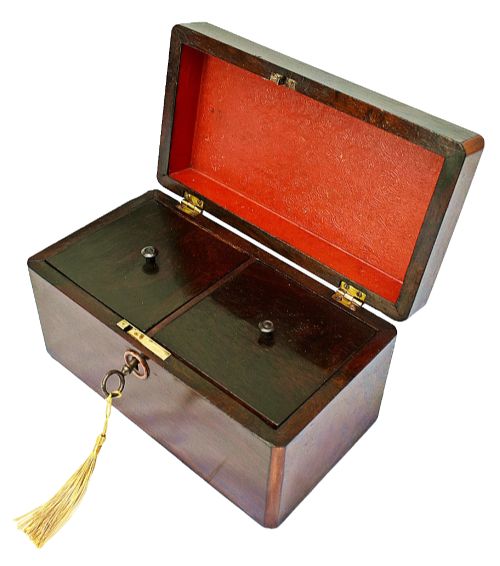
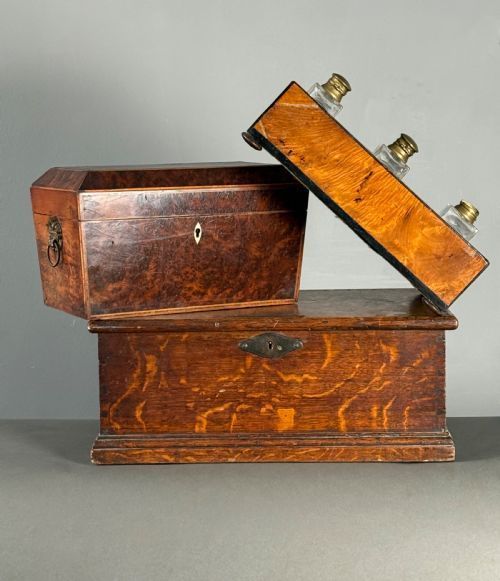
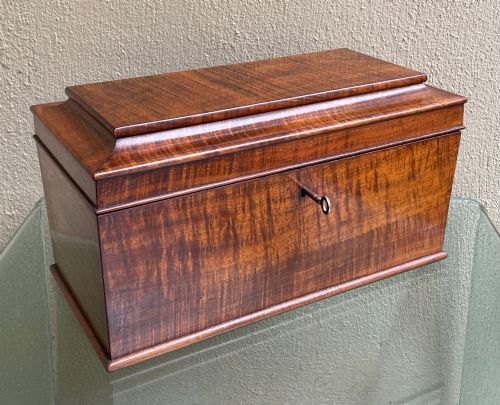
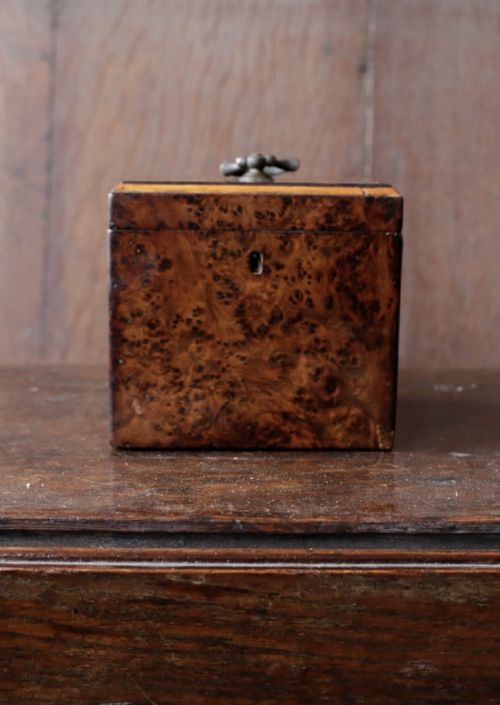
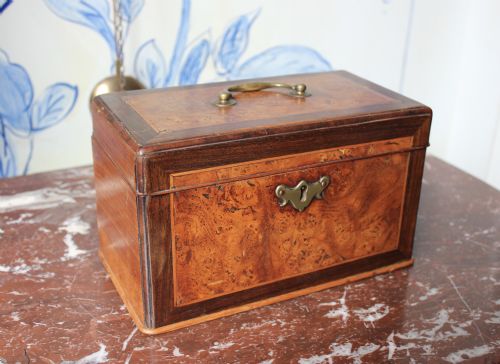
The pieces on this page appear primarily in rich timbers like rosewood, mahogany, and burr yew, often adopting geometric cubes, ovals, or rectangular chests. Many of these containers include internal compartments or mixing bowls, reflecting their primary domestic function in period households.
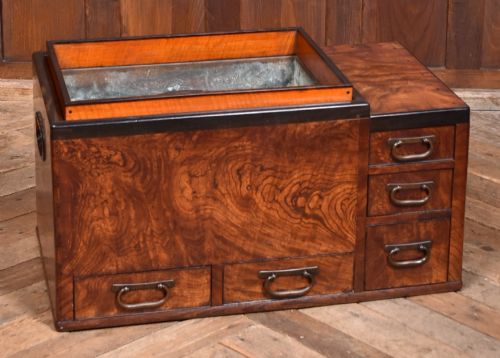
Origins stretch across Georgian, Regency, and Victorian aesthetics, alongside occasional traditional Japanese forms like the hibachi. Buyers encounter variations from plain timber grains to elaborate multi-compartment boxes fitted with brass hardware and mother of pearl details.
How they were made
Cabinetmakers utilised dense exotic and native hardwoods, cutting rosewood, mahogany, walnut, and partridge wood to construct sturdy carcases. Decorative veneers such as burr elm, burr maple, satinwood, and burr thorn wood provided striking exterior patterns.
Craftsmen enriched these surfaces through meticulous inlay work utilising contrasting light woods, bone, and mother of pearl. Brass stringing, escutcheons, and hinges added functional strength alongside visual contrast to the polished timber bodies.
Vintage Wood Tea Box Retail Price Guide 2026
Typical asking prices for vintage wood tea box among the pieces listed under this phrase on Sellingantiques today, from the lower quarter to the upper quarter. They describe what is for sale here now, not the wider market.
Several boxes sport elaborate mother of pearl birds and foliate inlay, proving that nineteenth-century tea lovers appreciated a little avian company.
What varies in quality
The calibre of a box rests upon the selection of timber veneers and the precision of the cabinetmaking. Fine examples display carefully matched burr grains and seamless mitred joints that hold firm across centuries.
Attention to interior detail distinguishes finer pieces, such as intact foil linings, fitted mixing bowls, and working locks complete with original keys. The refinement of mother of pearl or bone inlay work further separates standard utility boxes from exceptional creations.
The Vintage Wood Tea Box Glossary
- Tea caddy
- A small box or chest designed for storing loose tea leaves. These containers often featured internal lids or dual compartments to keep different tea varieties separate.
- Escutcheon
- A flat plate of brass or bone surrounding a keyhole. This element protects the surrounding wood from wear and adds a decorative focal point.
- Veneer
- A thin slice of figured wood applied over a secondary timber carcase. This technique allowed cabinetmakers to display expensive grains efficiently.
- Inlay
- A decorative method where contrasting materials like bone, mother of pearl, or lighter woods are set flush into the timber surface. It defines geometric borders and pictorial motifs.
- Hibachi
- A traditional Japanese heating device or brazier. These items represent alternative vessel forms found alongside standard British wooden boxes.
Vintage Wood Tea Box: Frequently Asked Questions
How were these boxes used?
Tea was an expensive commodity in the eighteenth and nineteenth centuries, kept under lock and key by the master or mistress of the house. Servants brought the caddy to the parlour, where the host measured out the leaves for brewing.
Inside, dual compartments typically separated green tea from black tea, while a central well held a glass bowl for blending. Later, many of these chests transitioned into general keepsake boxes for letters, jewellery, or stationery.
How do I date a tea box?
Dating relies on a combination of timber choice, hardware style, and construction methods. Georgian pieces often favour mahogany, satinwood, or simpler geometric proportions with delicate string inlay.
Regency and William IV examples introduce heavier rosewood, brass inlay, and mother of pearl details, while Victorian boxes frequently display elaborate carving and varied exotic woods like coromandel.
How should I clean the wood?
Maintenance requires gentle dusting with a dry, soft cloth to protect the polished timber and delicate veneer surfaces. Avoid modern liquid polishes or abrasive cleaners, which can strip the historic patina.
Feed dry rosewood or mahogany occasionally with a quality microcrystalline wax or specialist furniture balsam to preserve the depth of the grain.