
Vintage Wood Stool
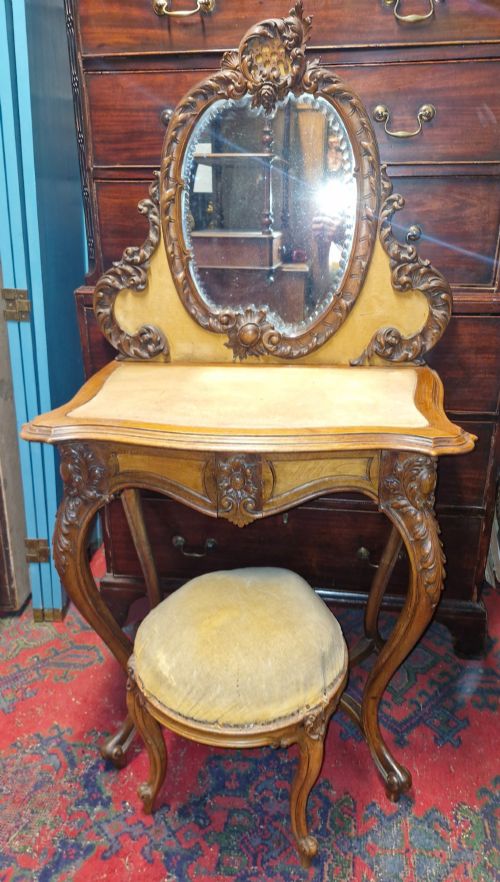
These vintage wood stool examples bring solid utility and character to a room, ranging from simple rustic seats to carved mahogany dressing forms.
Vintage Wood Stool
A vintage wood stool selection spans modest country seats and formal dressing furniture. You encounter elm tavern stools, oak joint stools, and mahogany piano variants across various periods.
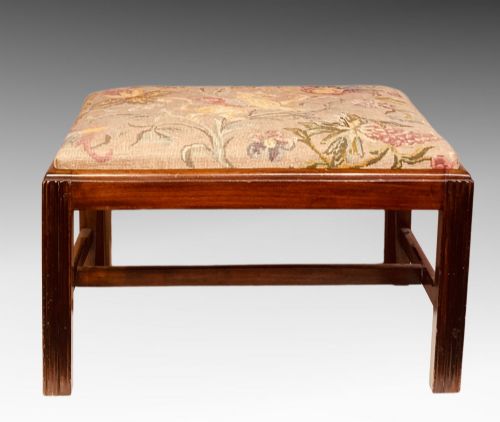
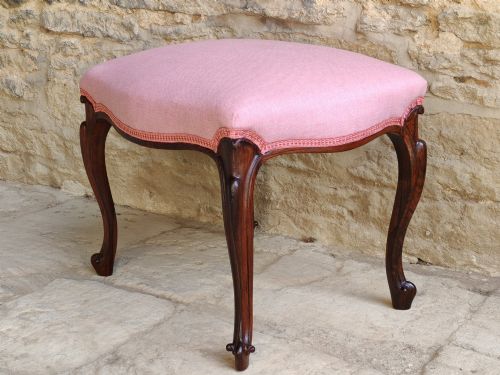
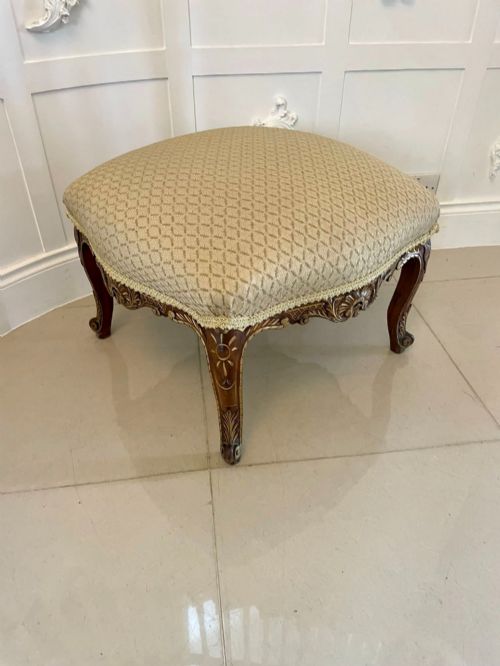
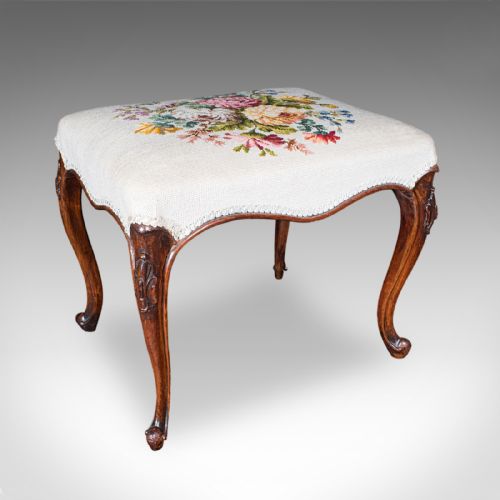
Makers utilised timber for both domestic comfort and practical trades. Pieces range from simple milking seats with original paint to carved walnut Victorian footstools with needlepoint upholstery.
Materials and construction
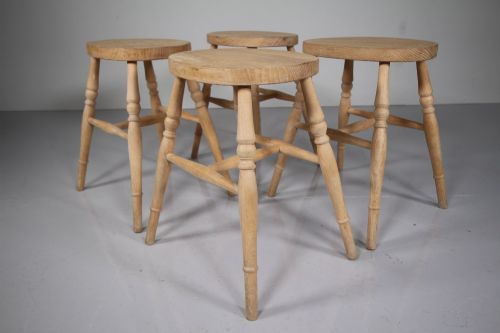
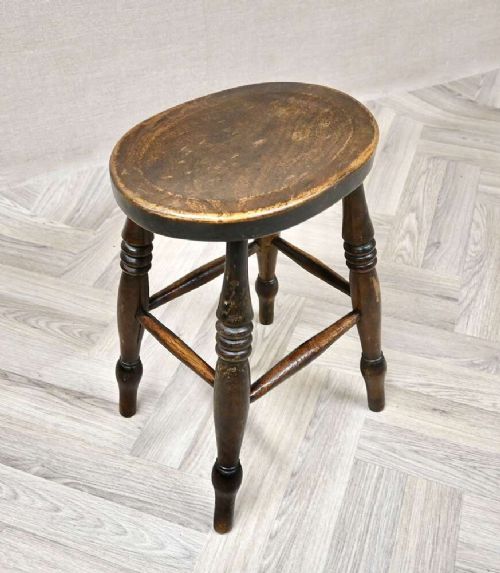
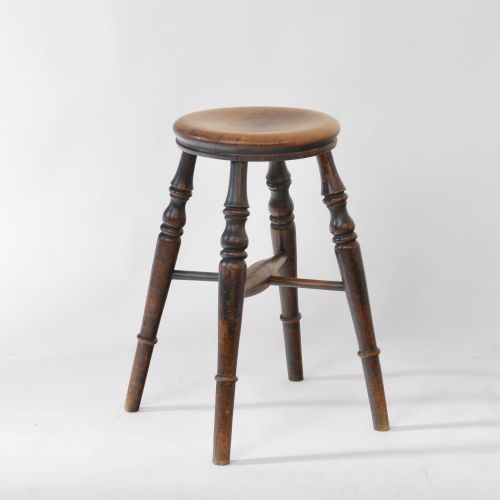
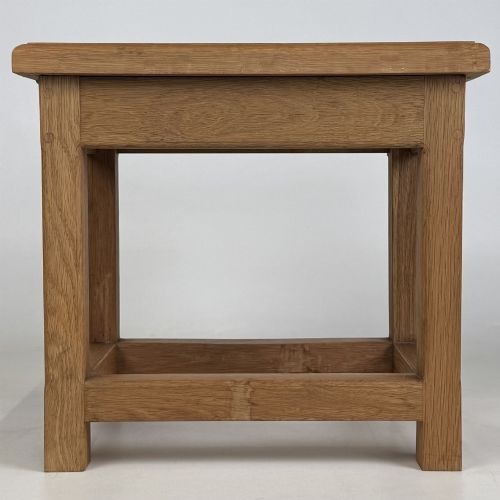
Construction relies heavily on traditional timbers such as elm, oak, mahogany, and beech. Craftsmen shaped solid wood tops, frequently dishing the surface for comfort, and joined them with sturdy stretcher bases.
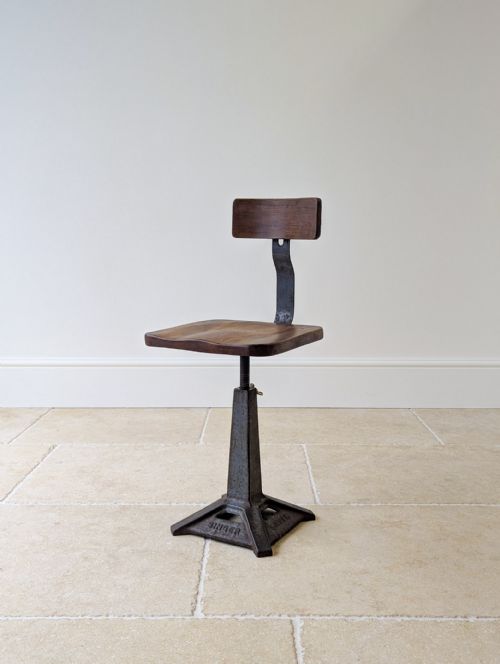
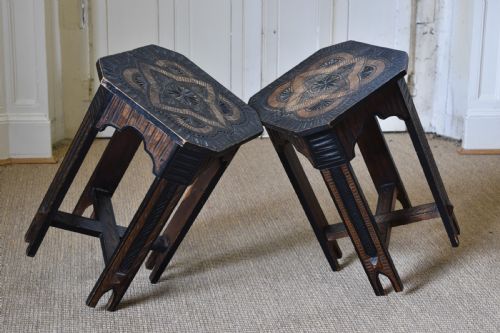
Many items feature turned legs, chip carving, or painted finishes. Metal elements occasionally appear alongside the timber, as seen in cast iron components on industrial machinist chairs.
Assessing quality and build
Quality reveals itself in the selection of timber and the integrity of the joinery. Solid oak and figured mahogany demonstrate finer cabinetmaking, while pegged joints ensure lasting stability in rustic forms.
Original surfaces elevate a piece significantly. Retained patination, early paintwork, or traditional upholstery contribute more to character than later restorations.
The Vintage Wood Stool Glossary
- Joint stool
- A traditional sturdy wooden seat assembled with mortise and tenon joints, commonly originating from the seventeenth century and later revived.
- Milking stool
- A simple three-legged utilitarian seat designed for agricultural labour, often featuring a roughly shaped elm or beech top.
- Stretcher
- A horizontal wooden rod connecting the legs of a stool to provide structural rigidity and support.
- Dished top
- A seat surface hollowed out into a shallow concave shape to improve sitting comfort.
- Needlepoint
- A form of counted thread embroidery traditionally used to cover the upholstered tops of Victorian footstools.
Vintage Wood Stool: Frequently Asked Questions
How do I identify a tavern stool?
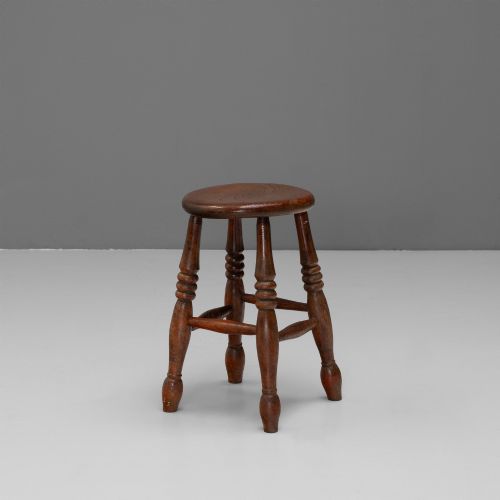
Tavern stools usually feature thick wooden tops, often dished for comfort, supported by sturdy turned legs and cross stretchers. They were built to withstand heavy daily use in public houses.
Look for robust timber construction, typically in elm or beech, with a heavy, honest patination accumulated from decades of commercial service.
Where should I place a piano stool?
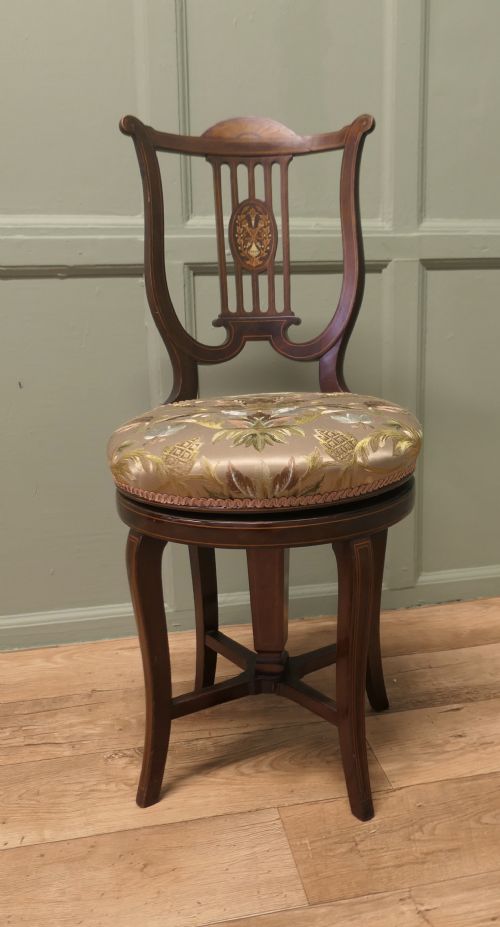
Piano stools suit music rooms, studies, or living spaces as occasional seating or compact side tables. Revolving mechanisms and adjustable heights make them particularly versatile.
Their smaller footprints allow them to tuck easily beneath desks or beside armchairs without crowding a room.
Are joint stools safe to sit on?
Joint stools are exceptionally sturdy because of their pegged mortise and tenon construction. They were engineered to handle heavy domestic loads.
Check that the joints remain tight and the feet show even wear to ensure the timber has not weakened over time.
What defines a rustic country stool?
Rustic country pieces display simpler working methods, utilising local woods like elm or pine with minimal ornamentation. Their charm lies in visible tool marks and honest utilitarian design.
Original painted surfaces or raw, scrubbed timber finishes are common characteristics of these vernacular items.