
Vintage Wood Sideboard
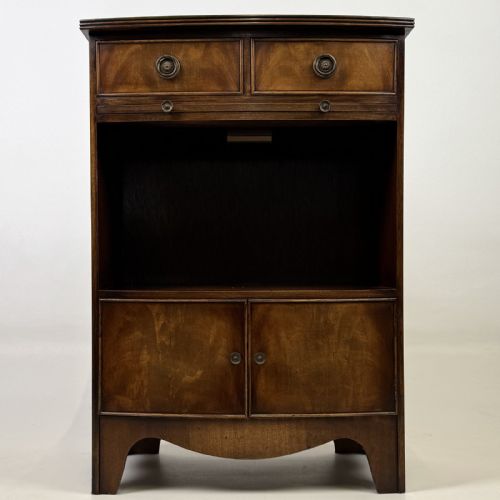
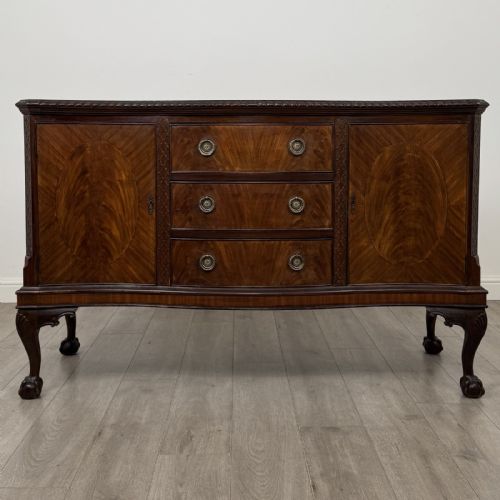
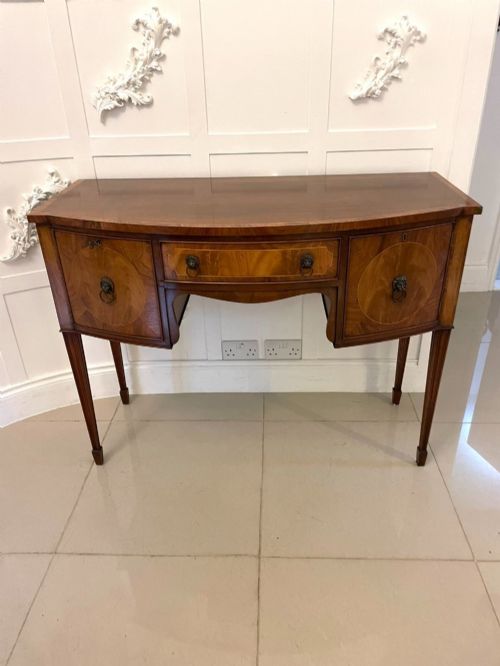
A vintage wood sideboard brings generous storage and rich timber grain to a room, ranging from robust oak dresser bases to elegant mahogany serpentine servers.
Vintage Wood Sideboard
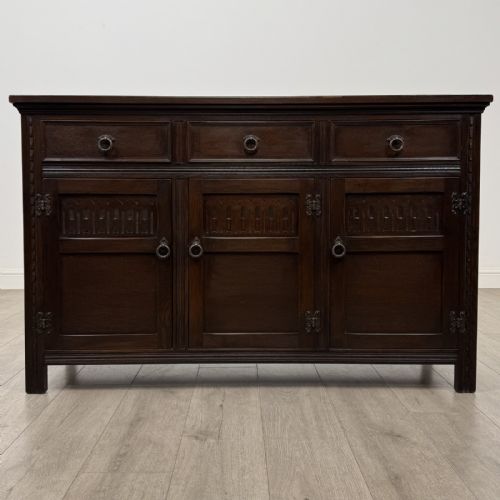
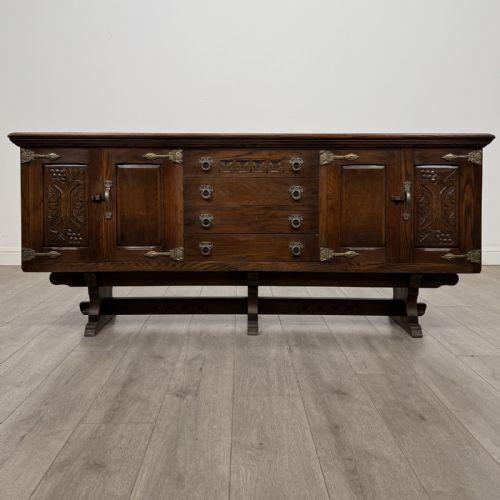
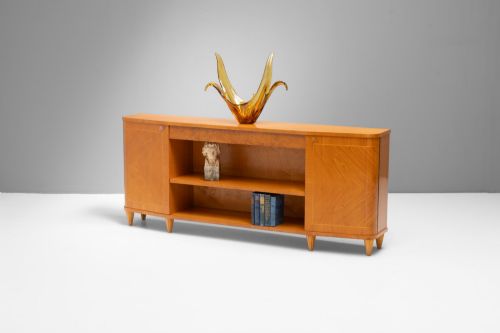
A vintage wood sideboard functions as a substantial storage piece in a dining room, hallway or living space, serving both practical uses and display purposes. These items encompass low servers, dresser bases, cabinets and chiffoniers spanning several eras.
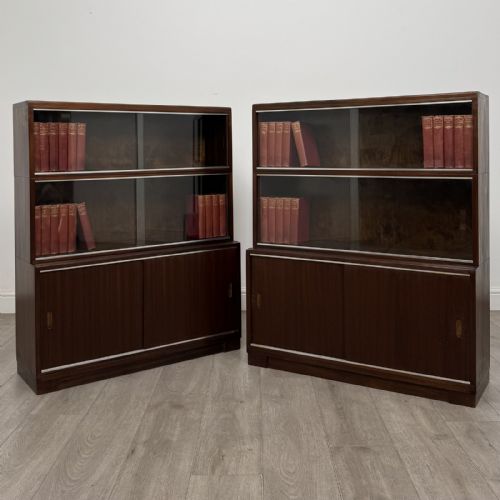
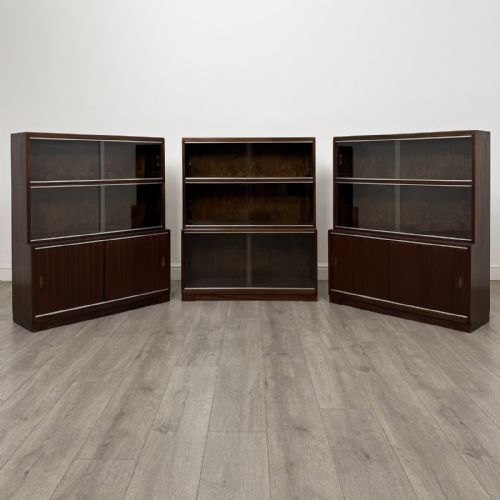
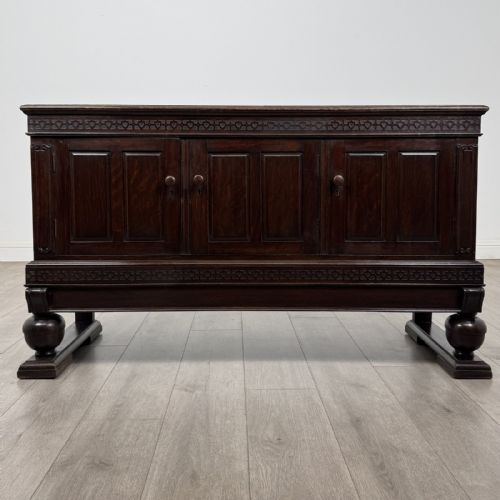
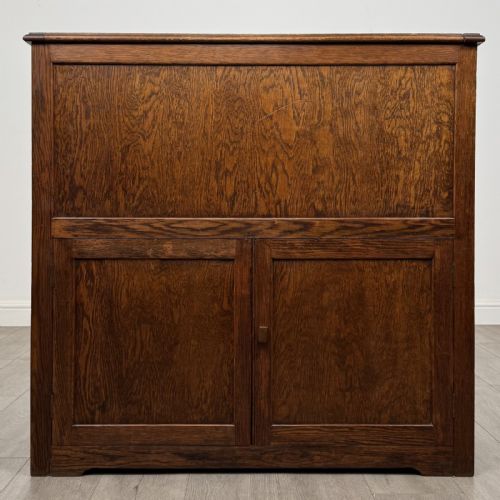
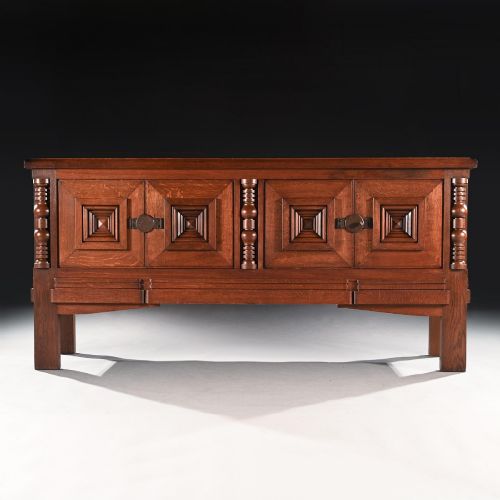
The versions most commonly met on this page date from the Edwardian period and the 1920s, constructed predominantly in oak and mahogany. Buyers encounter pieces featuring carved details, turned legs, sliding glass doors or simple drawer arrangements.
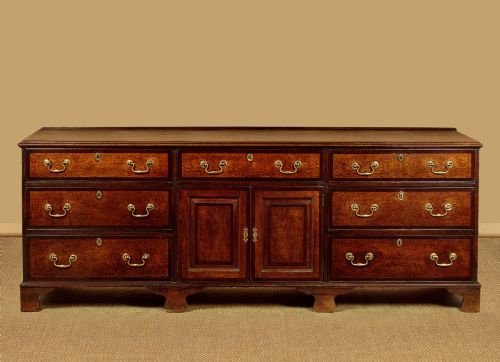
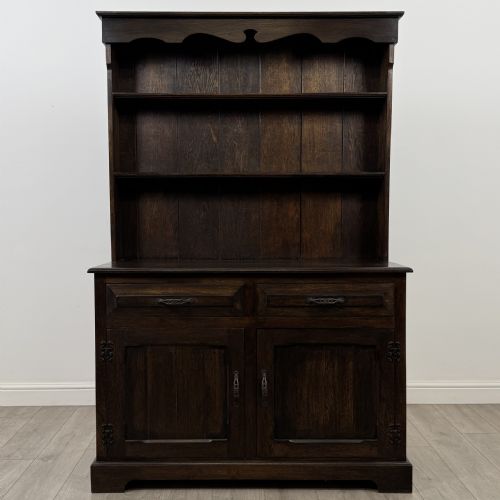
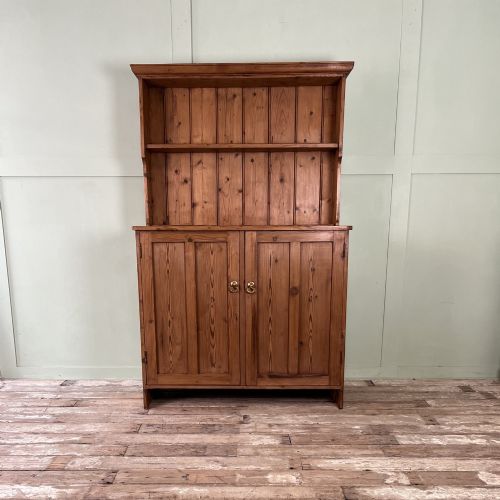
Beyond standard sideboards, the selection includes related forms such as Welsh dressers with open plate racks, narrow side cabinets and concave sideboards. Each form reflects the domestic storage needs of its original period.
Materials and construction methods
Cabinet makers utilised dense hardwoods including mahogany, oak and walnut, frequently selecting figured veneers or burr walnut for decorative surfaces. Secondary timbers provided internal framing for drawers and carcases.
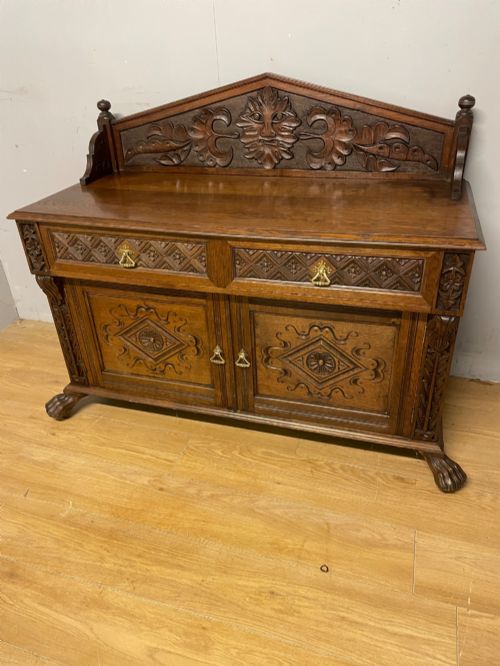
Joinery methods combined traditional dovetailing for drawer construction with mortise and tenon framing for structural stability. Decorative elements relied on hand carving, inlaid banding, brass hardware and turned or claw and ball feet.
Keep an eye out for carved green man motifs hiding amongst the foliage on late nineteenth-century oak woodwork.
Distinguishing quality in timber pieces
Quality reveals itself in the selection of the timber grain, such as figured mahogany or matched burr walnut, and the precision of the cabinet maker's joinery. Superior examples display careful attention to proportion, balanced drawer arrangements and clean interior fittings.
The handling of decorative details sets exceptional pieces apart from standard utility furniture. Crisp hand carving, well-fitted original handles and refined leg forms, whether cabriole, barley twist or claw and ball, indicate a higher grade of craftsmanship.
Charles Dudouyt
The Vintage Wood Sideboard Glossary
- Serpentine front
- A furniture front that curves outward in the centre and inward at the sides. This shape demands precise woodworking skill to follow the flowing contour.
- Dresser base
- A low cabinet with drawers and cupboards, originally used in kitchens or dining rooms for food preparation and storage. They often feature robust oak construction.
- Chiffonier
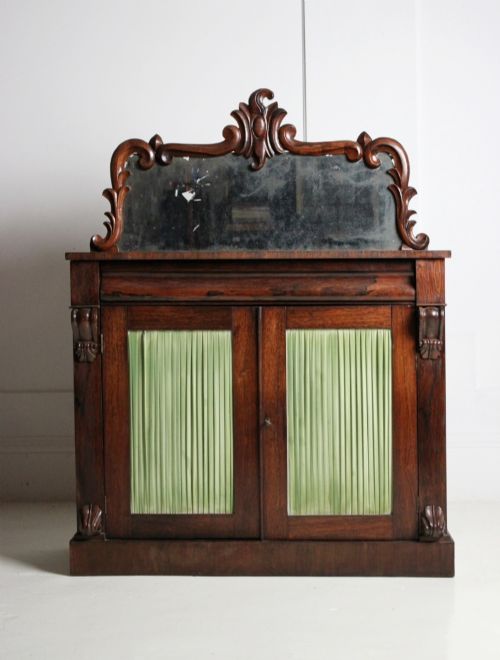
- A compact sideboard developed in the nineteenth century, typically featuring enclosed cupboards beneath a shelf or drawer tier. They suit smaller rooms.
- Pull out slide
- A horizontal wooden board that pulls out from the cabinet frame to provide an extra surface for serving or writing. It sits discreetly above drawers.
- Breakfront
- A piece of furniture where the central section projects forward from the flanking outer sections. This creates architectural depth and visual weight.
Vintage Wood Sideboard: Frequently Asked Questions
Where should I place a sideboard?
A sideboard fits naturally against a dining room wall to store tableware, linens and serving dishes.
In a hallway or living space, the top surface provides an ideal spot for lamps, decorative objects and everyday items.
How do I clean antique wood?
Dust the surface regularly with a soft, dry cloth to prevent the accumulation of grit.
Apply a quality beeswax periodically to nourish the timber grain and maintain a natural protective sheen.
What is the difference between a sideboard and a dresser base?
A sideboard generally stands lower and serves formal dining spaces with enclosed storage and drawers.
A dresser base often originates from a kitchen or rustic setting, sometimes paired with an open plate rack above.
How do I identify Edwardian sideboards?
Edwardian pieces often feature lighter mahogany or oak construction with inlaid stringing, brass drop handles and tapered or cabriole legs.
They reflect a lighter decorative taste compared to heavier Victorian designs.