




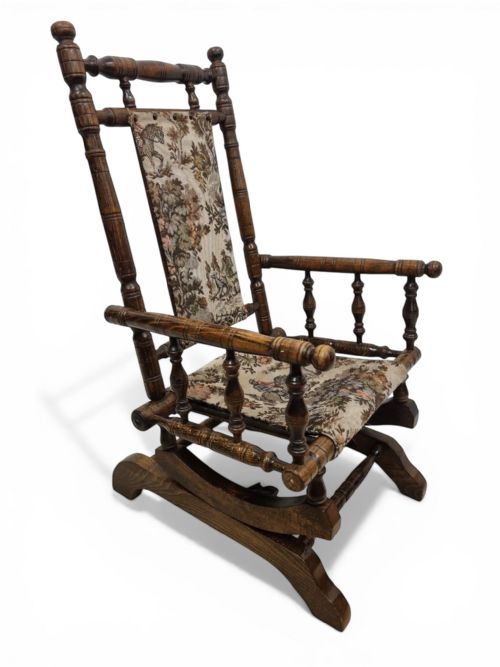


Vintage Wood Rocking Chair
A vintage wood rocking chair brings a comforting, rhythmic motion and genuine craftsmanship to any room.
Vintage Wood Rocking Chair
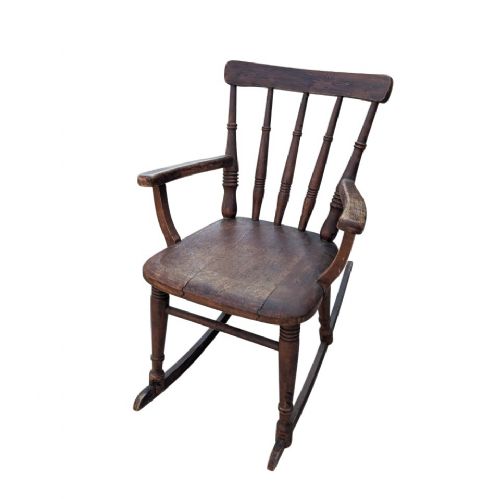
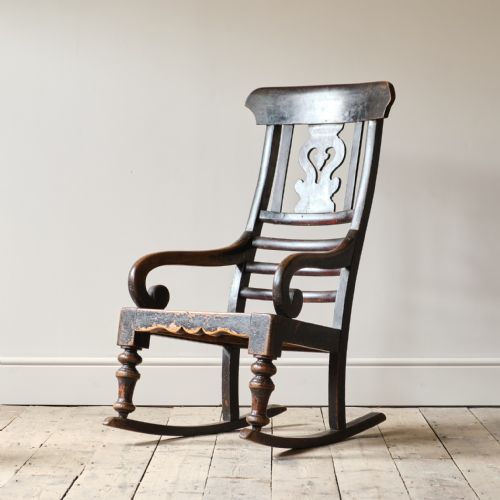
The pieces on this page span several centuries, reaching from the eighteenth century through the Victorian and Edwardian eras into the early twentieth century. Formats vary from full-sized armchairs designed for parlours and country houses to smaller children's rocking chairs intended for nurseries.
Regional variations and specific stylistic movements also shape the selection, featuring English country vernacular, Scottish vernacular, American styles, and European bentwood traditions. Each example reflects the domestic habits and woodworking capabilities of its specific period of origin.
Materials and construction methods
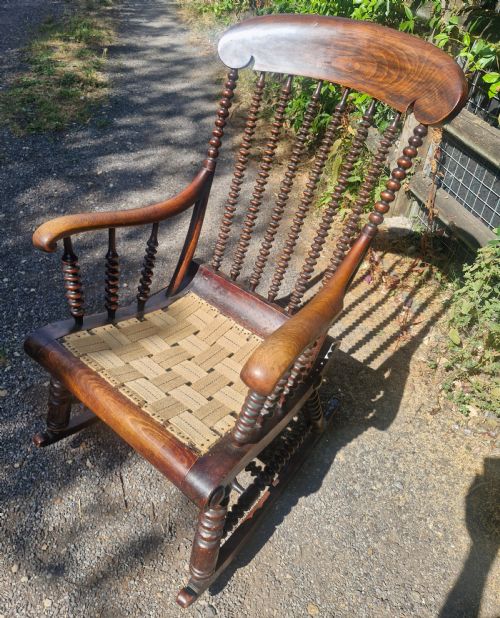
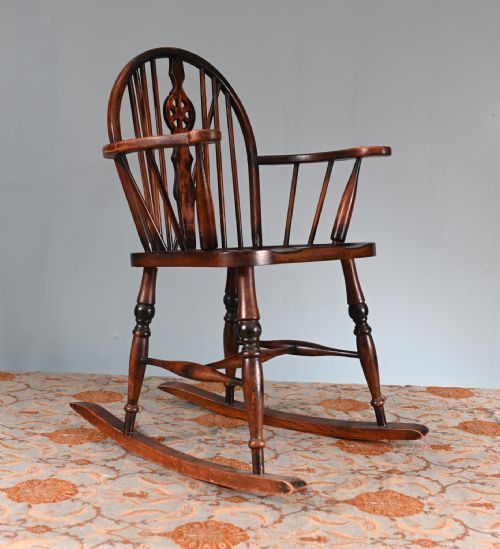
Makers utilised solid timbers such as beech, oak, elm, birch, and fruitwood to build sturdy frames capable of withstanding constant motion. Traditional joinery techniques, including spindle framing, ladder backs, and wheelback designs, provided the necessary structural integrity.
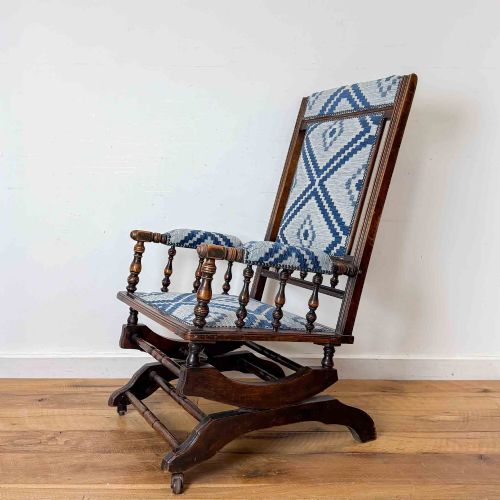
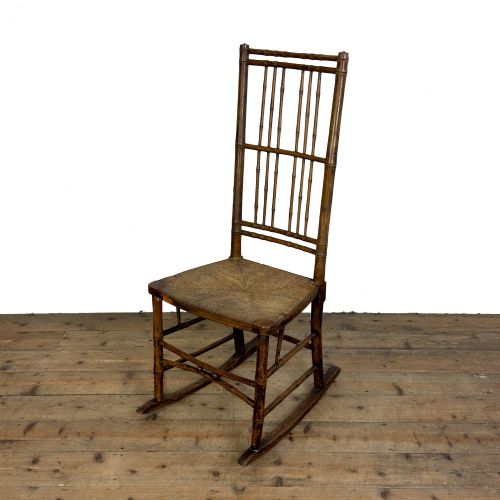
Flexible materials such as cane, rush, sea grass, and woven wicker formed supportive seats and backs on many country and bentwood examples. Where greater comfort was required, workshops applied upholstery using leather, fabric, tapestry, or button-backed textiles.
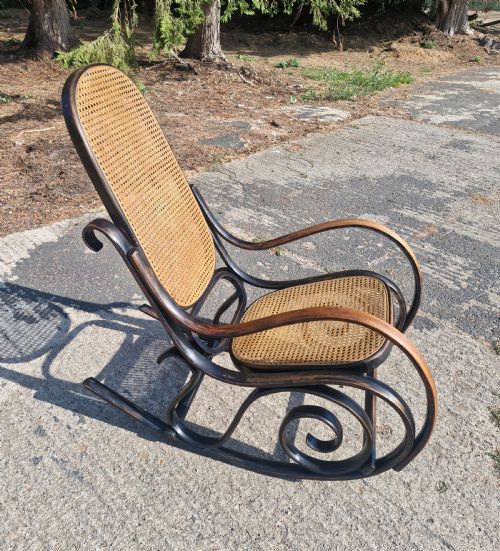
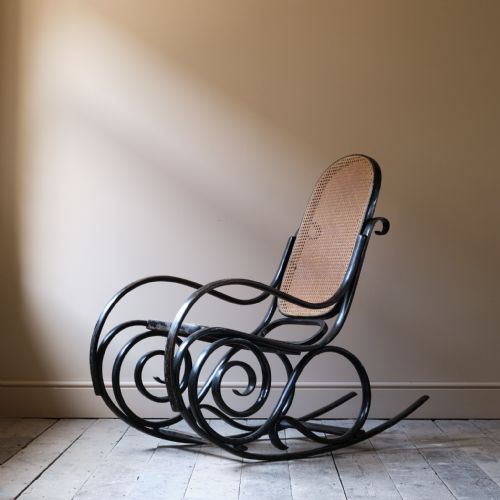
Bentwood construction revolutionised production through steam-bent beech components, creating light, curving frames typical of makers like Thonet and Kohn. Alternatively, vernacular pieces relied on locally available timber and turned components like bobbin framing.
Vintage Wood Rocking Chair Retail Price Guide 2026
Typical asking prices for vintage wood rocking chair among the pieces listed under this phrase on Sellingantiques today, from the lower quarter to the upper quarter. They describe what is for sale here now, not the wider market.
Even the smallest nursery occupant needed proper posture, resulting in charming miniature ladder-back and Windsor rockers.
What defines quality in these chairs
Quality rests heavily on the integrity of the timber and the retention of original surfaces, such as early paint or patinated polish. Pieces that maintain their structural stability without excessive timber shrinkage or unfaithful repairs command greater respect among collectors.
The sophistication of the design and the execution of turned or carved details separate standard utility chairs from finer workshop productions. Clean steam-bent curves in bentwood models or finely balanced Windsor spindles indicate superior craftsmanship.
Jacob and Josef Kohn·Thonet
The Vintage Wood Rocking Chair Glossary
- Bentwood
- Wood softened by steam and bent into curved structural forms. This technique created lightweight, durable rocking chairs popular in the nineteenth and twentieth centuries.
- Windsor
- A traditional wooden chair style featuring a solid sculpted seat into which legs and back spindles are directly fitted. Variations include wheelbacks and spindle backs.
- Vernacular
- Everyday regional furniture built by local joiners using available materials and traditional methods rather than adhering to high-style academic designs.
- Bobbin framing
- Furniture construction utilising turned wooden segments resembling spools or bobbins threaded along the uprights and stretchers.
- Cane
- Thin strips of peeled rattan woven into patterned open meshes for chair seats and backs. It provides a flexible yet supportive surface.
Vintage Wood Rocking Chair: Frequently Asked Questions
How do I choose the right rocking chair?
Consider the scale of the chair and where you intend to place it within your home. Full-sized armchairs suit living spaces, while smaller child versions fit well in nurseries.
Examine the seating material, whether solid wood, cane, rush, or upholstery, to match your comfort and aesthetic preferences.
Are these chairs suitable for daily use?
Most vintage wood rocking chairs remain structurally sound and functional for regular seating. Checking the stability of the rockers and joints ensures safe daily movement.
Lighter bentwood or delicate antique child chairs may require more mindful placement and gentler handling.
How do I identify the period of a chair?
Dating relies on observing construction methods, timber choices, and stylistic markers specific to eras like the Victorian period or Edwardian times. Turned components and upholstery styles also offer clear chronological clues.
Comparing regional vernacular traits helps narrow down the probable decade of manufacture.
What is the difference between Windsor and bentwood rockers?
Windsor rocking chairs utilise rigid solid wood seats with fitted spindles and heavy turned legs for a robust country aesthetic. They reflect traditional carpentry techniques.
Bentwood rockers rely on steam-formed curved wooden tubes, offering a lighter, more elastic frame associated with later industrial design.