
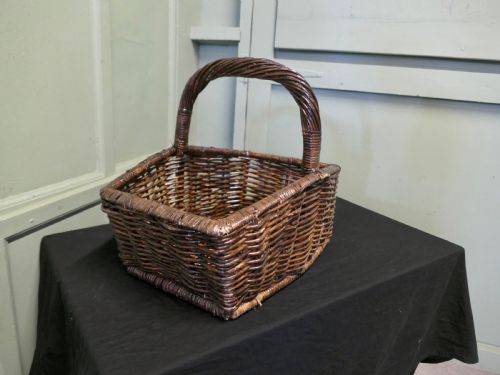
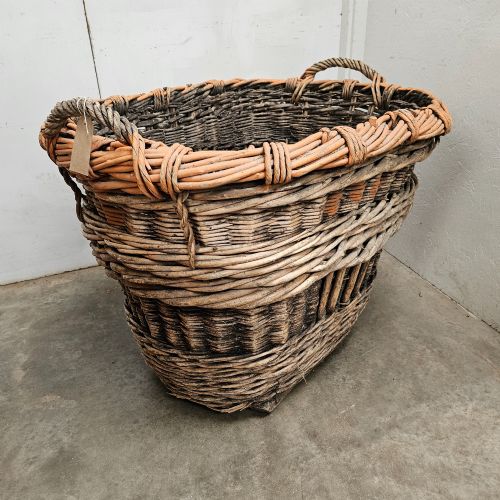
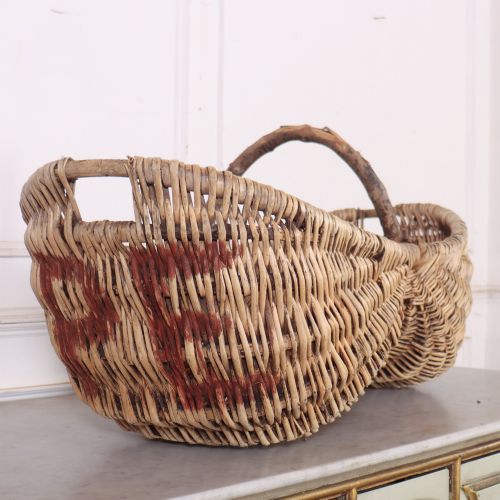

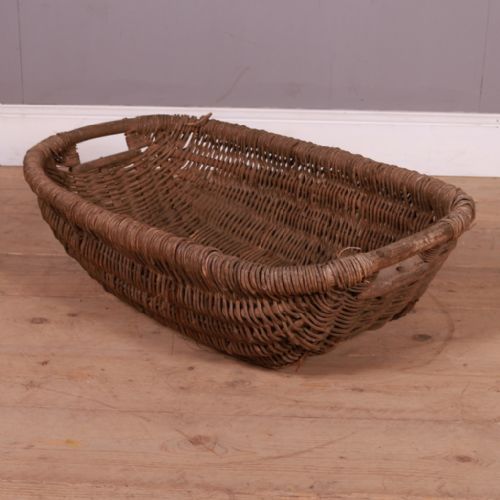

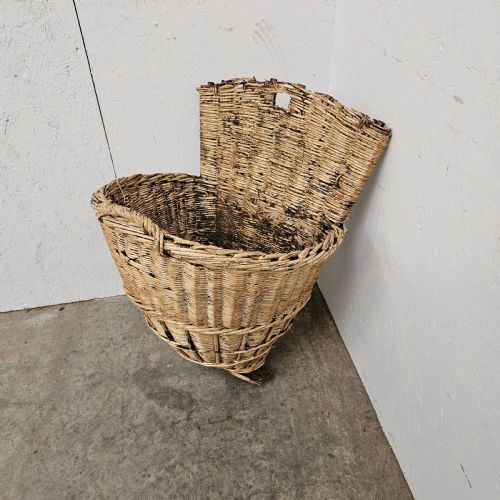

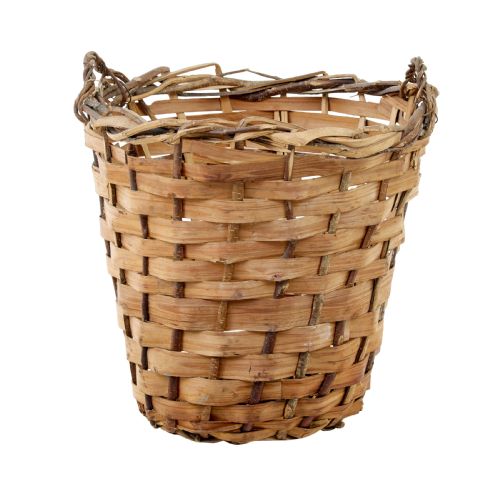

Vintage Willow Basket
These vintage willow basket finds bring tactile history and practical utility into the home, prized for their honest construction and rustic charm.
Vintage Willow Basket
A vintage willow basket encompasses practical agricultural and domestic vessels shaped from pliable natural fibres across the nineteenth and twentieth centuries. When searching for a vintage willow basket, collectors frequently encounter utilitarian forms designed for harvesting, storage, and market trading.
The selection here draws predominantly from French country traditions, including grape pickers' hods and champagne harvest carriers alongside Swedish linen baskets and British industrial mill hampers. These pieces reflect regional European craft methods aimed at heavy daily use rather than ornamental display.
Forms range from deep log storage containers to large woven troughs and market carriers, spanning periods from the eighteenth century through the nineteen-thirties. Buyers most commonly meet robust wicker and willow creations shaped for endurance in agricultural settings.
Construction and materials
Makers utilised natural materials such as willow, wicker, cane, and hazel, frequently supported by timber frames and reinforced with leather or rope. These components were harvested locally and worked green or soaked to achieve the flexibility needed for tight weaving.
Weavers employed traditional hand-weaving techniques to build rigid ribs and dense walls capable of withstanding heavy loads of fruit, grain, linen, or logs. The structural integrity relies entirely on the tension of the interlaced fibres and secure binding around rims and handles.
Assessing quality and character
Quality in these vessels rests on the tightness of the weave, the structural soundness of the frame, and the survival of original integrated handles or bindings. Superior examples maintain their symmetry and rigidity despite decades of heavy agricultural or industrial service.
Patina and evidence of authentic working life separate compelling vernacular objects from lesser items, as surface wear tells the story of past harvests and rural labour. The integrity of the natural materials dictates longevity, with tightly packed willow withstanding dry indoor environments more effectively.
The Vintage Willow Basket Glossary
- Wicker
- A technique of weaving with pliable plant materials rather than a specific material itself. It creates sturdy, resilient baskets suited to heavy farm and market labour.
- Hod
- A deep carrier or backpack basket, often associated with French grape harvesting in regions such as Chablis. These vessels were shaped to rest comfortably against the back during fieldwork.
- Cane
- The peeled, slender stems of rattan or similar palms used for fine binding or structural ribs. It offers smooth flexibility and high tensile strength.
- Hazel
- A tough, straight timber utilised for structural hoops and handles in traditional basketry. It provides rigid support to the softer woven willow body.
Vintage Willow Basket: Frequently Asked Questions
How were grape picking baskets used?
Workers carried or strapped these deep containers through vineyards to collect harvested grapes during the autumn vintage. Their robust construction handled the heavy weight of fresh fruit.
After harvesting, the baskets transported the yield directly to presses or collection points before modern mechanisation took over.
How do I care for a vintage willow basket?
Keep these natural fibre objects in rooms with stable humidity to prevent the willow from drying out and becoming brittle. Dust them gently with a soft brush rather than washing with water.
Avoid placing them in direct sunlight or near intense heat sources that might warp the wooden frames and leather straps.
How can I tell the age of a wicker basket?
Dating relies on observing the uniformity of the weave, the type of natural materials used, and the presence of hand-forged or early hardware. Nineteenth-century examples often display irregular, hand-processed fibres and heavier wear.
Later twentieth-century pieces tend toward standardised commercial production methods while retaining traditional forms like mill hampers and log troughs.