
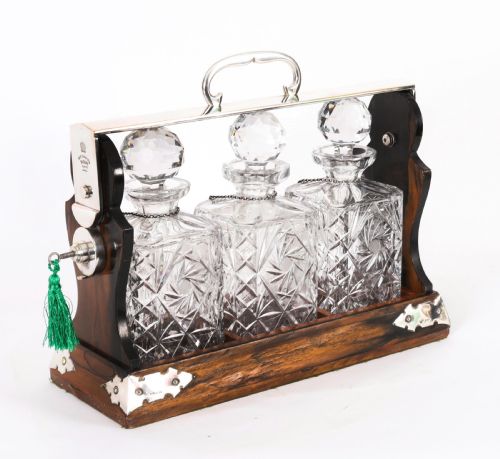
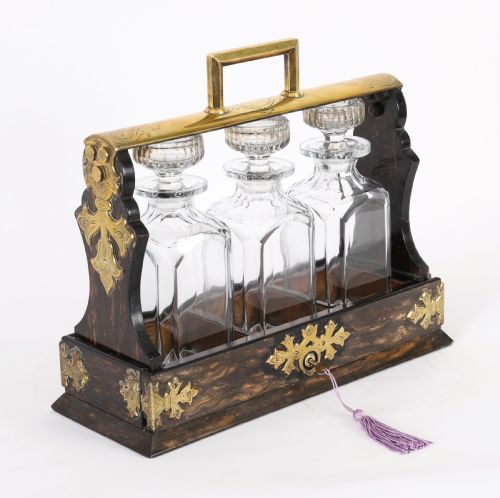

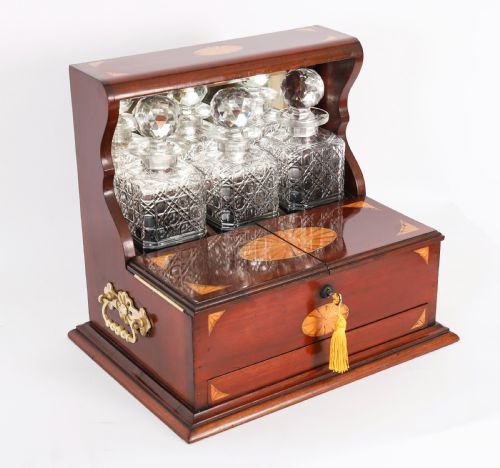


Vintage Whisky Tantalus
A vintage whisky tantalus secures your spirits behind a locking wooden frame, keeping the decanters safe whilst on display.
Vintage Whisky Tantalus
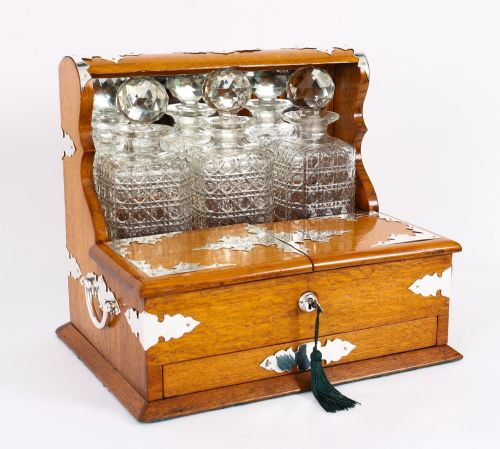
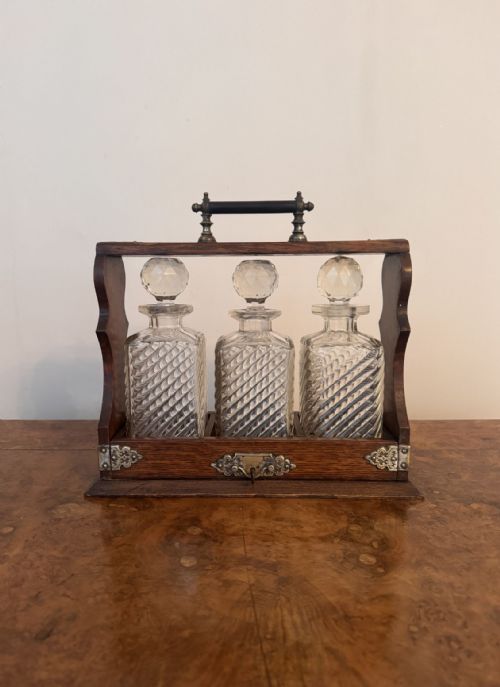
A vintage whisky tantalus is a locking barware stand designed to secure spirit decanters from unauthorized access. The form emerged strongly in the Victorian and Edwardian periods, housing cut crystal bottles within sturdy timber frames.
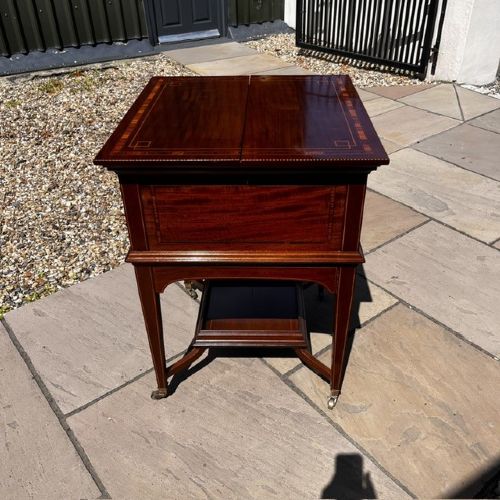
You meet oak and mahogany examples most often on this page, frequently featuring three cut crystal decanters held beneath a silver-plated or brass locking mechanism. Some variants incorporate games compendiums or dry bar storage beneath the bottle frame.
These pieces originated as functional luxury items for country houses and gentlemen's clubs, allowing hosts to lock away expensive spirits from servants or guests. Today, they serve as decorative after-dinner accessories that bring period character to a room.
How they were made
Cabinetmakers constructed the frames using solid oak, mahogany, satinwood, and coromandel, often mounting them with brass or silver-plated handles and locking bars. The timberwork reflects standard 19th and early 20th century joinery methods, incorporating precision housing for bottles and accessories.
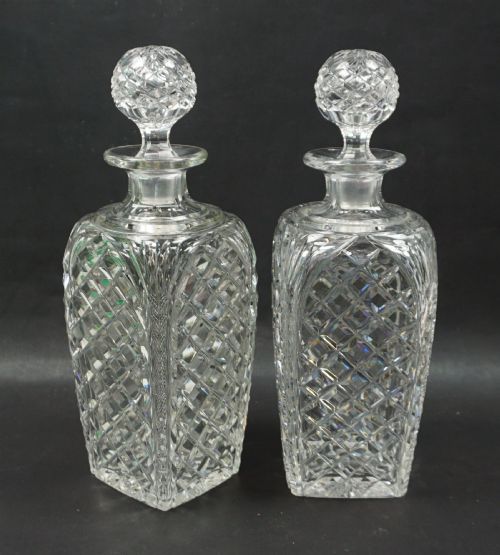
The bottles themselves are formed from heavy cut glass or crystal, shaped into square sections or tapered profiles to fit the locking frames securely. Makers integrated metal locking mechanisms that engage the stoppers, preventing removal of the decanters until a key is turned in the lock.
Listings feature oak, mahogany, coromandel, and satinwood frames paired with cut crystal decanters and silver-plated or brass hardware.
What varies in quality
The sophistication of the mechanism and the precision of the cabinetwork separate standard production pieces from high-end examples. Elaborate mechanisms bearing maker marks and heavy silver plating reflect superior manufacture.
The integration of auxiliary compartments, such as built-in games compendiums or satinwood inlay, elevates a piece beyond a simple bottle holder. The weight and clarity of the cut crystal decanters also indicate the standard of the original commission.
Betjemann·Elkington·Hukin and Heath
The Vintage Whisky Tantalus Glossary
- Tantalus
- A locking frame that holds decanters by their stoppers so the spirits cannot be poured without a key. The name derives from the mythological figure tormented by unreachable water.
- Compendium
- A fitted box containing multiple games or social accessories alongside the decanter frame. These combined items served diverse entertainment needs in Victorian drawing rooms.
- Silver plate
- A thin layer of silver fused to a base metal foundation, commonly used for the locking bars, handles, and mounts. It provides the visual appeal of solid silver with greater structural rigidity.
- Cut crystal
- Glass deeply faceted by grinding and polishing wheels to catch and refract light. This heavy material characterises the decanters housed within period frames.
Vintage Whisky Tantalus: Frequently Asked Questions
How do you open a tantalus?
Most models operate via a key inserted into the lock at the end of the metal retaining bar. Turning the key releases the mechanism, allowing the handle or bar to pivot backward and free the decanter stoppers.
If the mechanism lacks a key, a locksmith or specialist dealer can sometimes supply a replacement or pick the lock without damaging the surrounding timber.
Were these made for whisky?
They were designed to hold spirit decanters containing whisky, gin, brandy, or other liquors. The three-bottle arrangement often allowed hosts to offer a choice of different beverages.
While originally stocked with specific spirits, modern owners frequently fill the decanters with whatever liquor suits their personal taste.
How do you date a tantalus?
Dating relies on timber choices, hardware styles, and maker marks stamped on the silver plating or locks. Victorian examples tend to feature heavy oak or coromandel with ornate brass mounts, while Edwardian versions often display lighter mahogany or satinwood inlay.
Patents stamped on the metalwork, such as those associated with Betjemann, provide precise manufacturing windows.
Can you use the decanters?
The original crystal decanters can hold liquids, provided the interior is thoroughly cleaned and inspected for cracks. Care must be taken with antique crystal, as modern dishwashers can damage the glass and historic lead content requires appropriate washing methods.
Many owners use the decanters for display alongside functional barware rather than daily service.