





Vintage Whisky Decanter Stand
A vintage whisky decanter stand secures fine spirits under lock and key while offering a handsome centrepiece for a dining room or study.
Vintage Whisky Decanter Stand
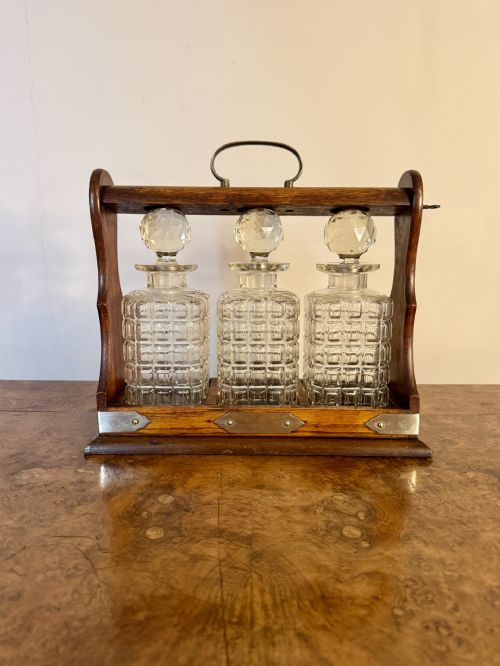
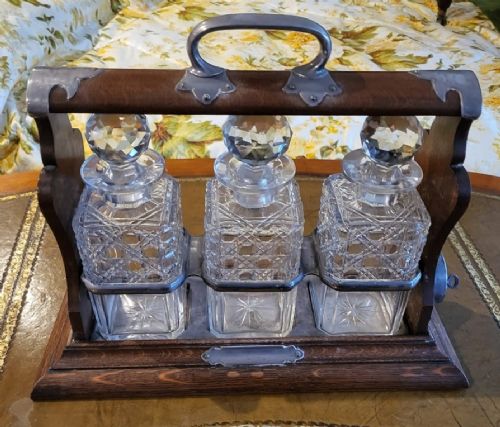
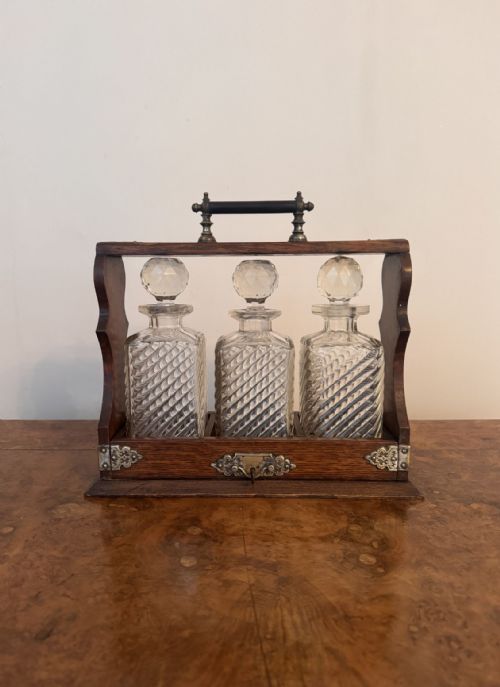
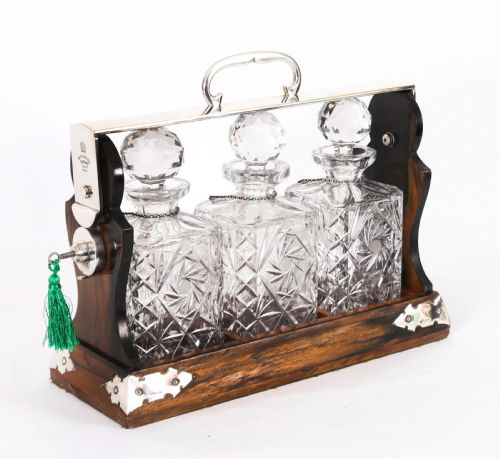
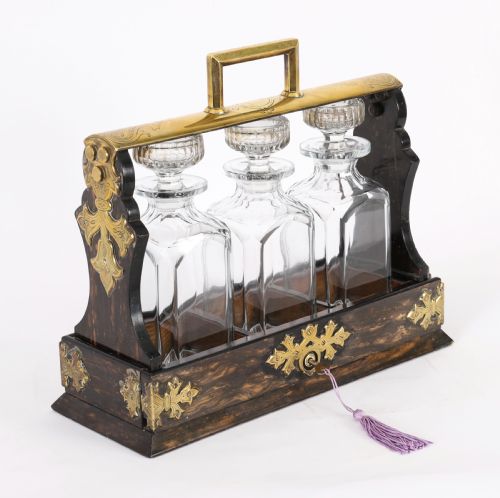
A vintage whisky decanter stand primarily takes the form of a tantalus, a clever locking frame designed to keep expensive spirits secure from servants or guests. These stands typically house two or three cut glass or crystal decanters nestled snugly within a fitted wooden or metal base.
The pieces appearing on this page span the Victorian and Edwardian eras, alongside items dating from the late nineteenth and early twentieth centuries. Makers utilised robust timbers such as oak and exotic coromandel wood, mounting them with brass or silver plate to create sturdy barware designed for daily use.
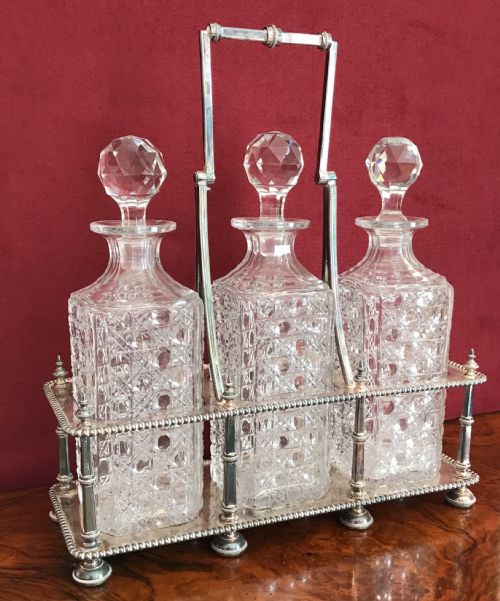
Beyond traditionaltantalus frames, the selection includes spirit cask sets and open decanter frames that hold liquor bottles without the locking mechanism. These barware accessories bring period character to a sideboard and remain practical containers for serving whisky, gin and brandy.
How they were made
Craftsmen built the frames using solid oak or richly figured coromandel wood, shaping the timber to securely cradle the heavy bottles. Metal components in brass or silver plate were cast and fitted to create the locking bars, carrying handles and corner mounts that reinforce the wooden structure.
The bottles themselves feature heavy cut glass or cut crystal, shaped with deep geometric facets that catch the light and display the colour of the spirit within. Skilled metalworkers applied silver plating over base metals or incorporated hallmarked silver mounts to elevate the status of the barware.
Vintage Whisky Decanter Stand Retail Price Guide 2026
Typical asking prices for vintage whisky decanter stand among the pieces listed under this phrase on Sellingantiques today, from the lower quarter to the upper quarter. They describe what is for sale here now, not the wider market.
Invented to frustrate thirsty Victorian household staff, these locking stands ensured the whiskey remained exactly where the master left it.
What varies in quality
The distinction between standard production pieces and the finest examples rests largely on the quality of the materials and the sophistication of the locking mechanism. Superior stands employ exotic timbers like coromandel and feature complex, fully functioning spring-loaded lock mechanisms with original keys.
Glassware quality also separates the tiers, with deeper, crisper hand-cut crystal decanters indicating a higher grade of manufacture than plain or lightly moulded glass. Furthermore, substantial silver-plated mounts or solid silver hardware reflect a greater initial investment by the original purchaser.
Walker and Hall·Betjemann·Elkington·Hukin and Heath
The Vintage Whisky Decanter Stand Glossary
- Tantalus
- A locking drink stand that holds decanters firmly in place so they cannot be removed without a key. The name derives from the mythological figure Tantalus, who was tormented by food and water just out of reach.
- Silver plate
- A manufacturing technique where a thin layer of silver is fused to a base metal such as copper or brass. This provided the appearance of solid silver at a more accessible cost.
- Cut crystal
- Glass with a high lead content that is hand-cut with decorative patterns using abrasive wheels. The lead content increases the weight, brilliance and clarity of the vessel.
- Spirit cask
- A barrel-shaped container mounted on a stand, used for storing and dispensing liquor. These wooden casks often contain glass linings to preserve the taste of the whisky or gin.
Vintage Whisky Decanter Stand: Frequently Asked Questions
What is a tantalus?
A tantalus is a locking barware stand that secures decanters beneath a metal bar to prevent unauthorized access to the contents. A mechanism locks the handle in place, meaning the bottles cannot be lifted out until a key is turned.
These devices appeared in wealthy Victorian and Edwardian homes to restrict access to expensive spirits while still displaying the decanters on a sideboard.
How do I use a vintage decanter stand?
Place the stand on a stable surface such as a sideboard, drinks trolley or table where the bottles can be easily accessed when unlocked. The heavy glass decanters lift straight out of their wooden or metal cradles once the locking bar is released.
Ensure the wooden bases are kept away from excessive moisture, and hand-wash the glass decanters carefully to preserve the cut crystal.
How do I date a decanter stand?
Dating relies on examining the materials, construction methods, hardware and any maker marks present on the metal mounts. Pieces from the Victorian period often feature heavier oak frames and ornate silver plating, while Edwardian examples can display cleaner lines.
Silver hallmarks on the mounts provide the most precise indication of age, corresponding to specific assay office date letters.
Are original keys usually included?
Original keys are sometimes present, but many surviving pieces have lost their keys over the decades of use. Locks can often be opened or fitted with replacement keys by a specialist locksmith if required for daily function.
The presence of an original working key adds to the completeness of the piece for collectors.