

Vintage Watercolour Landscape Art
Vintage watercolour landscape art captures topography across the nineteenth and twentieth centuries through fluid washes on paper.
Vintage Watercolour Landscape Art
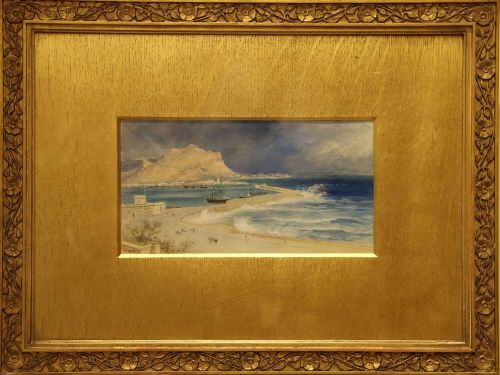
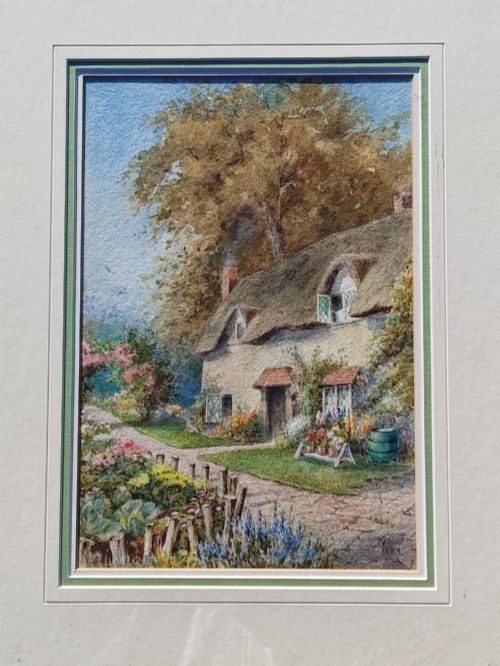
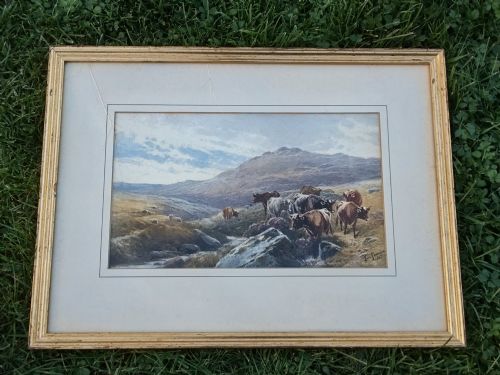
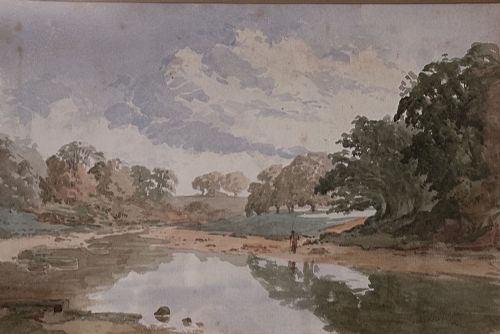
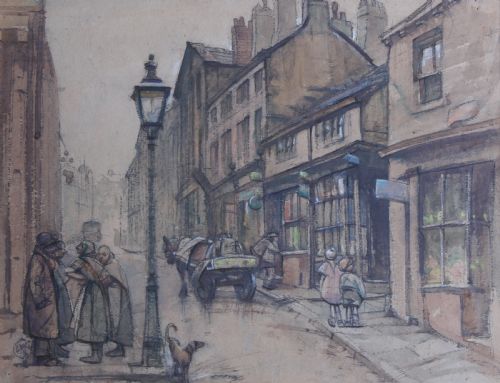
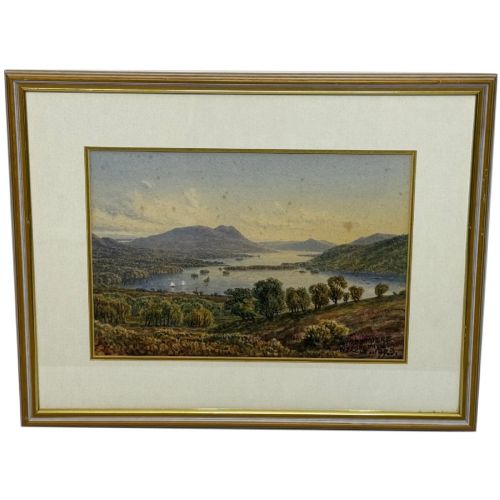
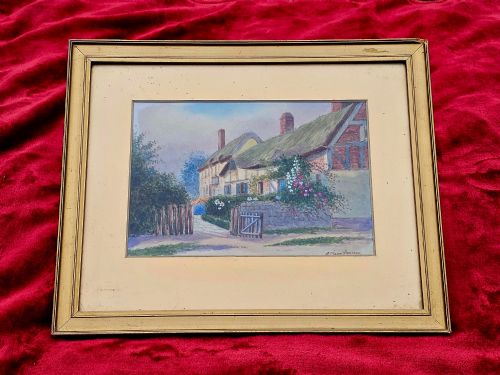
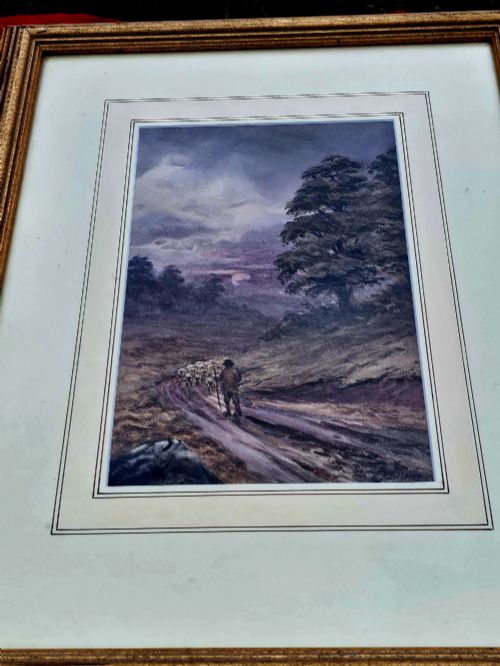
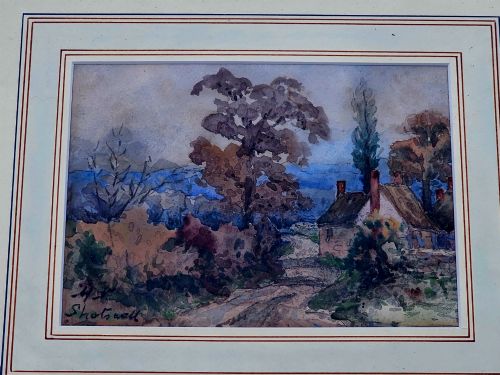
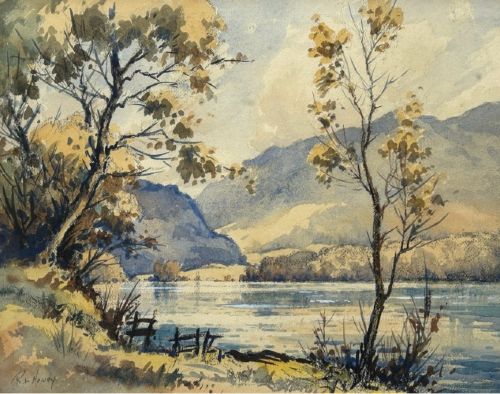
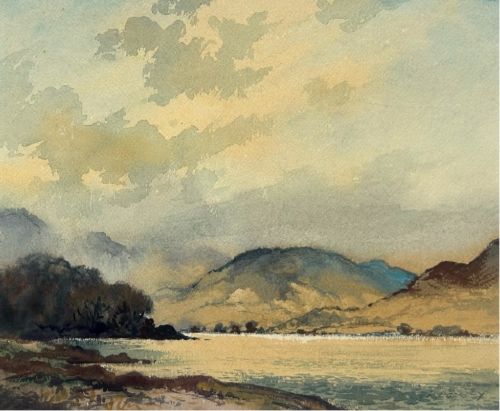
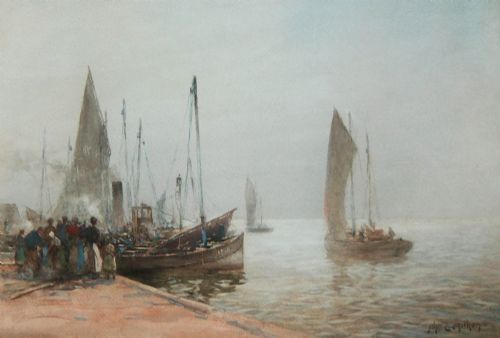
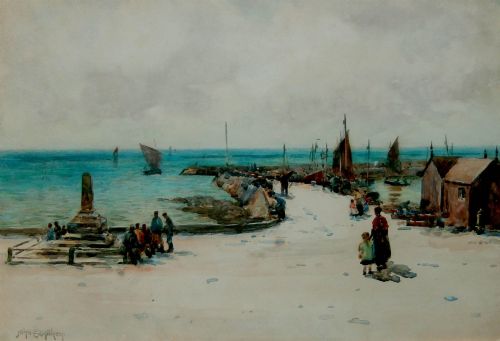
Vintage watercolour landscape art records rural valleys, coastal harbours, and mountain vistas produced by British and European schools. Buyers encounter original works on paper spanning the Victorian era through the mid-twentieth century, including regional depictions from Yorkshire, Cornwall, and the Lake District.
Materials and technique
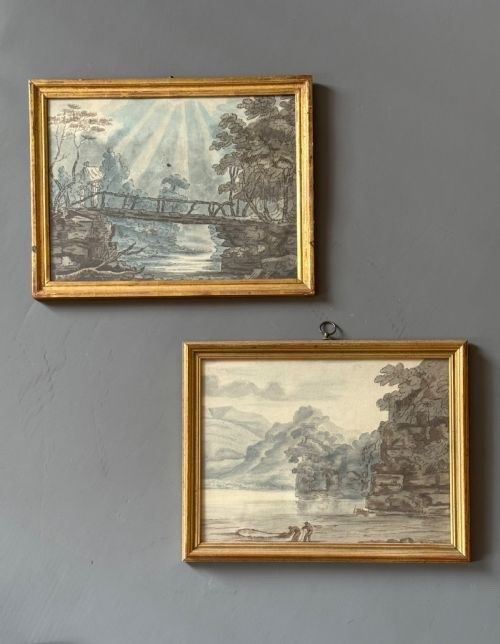
Artists applied watercolour pigment and ink onto paper sheets, sometimes combining media with gouache for opaque highlights. Many surviving examples retain their original wood and gilt wood frames paired with protective glass.
Techniques rely on fluid washes to build atmospheric light, capturing skies, water, and foliage with transparent layers. Pen and ink outlines frequently define architectural elements or tree branches before colour is applied.
The inventory records regional British landscapes from Cornwall, Yorkshire, and the Lake District.
Judging quality and condition
Quality rests upon the artist's handling of light, shadow, and perspective to create depth within the landscape. Stronger compositions demonstrate confident brushwork and precise control over pigment dilution.
Preservation of colour intensity determines visual impact, as prolonged exposure to light fades delicate pigments. The condition of the paper and the integrity of the original frame further influence the standing of each piece.
Alfred Young Nutt·A. Marie Parsons·Robert Leslie Howey·James E. Aitken·William Banks Fortescue·Thomas William Morley·Fred Lawson·Robert Thorne Waite·Richard Henry Wright·Frederick James Kerr·William Matthison·Percy Lancaster·Robert George Talbot Kelly·George Stanfield Walters·Frank Kelsey·Albert Pile·Orlando Greenwood·Cecil Arthur Hunt·W H Dyer
The Vintage Watercolour Landscape Art Glossary
- Watercolour pigment
- Colouring material ground with a water-soluble binder for use on paper. It allows for transparent washes that let the white of the paper illuminate the scene.
- Gouache
- An opaque watercolour paint containing added white pigment to create solid areas of colour. Artists utilise it to render highlights on water or clouds.
- Wash
- A thin, fluid layer of diluted pigment spread across the paper. It establishes expansive areas of sky or water.
- Provenance
- The documented history or origin of an artwork. It provides evidence of past ownership and exhibition history.
Vintage Watercolour Landscape Art: Frequently Asked Questions
How do I date an antique watercolour?
Dating relies on stylistic markers, framing methods, and signatures or dates inscribed by the artist. Paper characteristics and handwritten notes on the reverse also provide chronological clues.
Comparing the handling of the subject to known dated works by the same school helps narrow the period of execution.
Where should I hang watercolours?
Watercolours require placement away from direct sunlight to prevent the fugitive pigments from fading over time. Controlled indoor lighting preserves the delicate tones of the paper.
Displaying them in dry rooms protects the paper substrate and wooden frames from moisture damage.
How are landscape watercolours framed?
Period watercolours are typically housed behind glass within wood frames, often accented with gilt details. Mats separate the paper surface from the glass to prevent moisture accumulation.
Retaining the original frame adds historical context to the artwork, though some pieces require conservation framing.
What subjects are most common?
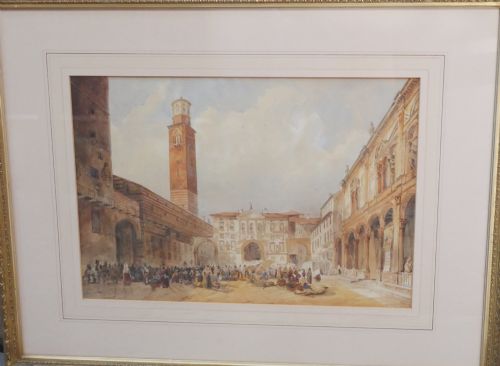
British rural scenes, coastal harbours, and river valleys dominate the available subjects. Topographical views reflecting local industries and coastal trade feature prominently.
Artists also recorded foreign travels, producing Italian lakes, French streetscapes, and mountainous terrain.