




Vintage Water Kettle
These vintage water kettle examples range from Georgian copper to Victorian brass and Edwardian silver plate, built to heat water with genuine character.
Vintage Water Kettle
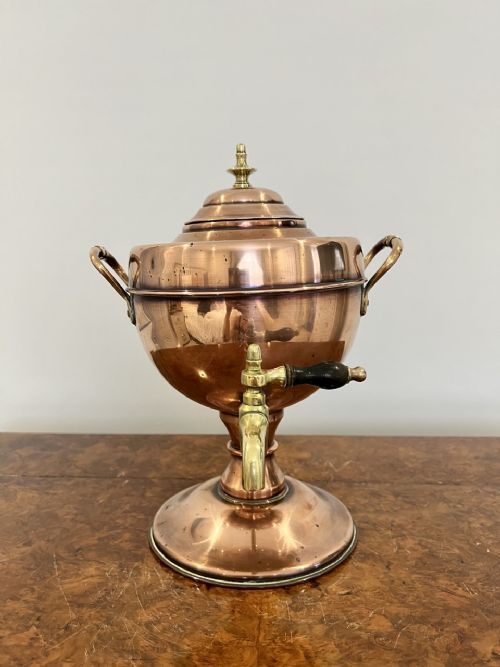
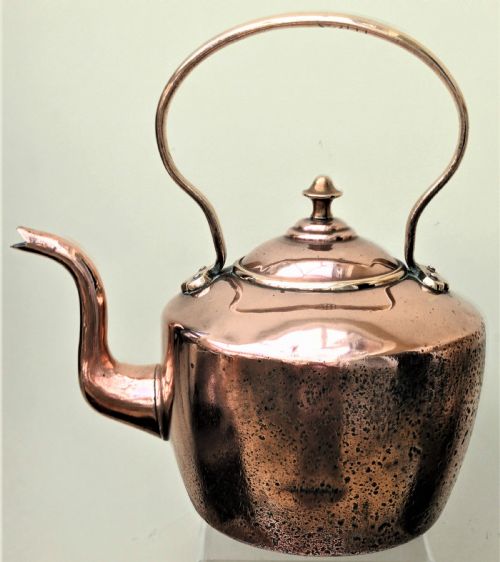
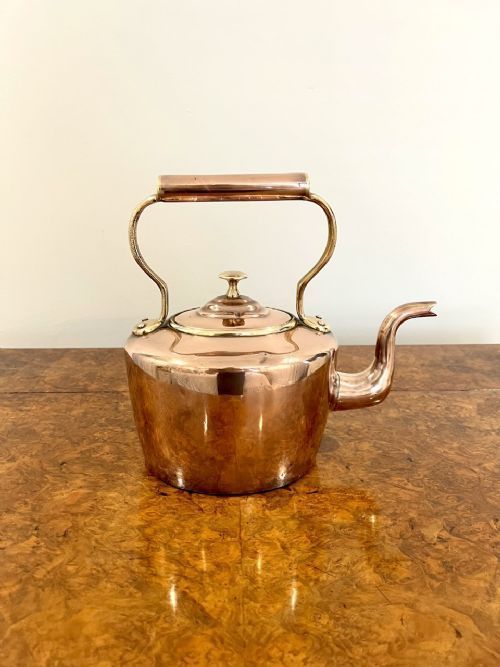
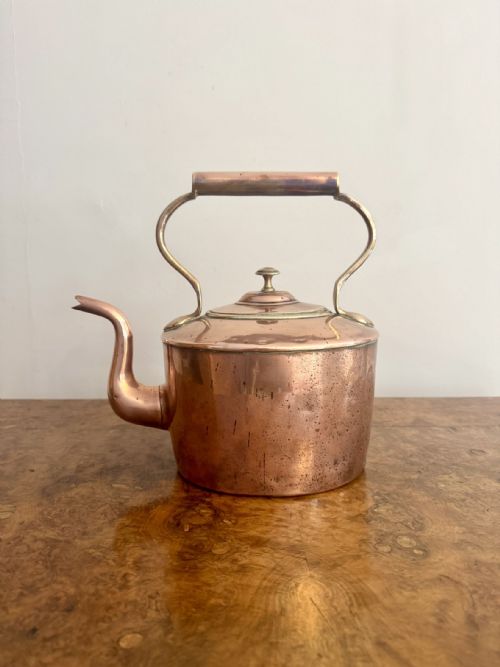
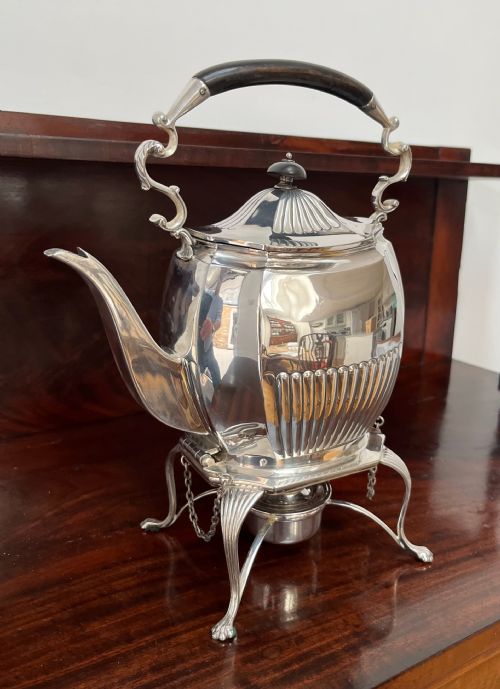
A vintage water kettle encompasses functional vessels designed for heating water, frequently appearing as freestanding pieces or mounted on dedicated stands with burners. You will encounter Georgian copper models alongside Victorian brass iterations and Edwardian silver-plated designs.
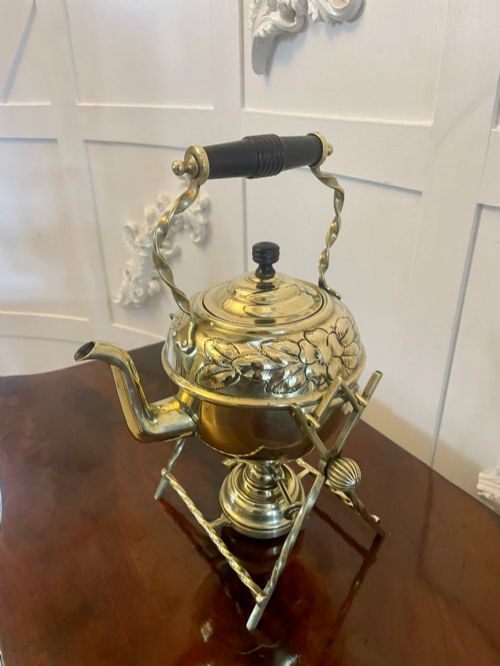
The selections span distinct periods, including the Georgian era, the Victorian period, and the Edwardian era, alongside Japanese Meiji period examples and Middle Eastern forms. Many pieces integrate stands, taps, or spirit burners intended for table use.
Copper and brass dominate the earlier Georgian and Victorian objects, while later Edwardian and 1930s pieces introduce silver plate. Teaware formats range from standard kettles to samovars and tea urns.
Materials and construction
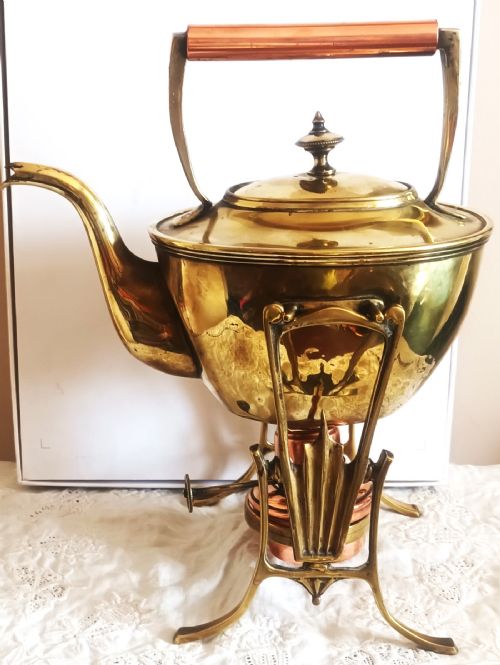
Makers utilised copper, brass, and silver plate, frequently combining metals such as copper bodies with brass handles or fittings. Ebonised wood and ebony appear on handles to provide insulation against heat during use.
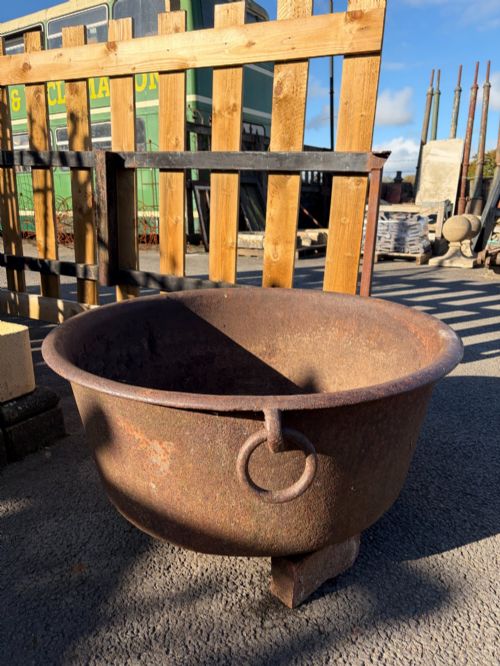
Techniques varied from hammered or polished sheet metal construction to specialised casting methods seen in Japanese iron and bronze tetsubin. Stands and burners involve intricate metalwork designed to support the vessel securely over a flame.
Vintage Water Kettle Retail Price Guide 2026
Typical asking prices for vintage water kettle among the pieces listed under this phrase on Sellingantiques today, from the lower quarter to the upper quarter. They describe what is for sale here now, not the wider market.
Listings feature copper, brass, and silver plate across Victorian, Georgian, and Edwardian periods.
Assessing quality and proportion
Substantial weight in the metal and crispness of form distinguish finer examples from standard production pieces. Superior items display careful integration of handles, taps, and stands without clumsy joins.
Maker marks and documented provenance elevate certain pieces, particularly those originating from known workshops or silversmiths. The preservation of original components, such as burners and matching stands, impacts the integrity of the object.
William Soutter And Sons·Walker And Hall·Kibundo
The Vintage Water Kettle Glossary
- Spirit kettle
- A water kettle mounted upon a metal stand above a small spirit burner that kept the water hot at the table.
- Samovar
- A large heated metal urn traditionally utilised to boil water for tea, often fitted with a spigot tap.
- Tetsubin
- A traditional Japanese cast iron or metal kettle used for boiling water, frequently associated with the Meiji period.
- Silver plate
- A layer of silver applied to a base metal core, common in Edwardian and later teaware production.
- Ebonised wood
- Timber treated to resemble ebony, frequently utilised for kettle handles and insulators.
Vintage Water Kettle: Frequently Asked Questions
What is a spirit kettle?
A spirit kettle is a water vessel designed to sit on a metal frame above a small fuel burner. This setup kept water hot during tea service.
These pieces date predominantly from the Victorian and Edwardian periods and often include matching stands.
How do I date a copper kettle?
Dating relies on construction methods, handle materials, and prevailing styles from Georgian, Victorian, or Edwardian eras. Early examples from 1800 often feature heavy hand-formed copper with distinct joinery.
Later Victorian and Edwardian pieces show more standardised manufacturing techniques and alternative finishes like silver plate.
What is the difference between a kettle and a samovar?
A kettle is typically lifted to pour water, whereas a samovar or tea urn incorporates a small tap near the base for dispensing. Samovars are generally larger and often rest on fixed bases.
Both forms appear in copper, brass, and silver plate across the nineteenth century.
Can I use these kettles today?
Many vintage water kettles retain their structural integrity, but interior linings and burners require inspection before actual use. Silver-plated and older copper models often serve as decorative display items in modern kitchens.
Consulting a specialist helps determine whether a specific piece remains suitable for boiling water.