




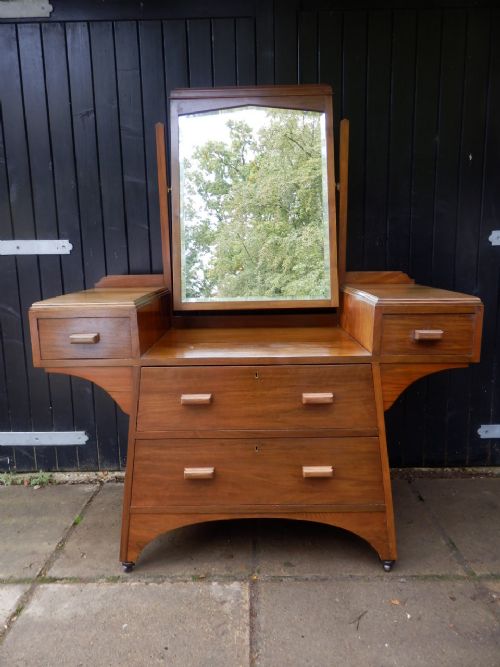
Vintage Walnut Makeup Desk
A vintage walnut makeup desk brings distinct warmth and period character to a bedroom.
Vintage Walnut Makeup Desk
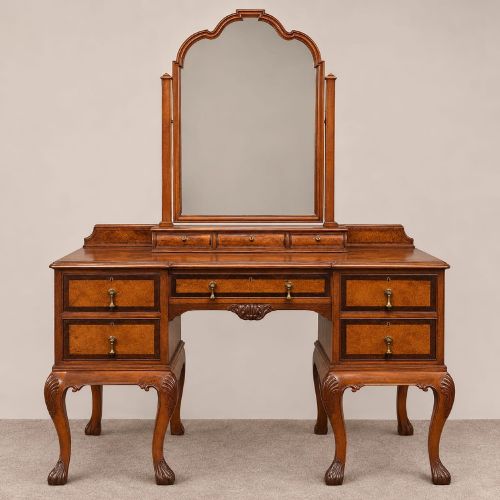
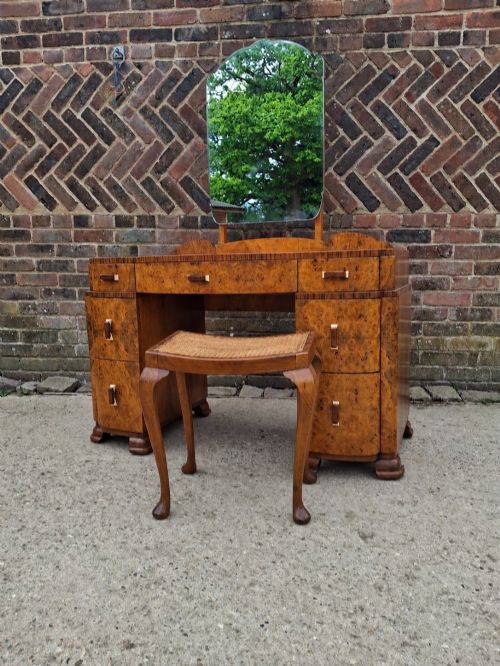
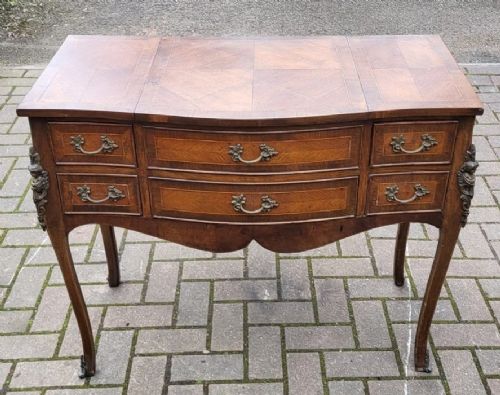
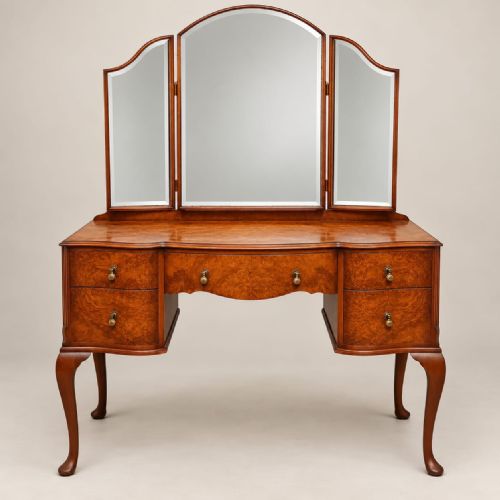
A vintage walnut makeup desk, commonly recorded in the evidence as a dressing table, provides a dedicated surface and mirror for daily grooming routines. These pieces span from the mid-nineteenth century through the Art Deco era, reflecting shifting domestic habits and interior tastes. Buyers searching this phrase encounter forms ranging from serpentine shapes and kidney-shaped designs to elaborate French poudreuses.
The materials and styles seen on this page demonstrate considerable variety, predominantly utilising walnut and burr walnut veneers alongside glass and brass. Pieces from the Victorian period sit alongside 1920s British examples and 1930s Art Deco models. Makers such as Maples are represented among the listings, offering structured options for collectors.
How they were made
Cabinet makers utilised solid walnut and decorative burr walnut veneers over secondary timbers, often shaping the wood into serpentine, kidney, or Duchess configurations. The distinctive figuring of burr walnut was selected to create striking patterns across the large surfaces of the top and drawers.
Metal components such as brass handles and ormolu mounts were applied to complement the dark tones of the wood. Glass mirror plates, sometimes bevelled or adjustable, were integrated into the upper sections to serve the functional requirements of a dressing table.
Vintage Walnut Makeup Desk Retail Price Guide 2026
Typical asking prices for vintage walnut makeup desk among the pieces listed under this phrase on Sellingantiques today, from the lower quarter to the upper quarter. They describe what is for sale here now, not the wider market.
Maples made sure every Victorian morning routine involved enough burr walnut to distract from the early hour.
What varies in quality
The calibre of a vintage walnut makeup desk rests upon the selection of the wood veneers and the precision of the cabinet work. Pieces featuring book-matched burr walnut across the top and drawer fronts demonstrate a higher level of artisan skill than plain walnut surfaces.
Hardware details and structural joinery also distinguish the range. Finely cast ormolu mounts, original brass fittings, and well-executed serpentine or kidney curves elevate the finish of the piece.
Maples
The Vintage Walnut Makeup Desk Glossary
- Burr walnut
- A veneer taken from the wart-like growths on a walnut tree, producing swirling, highly decorative grain patterns. It was frequently utilised on the primary surfaces of finer dressing tables.
- Serpentine
- A furniture form featuring a gently undulating front line that curves outward in the centre and inward at the sides. This shape required skilled woodworking to execute cleanly.
- Ormolu
- Gilded bronze ornamentation applied to furniture, popular in French-influenced pieces. It provides a metallic contrast against dark walnut timbers.
- Poudreuse
- A French dressing table or powder desk, typically featuring folding lids and compartments for cosmetics. These pieces often incorporate mirrored surfaces.
Vintage Walnut Makeup Desk: Frequently Asked Questions
What is a vintage walnut makeup desk?
A vintage walnut makeup desk is a period dressing table constructed from walnut or burr walnut, featuring a surface for grooming and often incorporating a mirror. These pieces date from the nineteenth and early twentieth centuries.
They serve as both functional furniture and decorative focal points in bedrooms, reflecting the design movements of their respective decades.
How do I identify Art Deco dressing tables?
Art Deco dressing tables typically date from around 1930 and display streamlined geometries, geometric veneers, and minimal ornamentation. They often showcase the natural figuring of burr walnut without excessive carving.
These pieces contrast sharply with the more ornate Victorian or French Rococo styles found in earlier periods.
What styles are available?
The available styles range from Victorian and Edwardian to French Rococo and 1930s Art Deco. Regional variations such as 1920s British designs also appear.
Each style employs walnut differently, from the grand Duchess forms of the nineteenth century to the clean lines of the interwar period.
How do I care for walnut veneer?
Walnut veneer requires protection from direct sunlight and excessive moisture to prevent fading and lifting. Regular dusting with a soft, dry cloth preserves the finish of the wood.
Avoid placing items that trap heat or moisture directly onto the burr walnut surface.