




Vintage Walnut Canterbury
A vintage walnut canterbury brings architectural warmth and practical division to your room, holding newspapers, sheets and journals in rich timber.
Vintage Walnut Canterbury
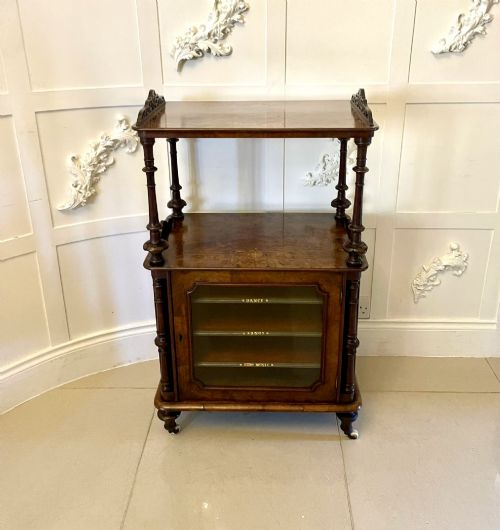
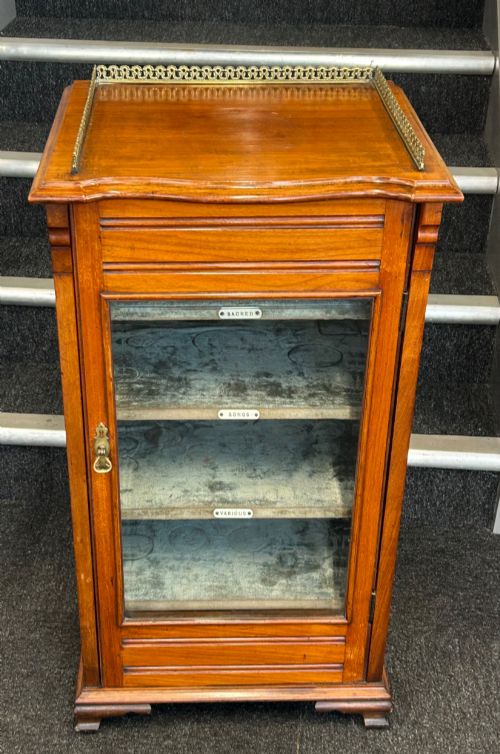
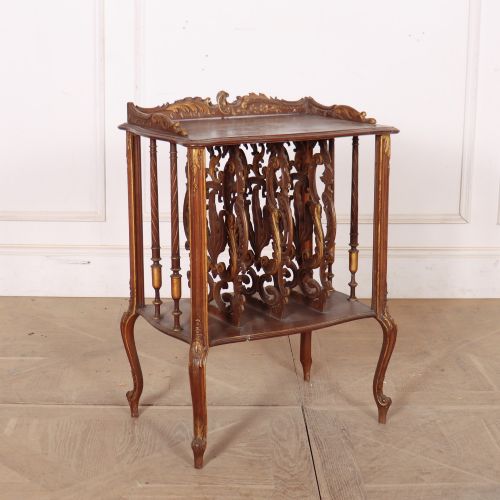
The listings show these items merging into related household forms, including music cabinets, magazine racks, occasional tables and whatnots. These variations reflect how the nineteenth-century stand evolved from a bedside or parlour piece into a multi-purpose furniture item for papers and volumes.
Origins span English workshops and French influences, with styles shifting from Regency lines through Victorian marquetry to Edwardian slimness. The fundamental purpose remains sorting and displaying periodicals and folios within a domestic interior.
What varies in quality
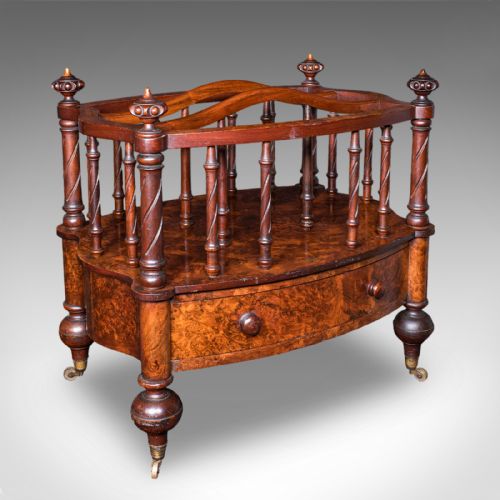
Quality rests in the selection of burr walnut veneer and the precision of the marquetry inlay across the surfaces. Pieces featuring integrated drawers, turned columns and crisp fretwork demonstrate higher ambition from the maker.
Proportion and structural integrity distinguish refined examples from standard production. A heavier timber frame, balanced division slats and intact brass mounts indicate careful initial manufacture.
Vintage Walnut Canterbury Retail Price Guide 2026
Typical asking prices for vintage walnut canterbury among the pieces listed under this phrase on Sellingantiques today, from the lower quarter to the upper quarter. They describe what is for sale here now, not the wider market.
Some nineteenth-century makers concealed extra sliding compartments for stray tuning forks right beneath the music sheets.
The Vintage Walnut Canterbury Glossary
- Canterbury
- A low stand with vertical partitions designed to hold sheets of music or newspapers. The form dates back to the late eighteenth century and continued through the Victorian era.
- Burr walnut
- A veneer sliced from the gnarled growth of a walnut tree, yielding complex, swirling grain patterns. It was favoured for high-status Victorian cabinet work.
- Marquetry
- The art of applying small pieces of veneer to a structure to form decorative patterns or pictures. On these pieces, floral or geometric motifs often adorn the top or door panels.
- Whatnot
- A piece of open shelving furniture designed for displaying ornaments or holding books. Some canterburys incorporate this tiered structure above the main rack.
Vintage Walnut Canterbury: Frequently Asked Questions
What is a walnut canterbury used for today?
These stands serve as functional storage for contemporary magazines, vinyl records and large books beside a sofa or desk. The vertical partitions keep soft-cover items upright and organised.
They also function as small occasional tables or lamp stands in living spaces, adding period timber texture to the room.
How do I date a vintage canterbury?
Dating relies on observing stylistic markers, timber choices and construction methods recorded across the periods. Regency pieces show simpler linear forms, whilst Victorian examples frequently display burr walnut veneers and marquetry.
Edwardian items tend towards slimmer proportions and lighter framing. Examining the secondary woods inside drawers also helps determine the era of manufacture.
Can I use a music cabinet as a canterbury?
Music cabinets share the same domestic purpose of storing printed sheets and bound volumes, though enclosed behind a door rather than held in open slats. Edwardian and Victorian makers produced both formats for the parlour.
Both items suit rooms requiring compact vertical storage for papers, periodicals or writing materials.
Are these stands suitable for small rooms?
The compact footprint of a canterbury or music cabinet allows it to fit neatly beside seating or against narrow wall spaces. Oval lamp tables and slim cabinets take up minimal floor area whilst providing a surface top.
The open partitions also maintain visual lightness in a crowded interior.