



Vintage Wall Console Brackets
Vintage wall console brackets range from carved timber Italian Rococo ornament to gilded 19th century architectural ledges, bought to display porcelain or small sculptures.
Vintage Wall Console Brackets
Vintage wall console brackets encompass architectural wall shelves, carved ledges, and small console mirrors designed to project outward from domestic surfaces. When searching for vintage wall console brackets, buyers encounter varied forms spanning 18th century architectural elements, 19th century Victorian revivals, and 20th century decorative pieces.
The inventory on this page spans from 18th century Italian items to 1930s gilt-framed hanging brackets, incorporating walnut, oak, and Parian porcelain. Architectural wall brackets from the 18th century share floor space with carved giltwood Italian examples from the 1920s and Anglo-Indian designs.
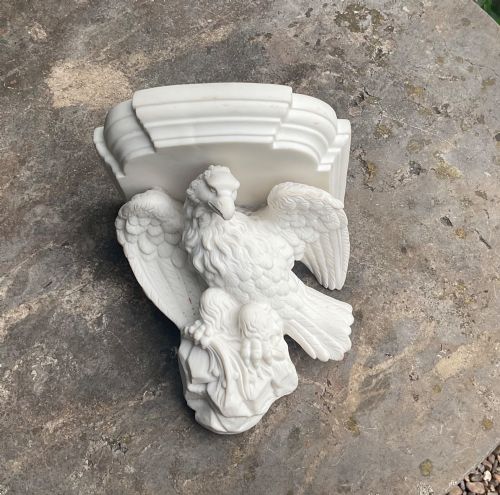
Forms extend beyond simple ledges to include console tables with mirrors and cloakroom shelves with mirror glass inserts. Buyers frequently meet pairs of carved wooden cherub brackets from 1900 alongside single Parian eagle wall brackets dating to 1880.
Materials and construction methods
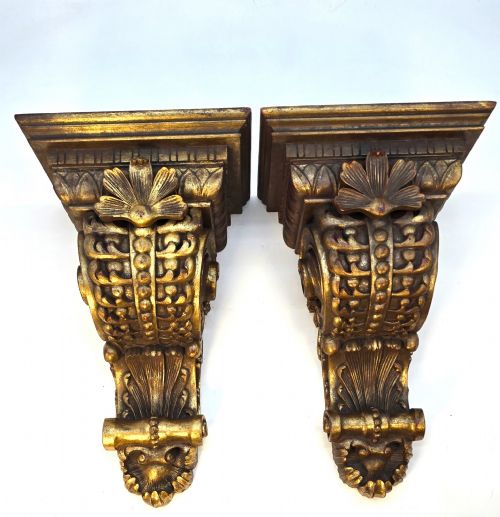
Carved wood forms the backbone of these pieces, utilising timber substrates beneath layers of gesso and gold leaf for traditional Italian Rococo and Baroque revival aesthetics. Giltwood and parcel-gilt finishes appear frequently, adding reflective surface brilliance to deeply carved walnut and assorted carved timber.
Moulded Parian porcelain provides an alternative ceramic medium, seen in sculptural bird figures functioning as structural wall supports. Mirror glass inserts integrate into combined shelf and mirror assemblies designed for hanging in hallways or reception rooms.
Vintage Wall Console Brackets Retail Price Guide 2026
Typical asking prices for vintage wall console brackets among the pieces listed under this phrase on Sellingantiques today, from the lower quarter to the upper quarter. They describe what is for sale here now, not the wider market.
Listings incorporate items spanning from the 18th century through the 1930s, featuring materials such as Parian porcelain, giltwood, and carved walnut.
Assessing quality in carved and gilded brackets
Depth of carving separates standard decorative items from superior examples, where crisp undercutting defines foliage, cherubs, or architectural motifs. Hand-carved timber and detailed gesso work display distinct chisel control absent in mechanical reproductions.
The integrity of the gilding surface determines finish quality, with burnished gold leaf ageing through natural craquelure rather than uniform modern paint. Original structural joinery and intact wall fixing points dictate whether a bracket retains its decorative utility.
The Vintage Wall Console Brackets Glossary
- Giltwood
- Timber coated with gold leaf over a prepared gesso ground. This traditional finish characterises many Italian and revival brackets from the 18th and 19th centuries.
- Gesso
- A plaster-like mixture applied to carved wood as a smooth base for gilding or painting. It allows intricate relief detail to be modelled before the application of gold leaf.
- Parian Porcelain
- A fine white ceramic resembling unglazed marble, developed in the 19th century. It suits detailed sculptural forms like bird and figure wall brackets.
- Parcel-Gilt
- Partially gilded woodwork where specific decorative elements gleam in gold leaf while the underlying wood grain remains visible elsewhere.
- Rococo Revival
- A 19th-century design movement resurrecting 18th-century asymmetrical scrolls and naturalistic ornament. It dominates the decorative style of many Victorian wall brackets.
Vintage Wall Console Brackets: Frequently Asked Questions
How do I hang a heavy console bracket safely?
Heavy carved wood and giltwood brackets require secure wall anchors fixed directly into masonry or internal studs rather than plaster alone. The weight of the timber and any displayed object places outward leverage on the mounting screws.
Using appropriate steel brackets or keyhole fixings ensures the ledge remains flush against the wall surface without tilting.
What were wall console brackets originally used for?
Console brackets served as ornamental wall shelves designed to elevate prized ornaments, clocks, or porcelain figures above eye level. They provided decorative architectural focal points in grand reception rooms and hallways.
Smaller variants also functioned as functional cloakroom ledges or supported integrated mirrors for quick reflections.
How do I distinguish 18th century brackets from later revivals?
Eighteenth-century brackets display hand-cut joinery, dense patination on the timber underneath, and gesso that shows age-appropriate shrinkage cracks. Tool marks left by hand chisels differ from the smoother uniformity found in later revival pieces.
Revival pieces from the 19th and 20th centuries often replicate earlier Baroque or Rococo styles but utilise machine-sawn timber elements or distinct secondary woods.
Can these brackets support heavy ceramic objects?
Support capacity depends entirely on the structural integrity of the backplate, the wall fixing method, and the size of the wooden shelf platform. Solid carved timber brackets generally offer robust weight-bearing capacity for porcelain or small bronzes.
Delicate giltwood or gesso-heavy surfaces require careful consideration of their age and condition before placing heavy items on the ledge.
How should I clean a gilded wooden wall bracket?
Gilded surfaces require extremely gentle dusting with a soft, dry brush to avoid disturbing fragile gold leaf or underlying gesso. Moisture and chemical cleaning agents dissolve historic water-gilding and ruin the patina.
Professional restoration is recommended if structural consolidation or deep cleaning of the gilt surface becomes necessary.