


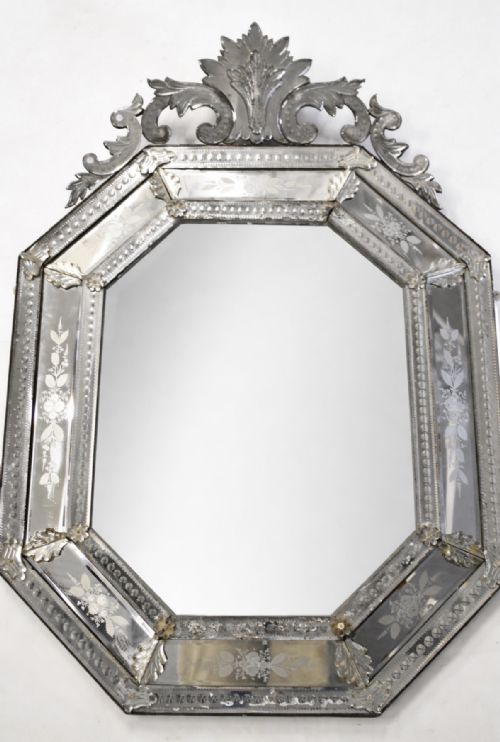


Vintage Venetian Style Mirror
A vintage venetian style mirror brings extraordinary reflective presence and intricate glasswork into a room.
Vintage Venetian Style Mirror
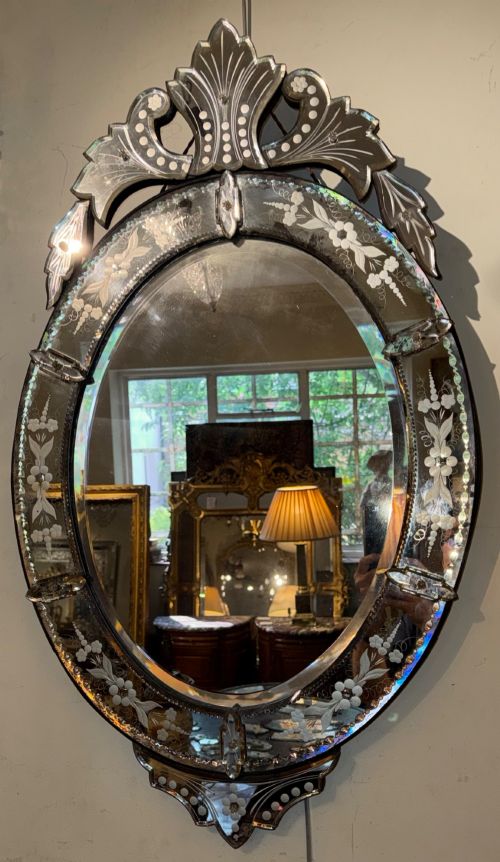
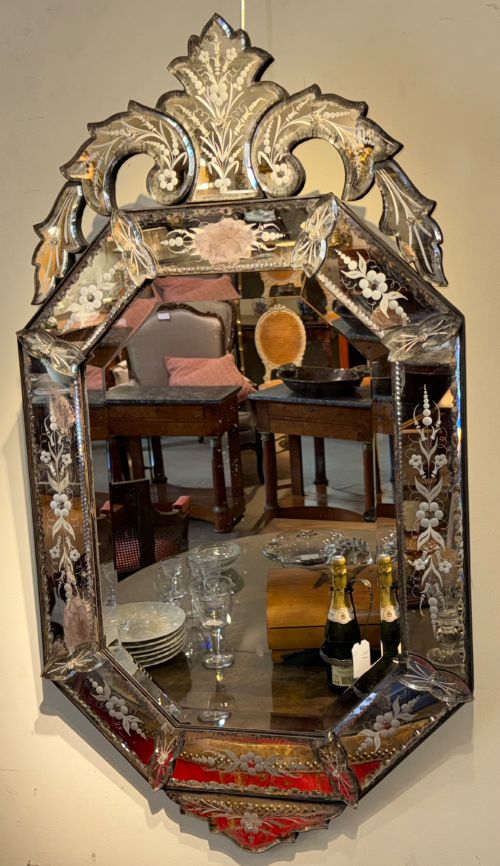
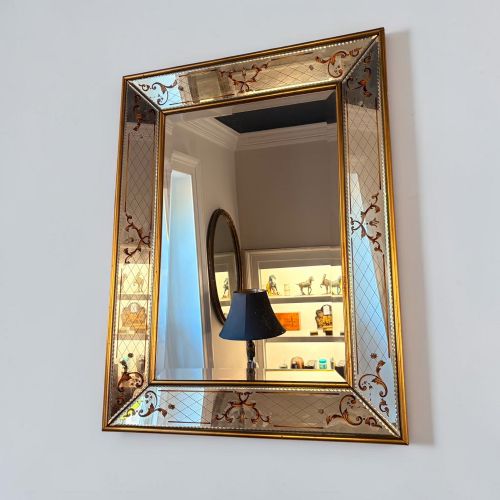
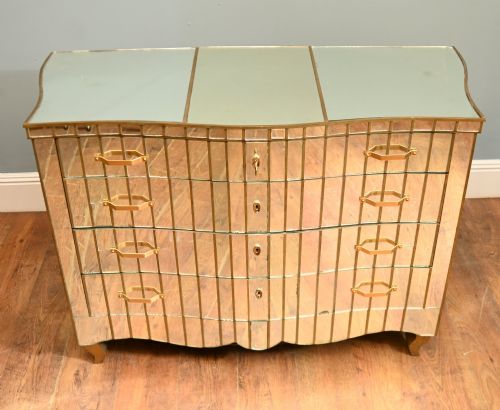
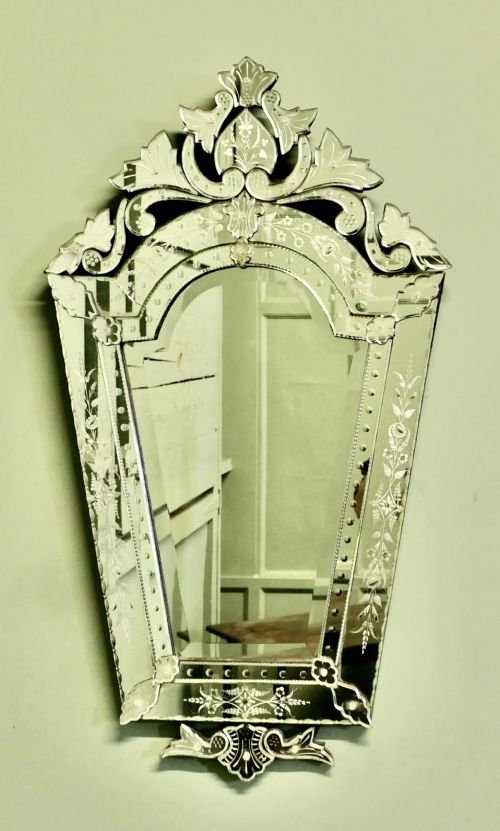
When you search for a vintage venetian style mirror, you encounter decorative looking glasses and wall mirrors originating from the nineteenth and twentieth centuries. These objects typically feature elaborate glass elements, engraved plates, and distinctive frame constructions that capture light from every angle.
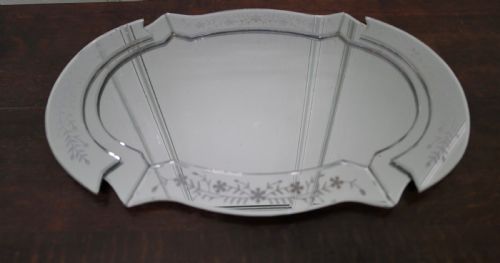
The versions most commonly met on this page span the nineteenth century through the mid twentieth century, encompassing Italian rococo, art deco, and traditional venetian aesthetics. Alongside standard wall mirrors, the selection includes specialised forms such as cushion mirrors, margin-edged pieces, and decorative glass trays.
Makers and artisans utilised traditional techniques to shape glass and timber, resulting in pieces that range from grand wall hangings to hand painted pier glass. Each example demonstrates the enduring appeal of venetian design translated through various historical periods.
How they were made
Construction relies on combinations of glass, mirrored glass, wood, and giltwood, often enhanced by painted wood or gilt bronze mounts. Artisans shaped these materials to form robust backing structures that support delicate glass components.
Techniques include glass cutting, plate engraving, and silvering, which create the characteristic luminous borders and patterned surfaces seen on cushion and marginal mirrors. Frames incorporate carved woodwork and hand-painted details to complement the reflective centre.
Vintage Venetian Style Mirror Retail Price Guide 2026
Typical asking prices for vintage venetian style mirror among the pieces listed under this phrase on Sellingantiques today, from the lower quarter to the upper quarter. They describe what is for sale here now, not the wider market.
The listings span the nineteenth century, 1900, 1930, 1950, and 1960, featuring glass, wood, gilt bronze, and painted wood.
What varies in quality
Quality reveals itself in the depth of the glass engraving and the precision of the margin-edged panels. Superior examples display crisp, deliberate cuts on the plate rather than simple surface etching.
The integration of the frame with the glass elements distinguishes finer pieces, particularly where giltwood, gilt bronze, or ebonised wood supports complex glass pediments and cushion profiles without strain.
The Vintage Venetian Style Mirror Glossary
- Cushion mirror
- A wall mirror with a convex, curved central plate or outward-sloping border panels that project forward from the wall. This construction maximises angled reflections across the room.
- Margin-edged mirror
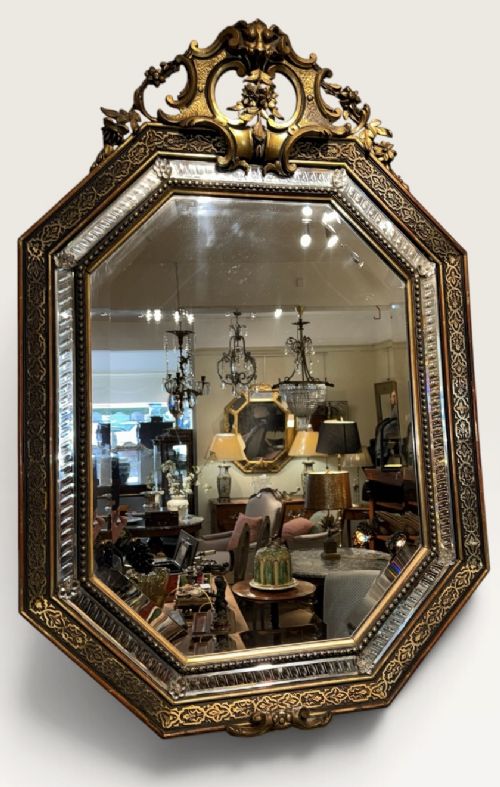
- A looking glass featuring separate border pieces of glass arranged around the central plate, often held by decorative clips or pinned with rosette screws.
- Pier glass
- A tall, narrow mirror designed specifically to hang on the wall space between windows. It frequently matches the proportions of the surrounding architecture.
- Giltwood
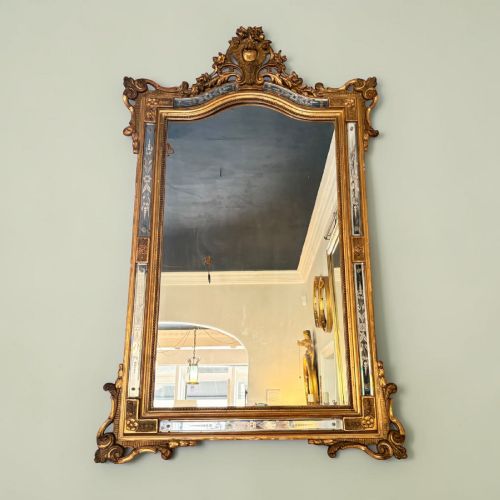
- Timber carved and coated with a thin layer of gold leaf or gilt preparation. It provides a bright, reflective frame finish typical of rococo and classical revivals.
Vintage Venetian Style Mirror: Frequently Asked Questions
What defines the art deco venetian style?
Art deco venetian mirrors combine the clean geometric lines of the 1930s with traditional venetian glass-cutting techniques. They often feature stepped frames and stylised floral or linear engravings rather than heavy scrolling.
These pieces bridge historical craftsmanship with modern modernist sensibilities, making them versatile additions to contemporary and period interiors alike.
How do I clean an antique glass mirror?
Clean the glass gently using a soft microfibre cloth and a mild, ammonia-free glass cleaner sprayed onto the cloth rather than directly onto the mirror. This prevents moisture from seeping behind the silvered backing or damaging the wooden frame.
Exercise caution around engraved sections, painted wooden areas, and gilt bronze mounts, avoiding harsh chemicals that can strip historical finishes.
What is a cushion mirror?
A cushion mirror incorporates outward-sloping glass panels around the central reflective plate, creating a three-dimensional, pillowed profile. This traditional venetian technique captures and refracts light from multiple angles.
Such pieces serve as dramatic focal points in hallways or living rooms, demonstrating intricate glasswork from the nineteenth century.