



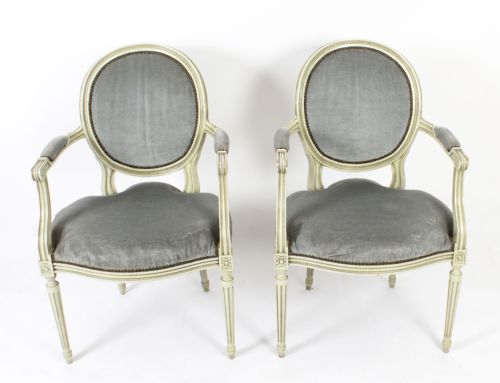


Vintage Velvet Fauteuil
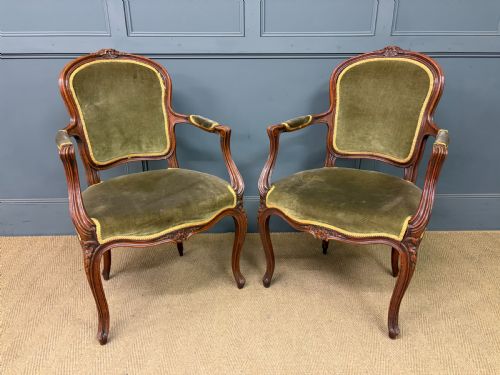
These vintage velvet fauteuil chairs offer open upholstered seating rooted in French revival styles, bringing period presence and tactile colour to a room.
Vintage Velvet Fauteuil
A vintage velvet fauteuil provides traditional open-arm seating, drawing heavily on Louis XV and Louis XVI design vocabularies across the nineteenth and early twentieth centuries. These armchairs typically combine carved wooden frames with plush textile upholstery, originating primarily from French and Victorian cabinet-making traditions.
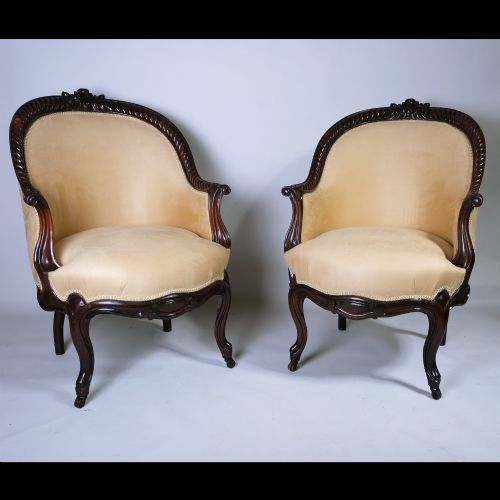
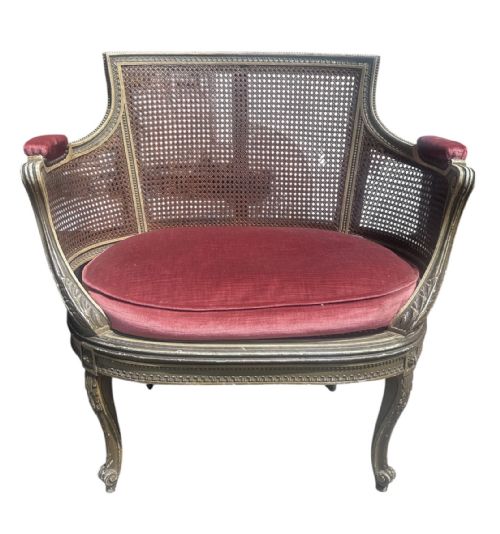
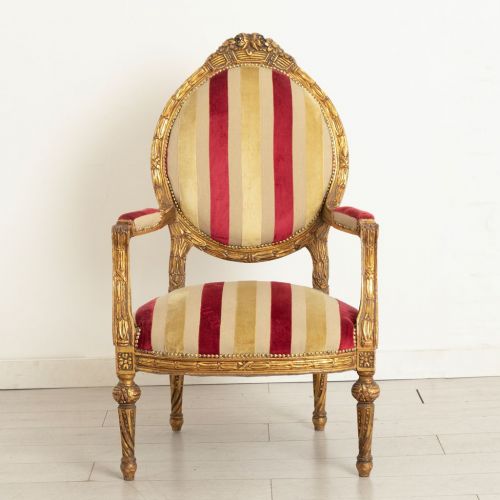
Buyers browsing this selection will encounter various revival aesthetics, including Louis Quinze and Napoleon III forms alongside nineteenth-century salon chairs. The frames range from carved mahogany and walnut to painted and giltwood surfaces, paired with rich pile textiles.
How they were made
The underlying frames of these armchairs rely on traditional timber construction, utilising hardwoods such as walnut, mahogany, beech, and goncalo alves. Carvers shaped these timbers into intricate decorative motifs, while other frames received painted or gilded finishes to achieve formal decorative effects.
Upholstery techniques applied velvet directly over padded structures, complemented by exposed wooden armrests and carved show-wood frames. Brass elements occasionally appeared in structural or decorative capacities to finish the piece.
Vintage Velvet Fauteuil Retail Price Guide 2026
Typical asking prices for vintage velvet fauteuil among the pieces listed under this phrase on Sellingantiques today, from the lower quarter to the upper quarter. They describe what is for sale here now, not the wider market.
This selection spans the nineteenth century through the early twentieth century, incorporating Victorian, Napoleon III, and various French revival periods.
What varies in quality
The distinction between standard and superior examples lies in the crispness and depth of the frame carving, particularly on the crest rails, cabriole legs, and arm supports. Hand-carved mahogany and walnut frames exhibit finer proportional harmony and crisper detail than simpler production pieces.
The choice of finish also dictates distinction, as genuine gilding or carefully layered paintwork interacts differently with light compared to plain timber. Furthermore, the integration of the velvet upholstery with the exposed wood frame dictates the overall visual cohesion of the armchair.
The Vintage Velvet Fauteuil Glossary
- Fauteuil
- An open-framed upholstered armchair originating in France, characterised by exposed wooden arms and a padded back and seat. It provides comfortable formal seating without side padding.
- Louis XV Style
- A design aesthetic reflecting the rococo revival of the eighteenth century, notable for asymmetric curves, cabriole legs, and elaborate floral carvings. Pieces from later centuries often adopt these flowing contours.
- Louis XVI Style
- A neoclassical revival style defined by straight lines, fluted columns, symmetry, and rectangular or oval backs. It stands in direct contrast to the curved exuberance of the preceding Louis Quinze taste.
- Giltwood
- Timber that has been coated with a thin layer of gold leaf or gilt powder to create a lustrous metallic finish. This technique highlights decorative carvings on formal salon chairs.
Vintage Velvet Fauteuil: Frequently Asked Questions
What is a fauteuil?
A fauteuil is a traditional French upholstered armchair featuring open wooden arms. The wooden frame remains partially exposed around the back and seat.
These chairs were designed for formal sitting rooms and parlours, offering comfort combined with decorative woodwork.
How do I date these armchairs?
Dating relies on examining the timber species, carved stylistic details, and construction methods used in the frame. Revival periods often replicate eighteenth-century forms during the nineteenth and early twentieth centuries.
Comparing the specific revival style, such as Louis XV or Louis XVI, helps narrow down the probable manufacturing era.
Where were these chairs placed?
These armchairs served primarily as salon, drawing room, or reception seating within period homes. Their decorative carved frames and upholstered velvet surfaces allowed them to function as both practical seats and decorative focal points.
Pairs were frequently positioned near fireplaces or conversational groupings.
How do I care for velvet upholstery?
Velvet requires gentle brushing to maintain the direction of the pile and prevent flattening over time. Professional cleaning is recommended to preserve the integrity of the fabric fibres.
Keeping the chairs away from direct sunlight prevents the rich colours of the velvet from fading.