



Vintage Upholstery Couch
These vintage upholstery couches bring deep-sprung comfort and robust nineteenth-century timber frames into modern living spaces.
Vintage Upholstery Couch
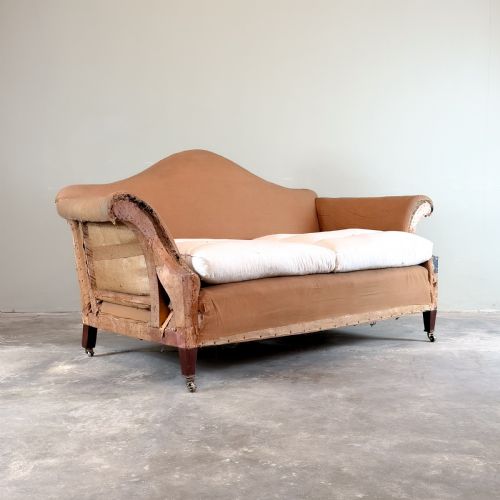
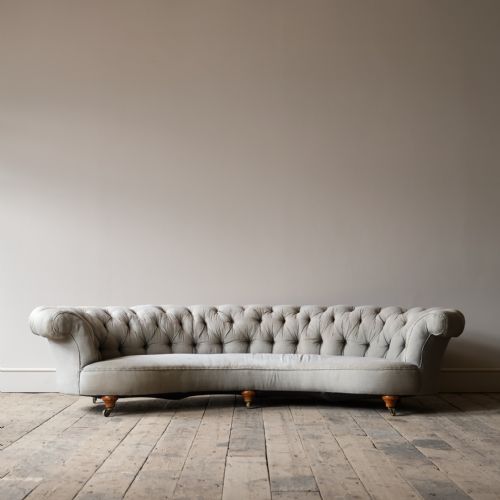
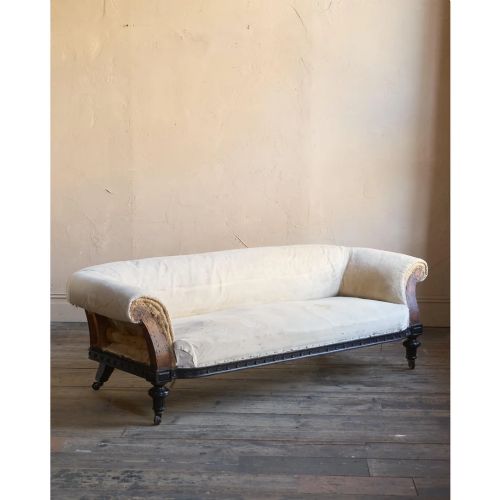
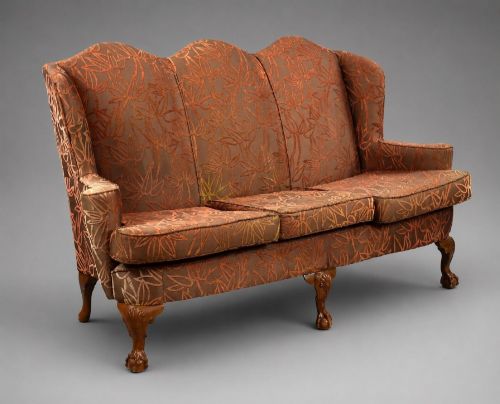
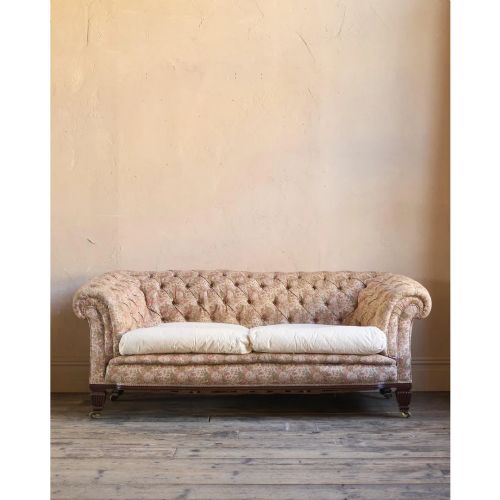
A vintage upholstery couch encompasses large Chesterfield sofas, deep daybeds, and carved wooden settees originating from the nineteenth and early twentieth centuries. Pieces span Victorian, Edwardian, and Regency periods, utilising traditional forms such as camel backs and scroll arms.
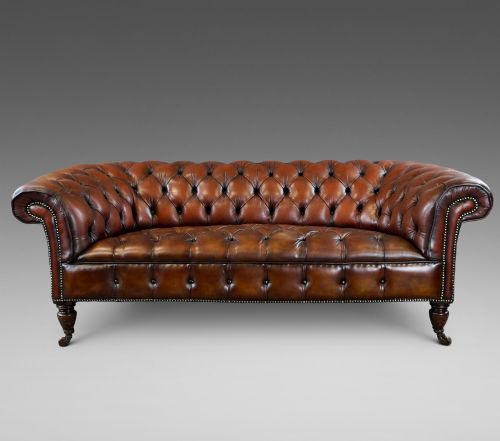
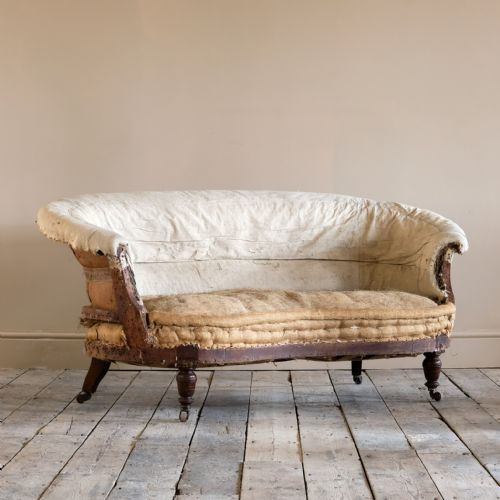
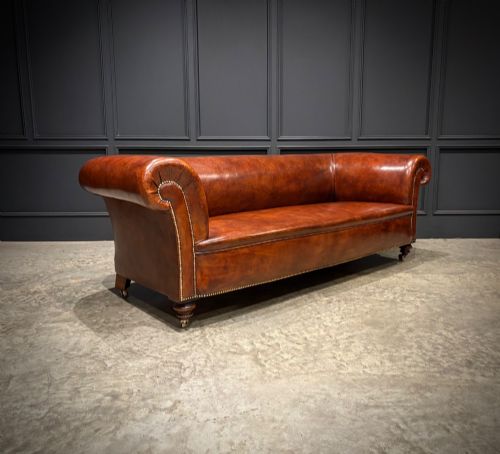
Buyers will most commonly encounter substantial Chesterfield designs and country house sofas upholstered in calico, ticking, or leather. These forms range from grand three-seat configurations down to compact salon settees intended for formal reception rooms.
How They Were Made
Frames utilise solid hardwoods including mahogany, walnut, and simulated rosewood, often featuring carved wooden details or inlaid mahogany surfaces. Structural support relies on heavy timber construction joined by traditional methods.
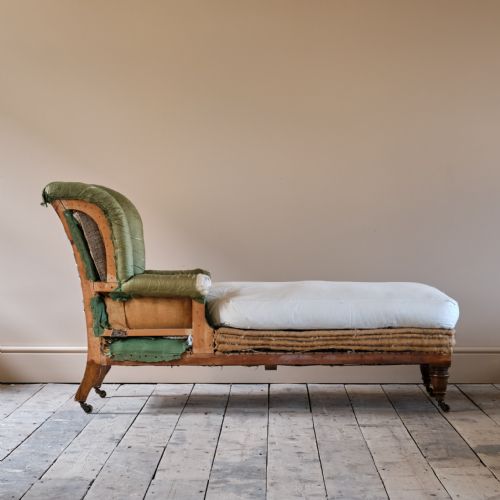
Upholstery foundations incorporate foundational materials such as hessian, cotton, and calico beneath top layers of leather or fabric. Brass hardware often appears as castors or decorative studwork securing the textiles.
Vintage Upholstery Couch Retail Price Guide 2026
Typical asking prices for vintage upholstery couch among the pieces listed under this phrase on Sellingantiques today, from the lower quarter to the upper quarter. They describe what is for sale here now, not the wider market.
The selection spans multiple design movements, incorporating aesthetic movement details, Rococo revival curves, and French provincial forms.
What Varies in Quality
The distinction between tiers rests upon the integrity of the underlying hardwood frame and the depth of the original springing system. Fine examples retain robust timber joinery and substantial internal stuffing rather than degraded modern substitutes.
Surface finish and textile authenticity separate standard output from superior pieces. Original calico, ticking, or patinated leather alongside untouched carved walnut or mahogany elevate the character of a couch.
Howard & Sons·Hampton & Sons
The Vintage Upholstery Couch Glossary
- Chesterfield
- A deep-buttoned sofa characterised by arms and back of the same height. This traditional seating form remains a staple of nineteenth-century British upholstery.
- Canape
- An upholstered French sofa style featuring an exposed wooden frame. These decorative seats often display carved walnut or gold-painted finishes.
- Hessian
- A coarse woven fabric utilised as internal scrim and webbing support. It forms the breathable foundation beneath top upholstery layers.
- Ticking
- A tightly woven cotton or linen fabric traditionally used as mattress and furniture lining. Original examples serve to contain internal stuffing securely.
- Daybed
- A long seating form designed for reclining, combining elements of a chair and a bed. Nineteenth-century versions frequently employ scroll arms and timber frames.
Vintage Upholstery Couch: Frequently Asked Questions
How do I identify a Victorian Chesterfield?
Victorian Chesterfields are distinguished by deep-buttoned upholstery, low backs, and rolled arms set at the same height. They typically feature heavy internal springing and robust wooden frames hidden beneath leather or calico.
Look closely at the proportions and the weight of the piece, as genuine nineteenth-century examples tend to be substantially heavier and more densely packed than later reproductions.
What is country house style?
Country house style refers to relaxed, traditional furnishings accumulated over generations within large British estates. These pieces prioritize comfort through deep seats and generous proportions.
Such couches often display simple scroll arms and practical fabrics like ticking or linen, built for long-term domestic use rather than formal display.
How should I care for leather upholstery?
Leather upholstery requires regular dusting and occasional treatment with suitable conservation balms to prevent drying. Keep antique leather away from direct sunlight and heat sources to preserve the original surface.
Avoid heavy chemical cleaners that strip the natural patina accumulated over decades of use.
Are these couches suitable for daily use?
These pieces were originally constructed for rigorous domestic service using solid hardwoods and durable internal springs. Many remain entirely practical for contemporary living spaces.
Buyers should assess the internal condition and webbing support to ensure the structure can handle everyday sitting and reclining.