






Vintage Upholstered Storage Box
A vintage upholstered storage box offers hidden utility beneath textile and timber, bringing period character and practical containment to any room.
Vintage Upholstered Storage Box
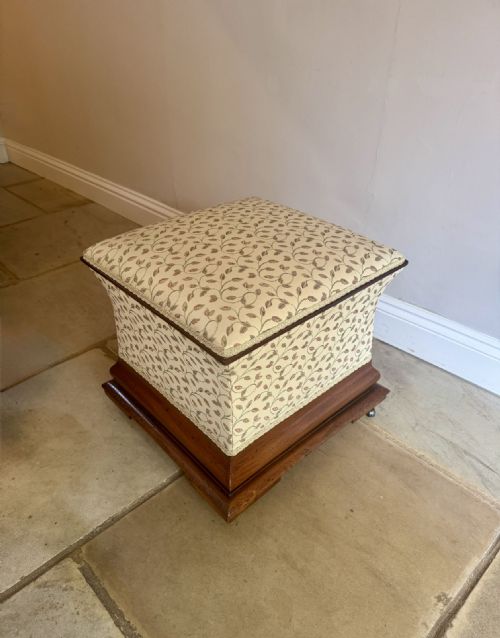
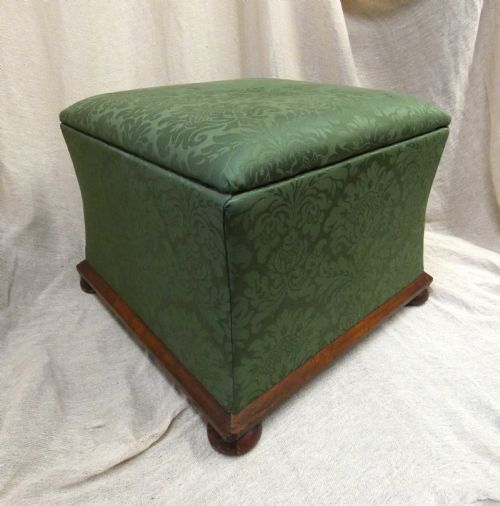
A vintage upholstered storage box combines a lidded compartment with a padded seat or textile top, functioning simultaneously as a container and a stool. These pieces span the Victorian period, the nineteenth century, and the early twentieth century, reflecting varied domestic uses from music rooms to bedrooms.
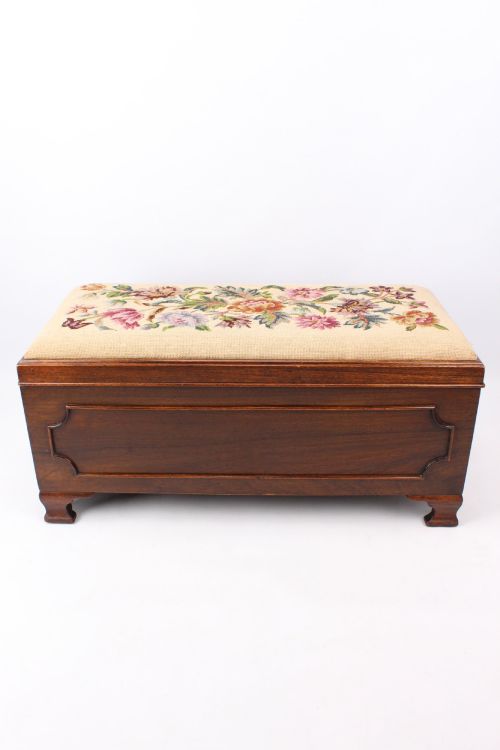
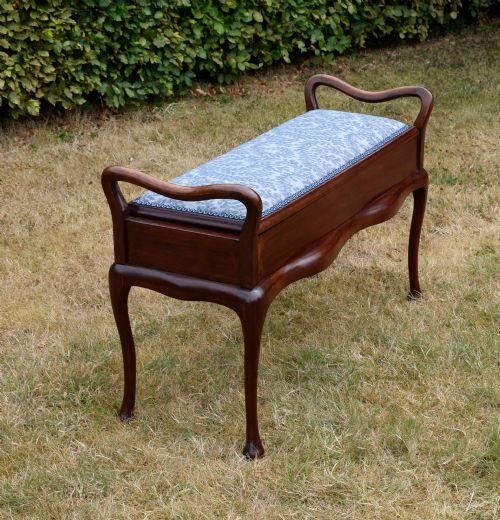
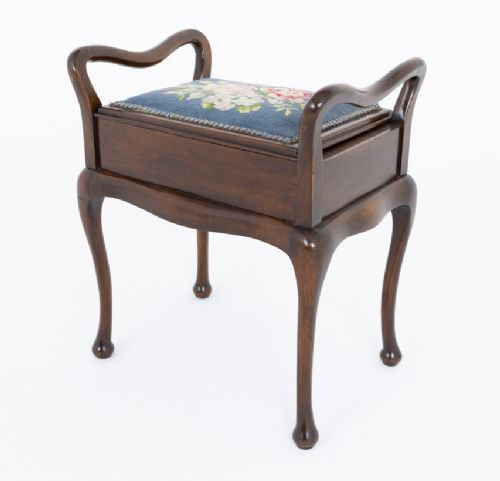
The most common examples you will encounter here are mahogany or walnut frames fitted with hinged seats, alongside pine storage chests and duet piano stools. Formats range from concave-shaped blanket boxes and work boxes to large country house ottomans and reversible box daybeds.
Origins stretch across multiple historical design revivals, including Queen Anne Revival and William IV influences. Whether you examine a modest Edwardian piano stool or a large nineteenth-century birch blanket box, each piece unites utilitarian storage with period upholstery.
Construction and materials
Makers built these pieces primarily from solid hardwoods such as mahogany, walnut, birch, and pine, constructing sturdy timber carcases designed to withstand daily seating and frequent access to the internal compartment. Brass hardware frequently appears on hinges, handles, and adjustable mechanisms.
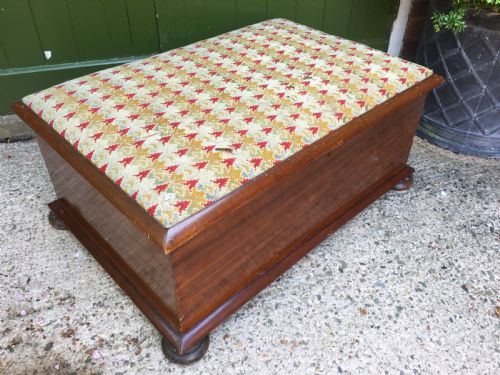
Upholstery forms the defining visual element, utilising leather, wool, fabric, and tapestry, including gros-point needlework tops. These textiles are fixed over padded seats, securing the dual purpose of comfort and concealment for household items.
Design influences span Victorian, Edwardian, Regency, William IV, and Queen Anne Revival periods across the nineteenth and early twentieth centuries.
Judging quality and craftsmanship
Superior examples distinguish themselves through dense timber framing, such as substantial mahogany or walnut carcases, paired with fine joinery and thoughtful proportions like concave shaping. Finer pieces often feature original needlework or high-grade leather upholstery that complements the structural woodwork.
Secondary grade examples rely on simpler pine construction or standard fabric coverings, serving utilitarian functions with less decorative ambition. The presence of specialised mechanics, such as fall fronts or reversible daybed functions, marks higher ambition in design and execution.
Hallett & Sons
The Vintage Upholstered Storage Box Glossary
- Ottoman
- A low, upholstered seat or footstool often featuring a hinged lid that opens to reveal an internal storage compartment. These vessels served multiple rooms in the nineteenth and early twentieth centuries.
- Duet piano stool
- A wider seating form designed for two musicians, frequently incorporating a hinged upholstered seat that lifts to store sheet music. Mahogany and walnut were standard timbers for these items.
- Gros-point
- A type of needlepoint embroidery worked on canvas with a coarse wool thread, frequently found on the upholstered tops of nineteenth-century stools and ottomans. It provides a durable and decorative surface.
- Canterbury stool
- A compartmentalised piece of furniture combining low seating with vertical partitions for holding folios, music, or newspapers beneath or beside the seat. Walnut examples appear in Victorian interiors.
- Fall front
- A hinged panel that drops forward to provide access to the interior storage space of a stool or box, rather than a conventional lifting lid. This mechanism allows retrieval of contents while seated.
Vintage Upholstered Storage Box: Frequently Asked Questions
What is a box ottoman?
A box ottoman is a dual-purpose furnishing featuring a padded top that lifts to reveal a deep compartment for blankets, linens, or personal items. These pieces combine comfortable seating with concealed storage.
They emerged strongly in nineteenth-century domestic interiors as practical solutions for bedroom and parlour organisation. The exterior woodwork typically matched prevailing period styles like Victorian or Edwardian design.
How do I date a Victorian piece?
Dating a Victorian piece involves examining the timber species, construction methods, and upholstery materials used in the carcase. Mahogany and walnut frameworks combined with hand-stitched textiles generally point to nineteenth-century workshops.
Stylistic cues such as Queen Anne Revival details or specific hardware like brass hinges offer further chronological markers. Comparing the joinery style to documented nineteenth-century cabinet-making techniques confirms the era.
Can these fit modern interiors?
These storage boxes integrate easily into contemporary rooms by serving practical functions as coffee table alternatives, hallway seats, or bedroom blanket chests. Their enclosed storage helps reduce visible clutter.
Mixing period timber tones and traditional upholstery like leather or tapestry adds textural contrast to modern living spaces. Their robust hardwood construction ensures they remain durable for daily household use.