




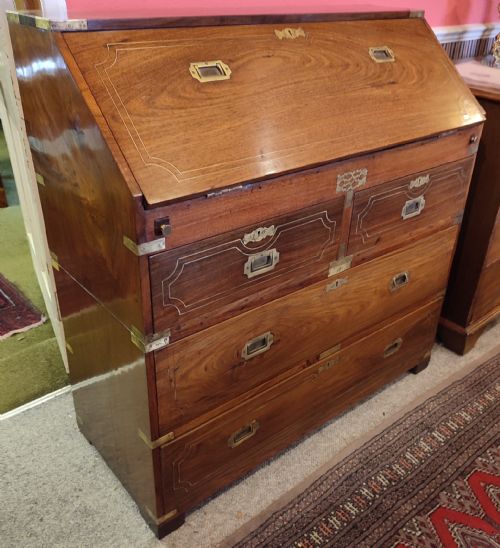


Vintage Two Part Chest
A vintage two part chest offers practical separation and transport, uniting robust timber with fitted brass details.
Vintage Two Part Chest
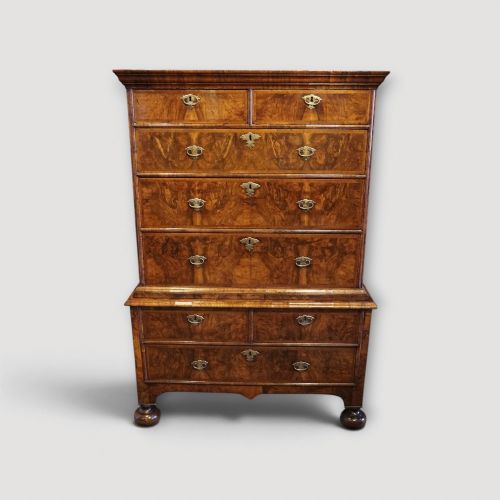
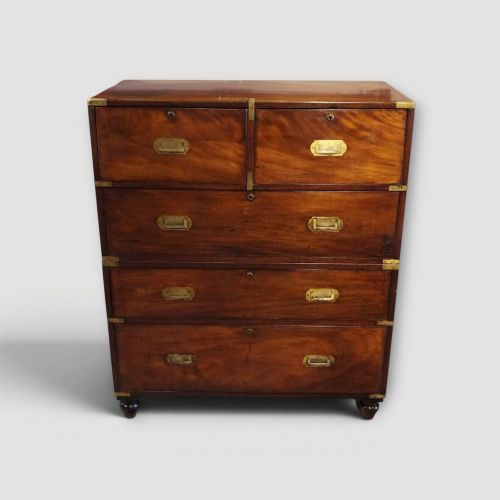
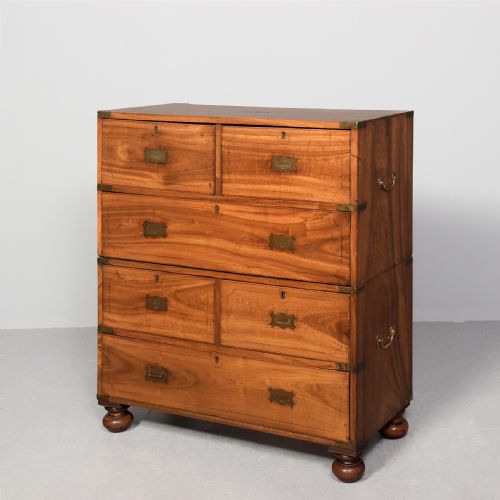
A vintage two part chest splits horizontally into two modular sections to ease movement, often taking the form of campaign furniture or a tallboy. These pieces range from early walnut examples down to late Victorian pieces built for travel.
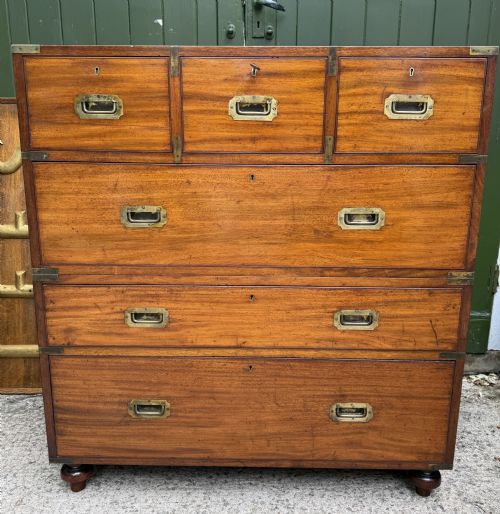
Mahogany, teak, camphor wood and oak form the primary bodies, frequently paired with brass corners and flush handles. The separation line sits mid-way, allowing officers and travellers to pack and shift heavy wardrobes in distinct segments.
Most entries belong to military styles or Georgian and Victorian periods, carrying drawers or secretaire fitted writing sections. Buyers encounter modular chests-on-chest and campaign cabinets designed specifically for division.
Materials and construction
Cabinet makers joined dense hardwoods like mahogany, teak, padouk and camphor wood to withstand humidity and frequent transit. These timbers take tight joinery and hold structural integrity when separated into distinct halves.
Brass strapping, corner brackets and inset carrying handles reinforce the weak points of travelling furniture. Screws and flush fittings protect the wood from knocks during long journeys across land and sea.
Vintage Two Part Chest Retail Price Guide 2026
Typical asking prices for vintage two part chest among the pieces listed under this phrase on Sellingantiques today, from the lower quarter to the upper quarter. They describe what is for sale here now, not the wider market.
Camphor wood chests carried a natural aromatic defence against insects, keeping uniforms fresh on long voyages at sea.
Judging quality in modular chests
The precision of the dividing joint and the tightness of the brass hardware distinguish finer workshops from standard utility pieces. Clean alignment between the upper and lower carcase shows careful initial assembly.
Timber selection dictates the overall presence, with figured walnut and richly grained mahogany sitting above plain secondary woods. Original brass fittings and functioning internal secretaire drawers elevate the piece.
Army & Navy
The Vintage Two Part Chest Glossary
- Campaign furniture
- Portable furniture built in sections with recessed handles and protective brass corners for transport.
- Chest-on-chest
- A tall storage unit formed of a smaller upper chest stacked directly upon a deeper lower base.
- Secretaire
- A desk disguised as a chest drawer, featuring a drop-front writing flap and internal pigeonholes.
- Flush handle
- A metal pull inset level with the wood surface so it avoids snagging during transit.
- Tallboy
- A traditional tall chest of drawers standing higher than a standard dressing chest.
Vintage Two Part Chest: Frequently Asked Questions
Why do these chests split in two?
Splitting the carcase into two separate boxes allowed officers, merchants and travellers to pack and carry heavy storage through narrow ship hatches and rugged terrain. Each half remained manageable for a single porter.
The horizontal split also protected the contents by distributing weight evenly across smaller structural units during long journeys.
How do I spot a campaign chest?
Look for recessed brass handles, reinforced brass corners, and side carrying brackets designed to prevent damage during movement. The presence of a two-part construction is another primary indicator.
Interior fitted drawers and secretaire compartments often feature alongside these exterior protective metal mounts.
What timbers were commonly used?
Cabinet makers relied on durable hardwoods such as mahogany, teak, camphor wood, padouk and oak. These woods resisted warping and endured harsh climates during colonial service.
Earlier examples utilised walnut before mahogany and exotic foreign timbers became dominant in the Georgian and Victorian eras.
Where were these pieces used?
These modular chests travelled with British military officers, diplomats and colonial administrators across distant outposts. They served as portable wardrobes and writing desks in tents and temporary quarters.
At home, similar tallboy and chest-on-chest forms provided permanent bedroom storage for country houses and town residences.