

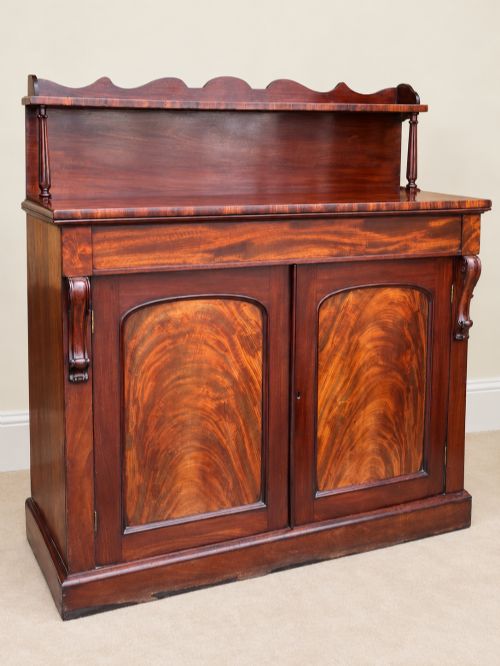
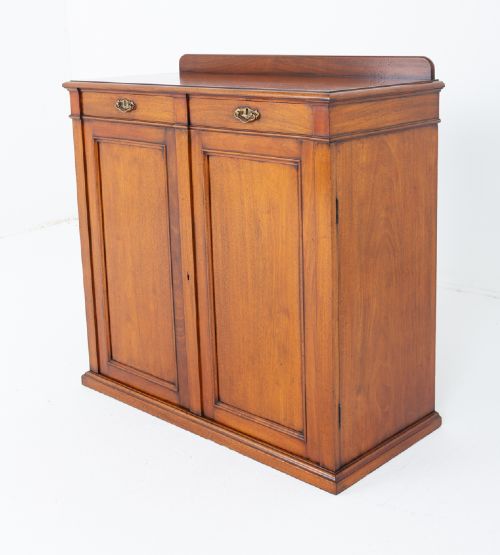
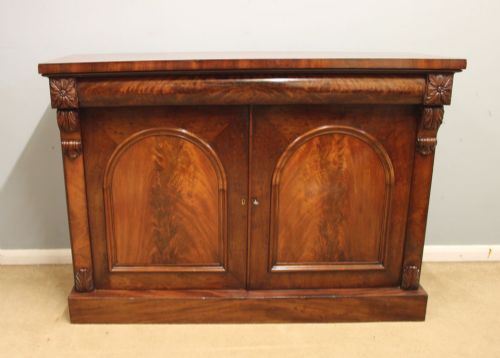
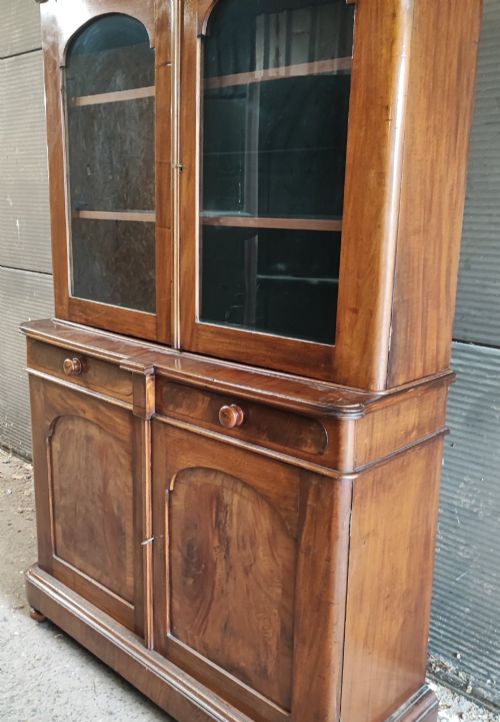
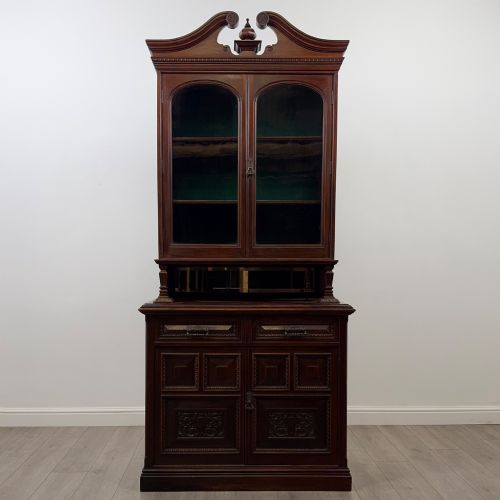
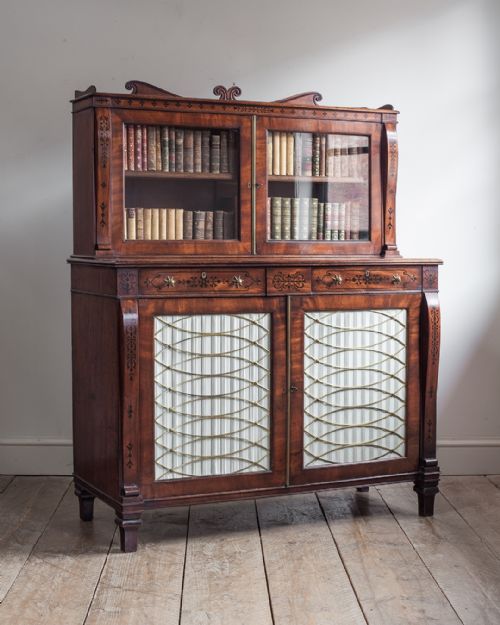


Vintage Two Door Chiffonier
These vintage two door chiffonier pieces are timber side cabinets with enclosed lower storage, offering timeless utility and classic proportions for any interior.
Vintage Two Door Chiffonier
A vintage two door chiffonier is a low-standing side cabinet, often topped with a shelf superstructure or bookcase, designed for formal dining rooms and parlours. The pieces on this page span the Regency, Georgian, and Victorian periods, alongside specific dates such as eighteen-fifty, eighteen-sixty, and nineteen-hundred.
Materials and construction methods
Cabinet makers relied heavily on dense hardwoods, employing mahogany, flame mahogany veneer, rosewood, pollard and burr oak, Irish cedar, pine, and satinwood. These timbers were selected for their rich grain patterns and durability, providing a stable foundation for frequent daily use.
Decorative details included brass inlay and glass panels, particularly on the upper bookcase sections and cabinet doors. Surfaces were polished to highlight the natural figures of the wood, while pediments and serpentine fronts demonstrated advanced carpentry techniques.
Vintage Two Door Chiffonier Retail Price Guide 2026
Typical asking prices for vintage two door chiffonier among the pieces listed under this phrase on Sellingantiques today, from the lower quarter to the upper quarter. They describe what is for sale here now, not the wider market.
Some nineteenth-century makers secreted clever little cellar drawers inside these cabinets for locking away the expensive spirits.
Distinguishing exceptional examples
The degree of figuration in the timber veneer dictates much of the visual weight, with heavily figured flame mahogany and burr oak sitting at a higher tier than plain surfaces. Cabinetry that integrates precise brass inlay work or delicate satinwood elements requires superior craftsmanship.
Proportion and structural integrity separate standard utility cupboards from refined drawing-room pieces. Well-executed details such as swan neck pediments and balanced proportions indicate a higher grade of manufacture from the workshop.
The Vintage Two Door Chiffonier Glossary
- Chiffonier
- A low sideboard or cabinet, typically featuring a two-door lower cupboard and often surmounted by a shelf or bookcase. It evolved during the nineteenth century to serve both display and storage functions.
- Flame Mahogany
- A veneer cut from timber where the grain creates a distinctive flickering flame pattern. It was widely utilised on high-end furniture surfaces.
- Regency
- A British design period spanning the early nineteenth century, characterised by neoclassical influences and clean architectural lines. Pieces from this era often incorporate dark woods and subtle brass details.
- Serpentine Front
- A cabinet front that curves outward in the centre and inward at the sides. This contour demands advanced woodworking skill to execute cleanly.
- Pediment
- The decorative crowning feature situated at the top of a bookcase or cabinet. Swan neck variations curve outward and upward to a central terminal.
Vintage Two Door Chiffonier: Frequently Asked Questions
What is a vintage two door chiffonier used for?
These cabinets were originally placed in dining rooms and living spaces to store tableware, linens, and books while providing a surface for serving.
Today, they function well in modern hallways, living rooms, and bedrooms to store household items and display decorative objects on top.
How do I date a chiffonier?
Dating relies on identifying stylistic markers, timber choices, and construction techniques associated with periods like the Regency, Georgian, and Victorian eras.
Earlier pieces often feature lighter exotic woods or architectural brass inlay, while mid-nineteenth-century examples tend toward heavier proportions and darker solid mahogany.
Are these pieces made of solid wood?
Construction typically combines solid timber frames with selected decorative veneers applied to primary surfaces, such as flame mahogany or satinwood.
Secondary woods like pine were often used for internal framing and drawer linings to ensure structural stability.
How do I care for a mahogany chiffonier?
Keep the timber away from direct sunlight and heat sources to prevent the wood and delicate veneers from drying out or splitting.
Regular dusting with a soft, dry cloth and occasional application of appropriate furniture wax will preserve the finish.