
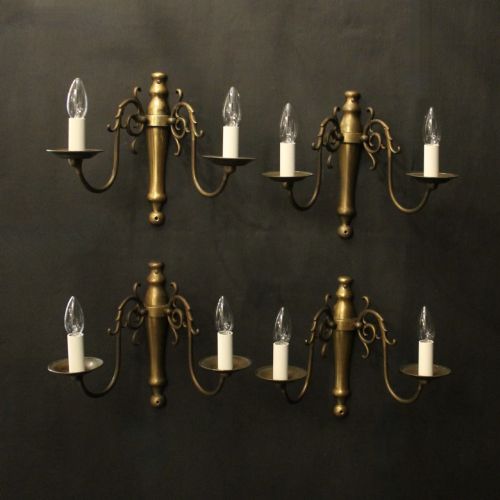
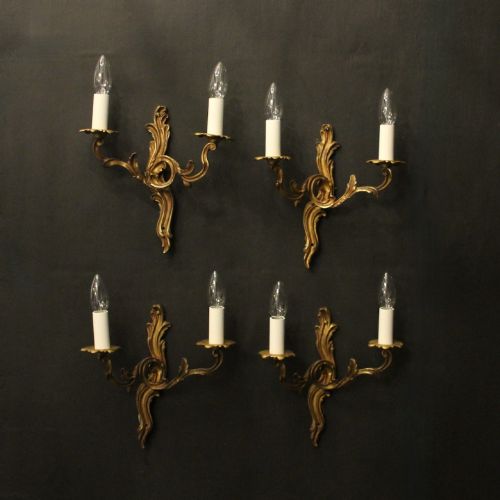

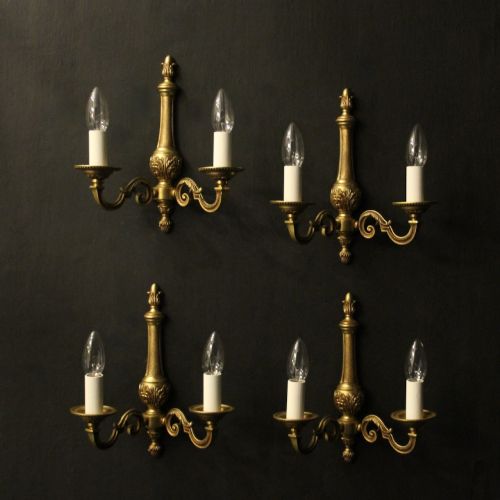
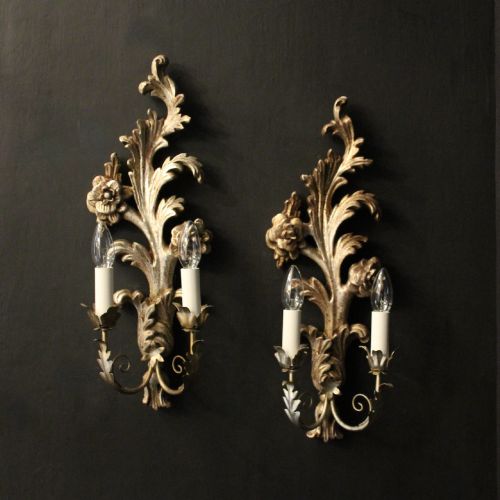
Vintage Twin Light Sconces
Vintage twin light sconces bring paired illumination to walls, channelling decades of French and English metalwork into living spaces.
Vintage Twin Light Sconces
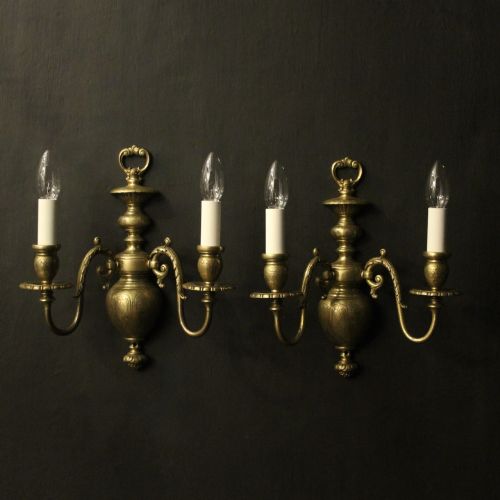
Vintage twin light sconces encompass wall-mounted light fittings designed with two branches or arms to hold candles or electric bulbs. When searching for vintage twin light sconces, buyers encounter lighting fixtures originating predominantly from the early twentieth century, alongside Victorian and nineteenth-century examples.
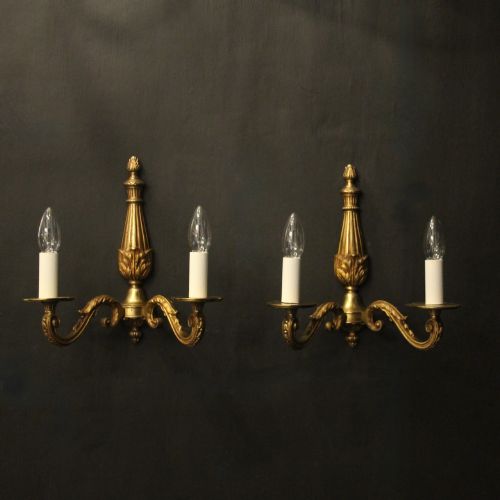
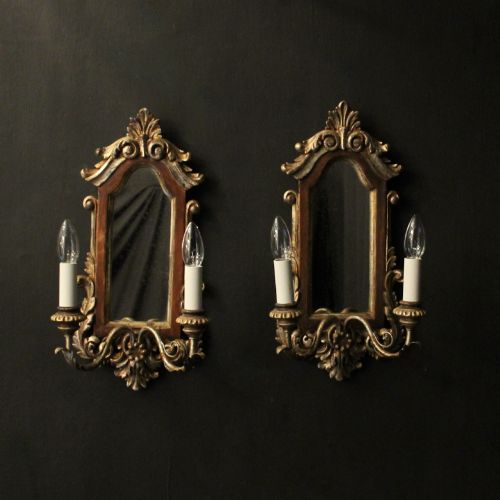
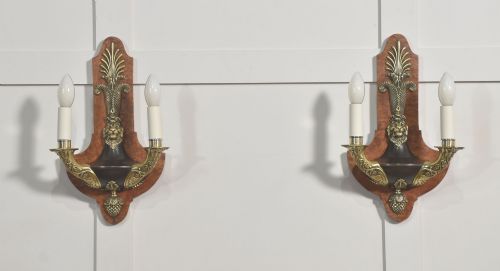
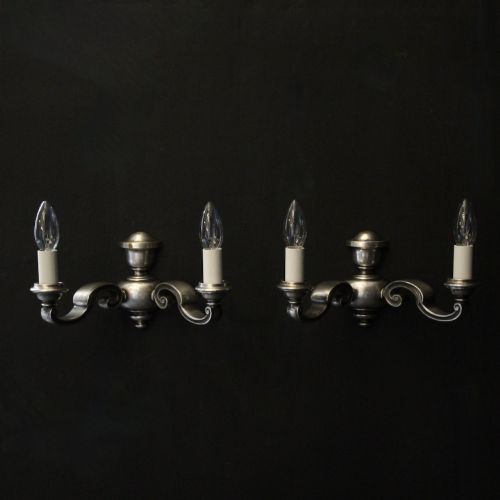
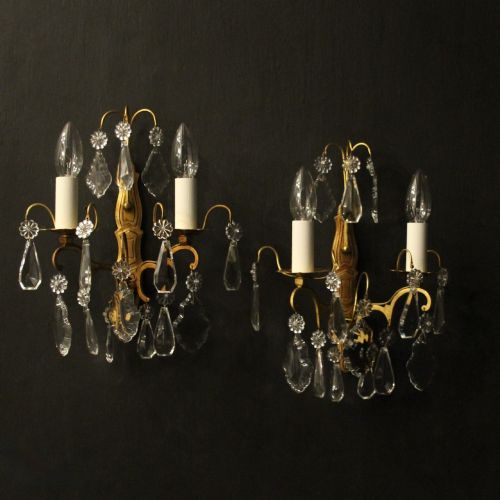
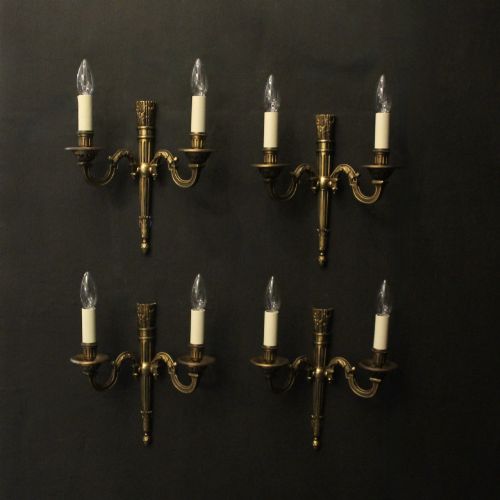
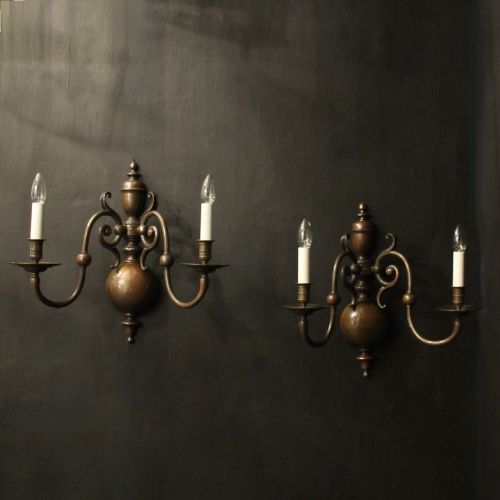
The selection on this page leans heavily towards French production from the 1920s and 1930s, alongside English brass and bronze pieces. Forms range from standard twin-arm wall lights and girandoles to half-lanterns and candle lamps designed for domestic interiors.
How they were made
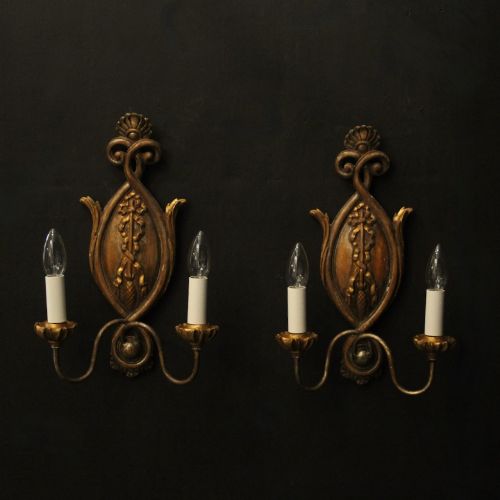
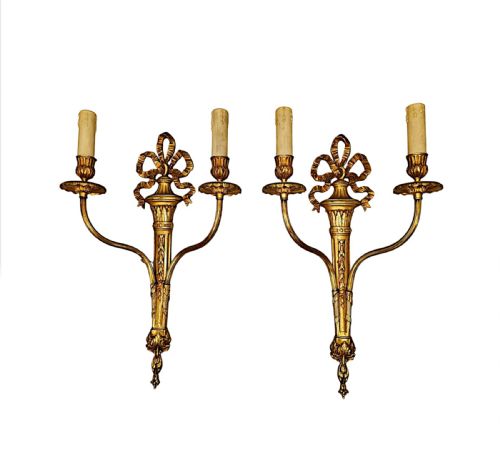
Maker workshops utilised metals such as brass, bronze, and gilt bronze, often applying a gilded finish to create reflective surfaces for candlelight. Silver plating and carved giltwood also appear across the selection, paired with glass crystal elements.
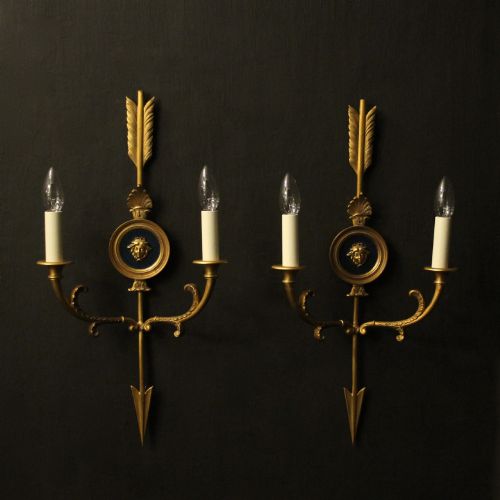
Casting methods allowed artisans to shape intricate forms including ribbon motifs, rococo scrolls, and neoclassical details. These metal and wooden bodies required careful assembly by hand to support twin branching arms securely on partition or masonry walls.
Object forms include standard wall lights alongside girandoles, candle lamps, half-lanterns, and reflector sconces.
What varies in quality
Quality rests in the crispness of the metal casting and the depth of the gilding applied to the bronze, brass, or carved wood. Superior examples display sharply defined ornamentation, such as deep relief in rococo scrolls or finely detailed ribbon twists, rather than soft or blurred edges.
The integrity of the construction distinguishes finer sconces, seen in how firmly the twin arms join the backplate and the weight of the chosen materials. Balance and proportion dictate visual success, separating standard commercial production from workshop pieces designed for formal rooms.
Casier
The Vintage Twin Light Sconces Glossary
- Girandole
- A decorative wall sconce featuring a mirror or highly reflective backplate designed to multiply the light from candles. These fixtures combine carved wood or metal frames with branching candle holders.
- Ormolu
- Gilded bronze produced by applying a mercury and gold amalgam to a bronze base, commonly found on French lighting fixtures. This technique yields a durable, rich golden surface.
- Rococo Revival
- A nineteenth-century style drawing on eighteenth-century French design, characterised by asymmetrical scrolls, shell motifs, and curving plant forms. Sconces in this style exhibit exuberant, flowing lines.
- Giltwood
- Timber, often gessoed and carved, coated with a thin layer of gold leaf. Florentine workshops frequently employed this technique for decorative wall lights.
Vintage Twin Light Sconces: Frequently Asked Questions
How were twin light sconces used?
These fixtures served to illuminate rooms by holding candles or oil burners mounted at eye level or above mantelpieces. Their paired arms doubled the available flame light in domestic interiors.
Positioned in pairs flanking mirrors, doorways, or fireplaces, they distributed ambient illumination evenly across a wall before the widespread adoption of domestic electricity.
Are these wall lights wired for electricity?
Many surviving examples retain their original candle sockets or have been adapted for modern electrical wiring by dealers and specialists. Buyers should check individual listings to see whether a piece is set up for candles or electrified.
Rewired fixtures allow integration into contemporary lighting circuits while preserving the historical appearance of the metalwork and arms.
How do I identify French styles?
French pieces often display distinct design idioms such as rococo scrolls, neoclassical symmetry, or empire motifs like ribbons and urns. Workshops in France favoured gilded brass and bronze for these decorative wall fittings.
Details like convex half-lanterns and elaborate gilt casting point directly to continental manufacturing traditions from the early twentieth century and earlier.