


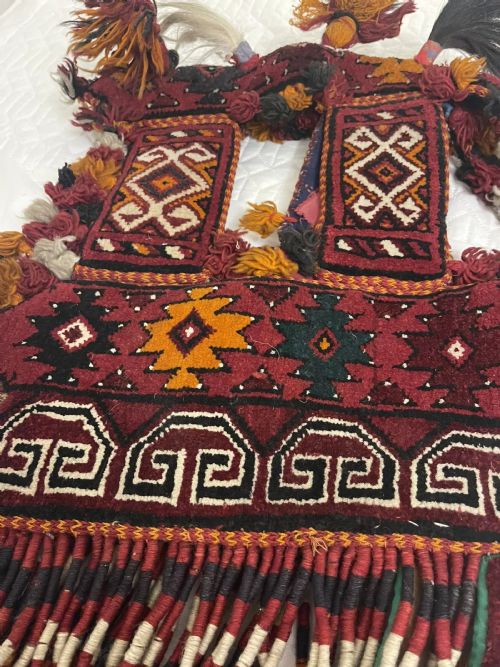


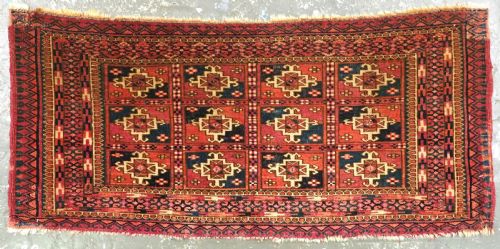

Vintage Turkoman Rug
These vintage turkoman rug pieces bring bold Central Asian tribal geometry and deep madder tones straight into a modern room.
Vintage Turkoman Rug
A vintage turkoman rug encompasses tribal woven textiles produced across Central Asia by nomadic and semi-nomadic groups. Buyers searching this phrase encounter floor rugs, runners, tent bands, and trapping fragments spanning the nineteenth century through the early twentieth century.
The pieces most frequently met on this page include room-size rugs and smaller dowry or bag faces bearing characteristic repeated guls. These tribal weavings function effectively as floor coverings, wall hangings, or striking textile art.
Origins vary across specific tribal lineages such as Tekke, Yomut, and Salor or Saryk traditions. Each group maintains distinct structural nuances and palette preferences whilst sharing a deep foundation in nomadic craftsmanship.
Materials and construction
These textiles rely primarily on durable wool foundations and piles, occasionally incorporating cotton for structural warps or supplementary details. Silk highlights appear on specific nineteenth-century pieces to lend a subtle sheen to the primary geometric motifs.
Nomadic weavers knotted these wool structures by hand, utilising dense pile construction designed to withstand generations of daily use inside tents and yurts. Structural elements like tent bands and camel trappings showcase specialised narrow-loom techniques alongside flatweave and pile combinations.
Vintage Turkoman Rug Retail Price Guide 2026
Typical asking prices for vintage turkoman rug among the pieces listed under this phrase on Sellingantiques today, from the lower quarter to the upper quarter. They describe what is for sale here now, not the wider market.
Current listings span the nineteenth century through the early twentieth century, utilising wool, cotton, and silk materials across various tribal rug and trapping formats.
Distinctions in quality
Knot density and structural tightness set finer examples apart from coarser everyday utility pieces. Higher quality is visible in the precision of the geometric layout and the disciplined execution of complex gul patterns.
The depth and saturation of natural dye work dictate visual success across the surface. Superior pieces maintain rich madder reds and crisp contrasting tones that retain their vibrancy over decades of wear.
The Vintage Turkoman Rug Glossary
- Gul
- The repeated octagonal or medallion motif that forms the primary decorative unit across most tribal designs. These motifs often identify the specific weaving tribe.
- Chuval
- A large storage bag face produced by nomadic groups for domestic use inside tents. These rectangular panels frequently survive as standalone decorative wall hangings.
- Mafrash
- A smaller storage bag face or bedding bag panel created with intricate pile weaving. Collectors prize these fragments for their concentrated geometric layouts.
- Madder
- A natural vegetable dye derived from plant roots producing the characteristic deep red hues found throughout these textiles. It provides the dominant warm backdrop for secondary tones.
- Tent band
- A long, narrow woven strip utilised structurally inside a yurt or tent for tension and decoration. Examples range from modest lengths to extensive ornamental bands.
Vintage Turkoman Rug: Frequently Asked Questions
How do I clean a tribal rug?
Professional specialist cleaning remains essential for fragile wool and silk textiles. Avoid standard household washing methods that can bleed natural dyes.
Gentle surface vacuuming without a beater bar removes everyday dust safely. Keep the textile away from direct sunlight to preserve the natural wool colours.
Can these rugs be hung on walls?
Many smaller bag faces and tent bands function brilliantly as textile wall art. Proper mounting distributes the weight evenly across the entire upper edge.
Use a fabric sleeve or specialised non-damaging clamps rather than piercing the wool directly. Ensure the hanging method allows the textile to breathe naturally.
How are different tribal groups identified?
Specific structural traits, border arrangements, and repeating gul motifs separate groups like the Tekke and Yomut. Palette choices also offer clues regarding the weavers' regional origins.
Comparing knot direction and edge finishes helps determine the likely nineteenth-century workshop or nomadic subgroup. Reference texts on Central Asian weaving assist in confirming these attributions.