
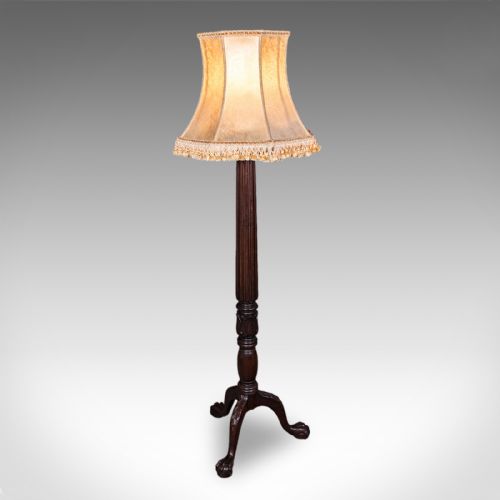
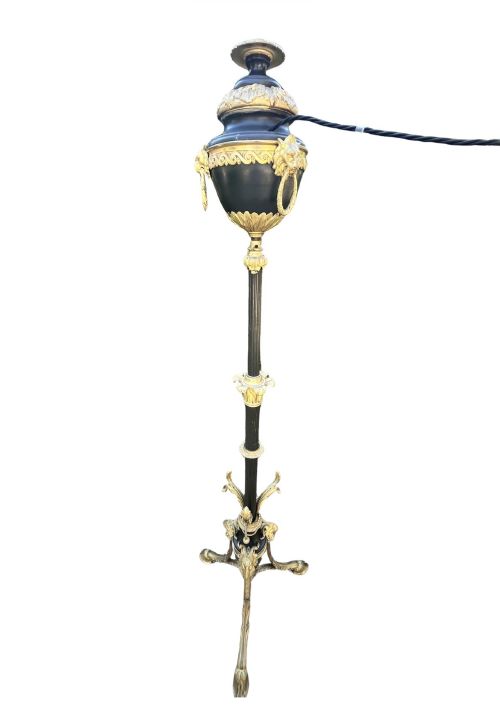

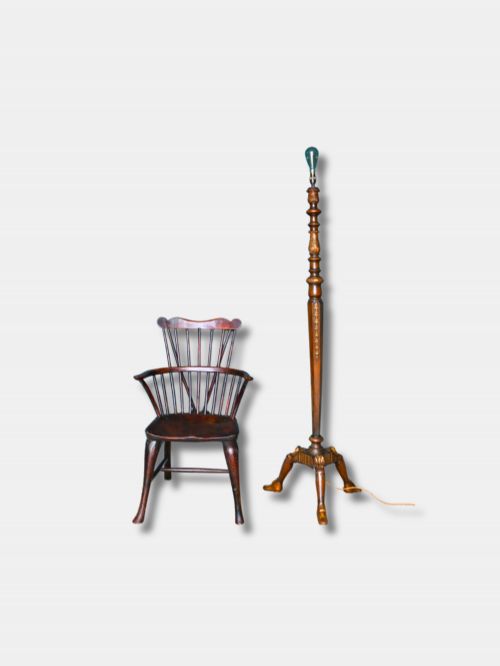


Vintage Tripod Light Stand
These vintage tripod light stand pieces bring adjustable height and sturdy three-legged bases to living spaces through floor lamps and standard lamps.
Vintage Tripod Light Stand
When you search for a vintage tripod light stand, you encounter floor lamps, standard lamps, and lamp bases designed to elevate illumination across a room. The selection spans the nineteenth century through the early twentieth century, taking the form of telescopic standards, standard oil lamps, and converted lamp tables.
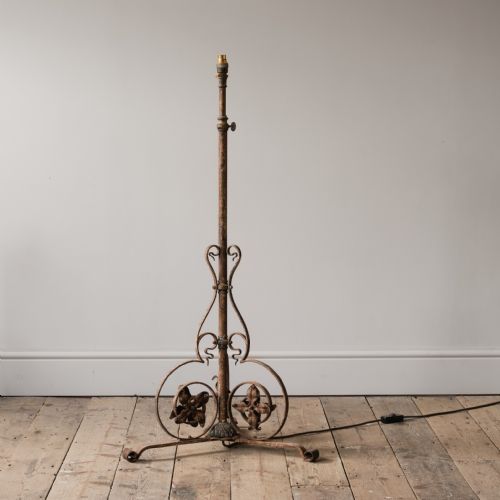
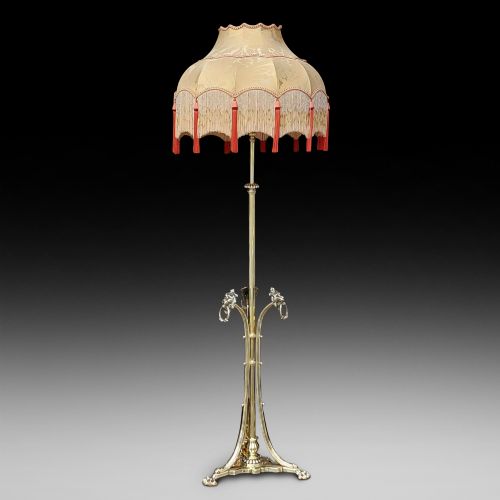
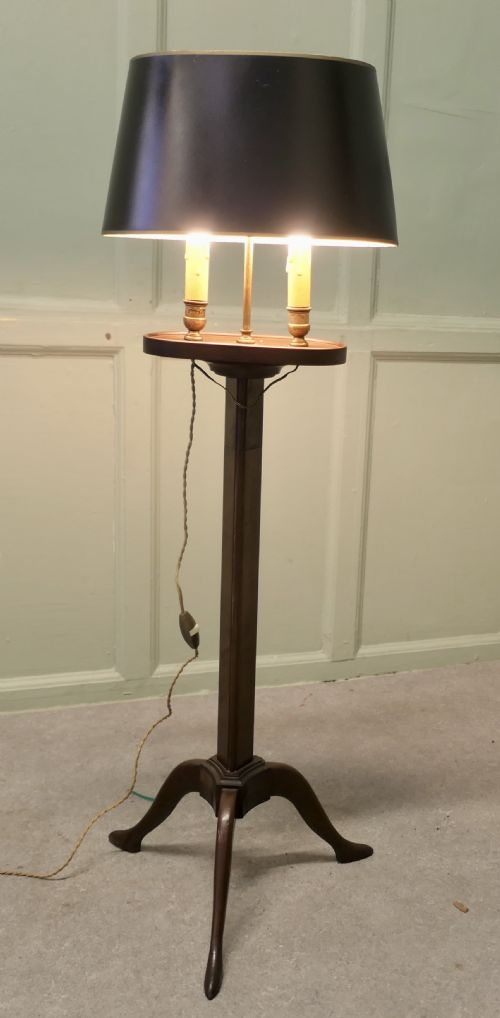
Brass, wrought iron, and mahogany dominate the physical forms, often styled in Victorian, Arts and Crafts, or Art Nouveau aesthetics. You meet adjustable blacksmith-made pieces alongside slender Edwardian brass standards and heavy pricket candlesticks mounted on three-legged supports.
How they were made
Makers utilised cast and turned brass, wrought iron, and dense timbers like mahogany, walnut, and rosewood to construct the three-legged bases and telescopic shafts. Metal components frequently feature adjustable mechanisms, allowing the height to shift via keys or screws.
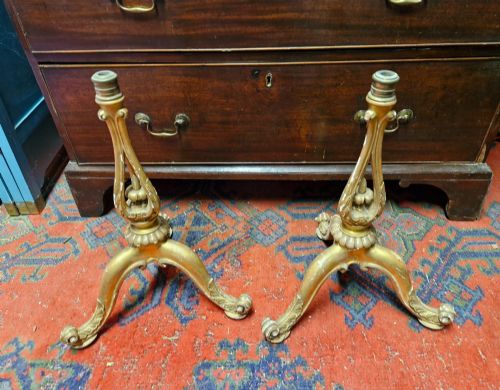
Surface finishes combine polished metal, giltwood, and dark wood polishes, sometimes paired with glass components or fabric elements. Blacksmith-worked iron brings hand-forged texture to utilitarian frames, while brass and copper elements receive careful turning and finishing.
What varies in quality
The weight and stability of the three-legged base dictate the structural integrity of the piece, separating robust floor standards from lighter supports. Heavy gauge brass and dense hardwoods offer superior balance compared to lighter, more flexible constructions.
The precision of the adjustable mechanism influences utility, distinguishing smooth telescopic movement from rigid or stiff shafts. Refinement in cast ornamentation, such as Art Nouveau floral motifs or Arts and Crafts hammering, defines the artistic standard of the metalwork.
The Vintage Tripod Light Stand Glossary
- Standard Lamp
- A tall floor-standing lamp designed to illuminate a room from standing height. These pieces often incorporate adjustable stems for directional lighting.
- Telescopic
- An adjustable mechanism allowing the upper shaft of the lamp to slide upwards and downwards. This feature enables the overall height of the standard lamp to change.
- Torchere
- A tall ornamental stand or candlestick originally designed to carry a torch or light. In later periods, these forms were adapted to hold lamps or candles.
- Pricket
- A sharp metal spike on a candlestick or pricket stand designed to hold a large candle in place. These heavy pieces originate from ecclesiastical and domestic settings.
Vintage Tripod Light Stand: Frequently Asked Questions
How do I adjust a telescopic floor lamp?
Telescopic standards utilise a central sliding shaft secured by a key or screw mechanism near the upper section of the pole. Loosening this fastener allows the inner brass tube to raise or lower to the desired height.
Tighten the fastener firmly once the correct position is reached to secure the weight of the upper lamp fitting and shade.
Where should I place a standard lamp?
Standard lamps suit corners of rooms or beside seating areas where floor space permits a three-legged base. Their height makes them effective for casting ambient light over reading chairs or dark architectural corners.
Ensure the tripod legs sit level on the floor to maintain stability when the lamp is extended to taller heights.
What materials make up these lamp bases?
The listings show bases constructed primarily from cast or tubular brass, wrought iron, and hardwoods such as mahogany and walnut. Some examples incorporate copper, giltwood, or glass stems for varied visual weight.
Tripod configurations distribute the weight of these dense metals and woods across three supporting feet.
How do I identify an Arts and Crafts lamp?
Arts and Crafts standard lamps display honest construction, visible hammer marks on metal surfaces, and minimal applied ornamentation. They frequently feature adjustable telescopic brass columns and simple tripod bases.
These pieces prioritise utilitarian function and straightforward geometric lines over ornate Victorian or Rococo styling.