



Vintage Triform Table
These vintage triform table selections bring three-legged structural elegance and rich timber surfaces into period rooms.
Vintage Triform Table
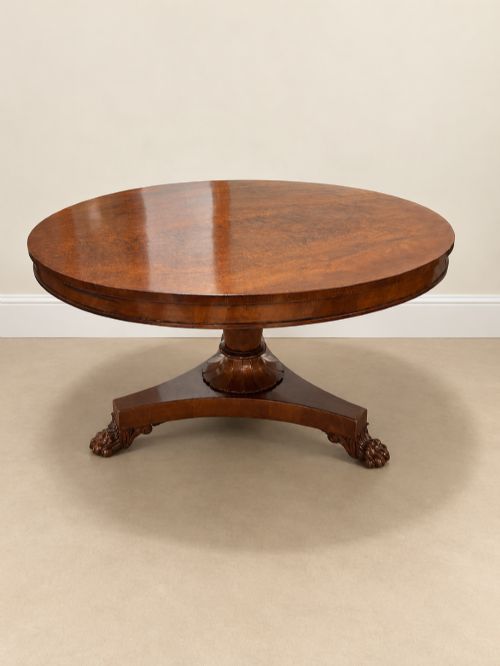
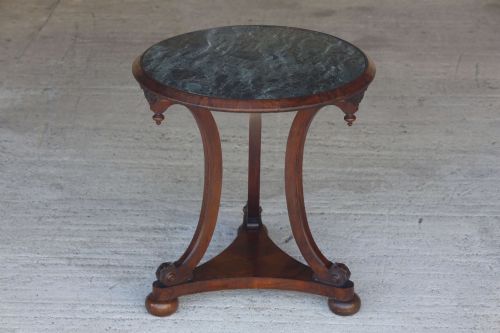
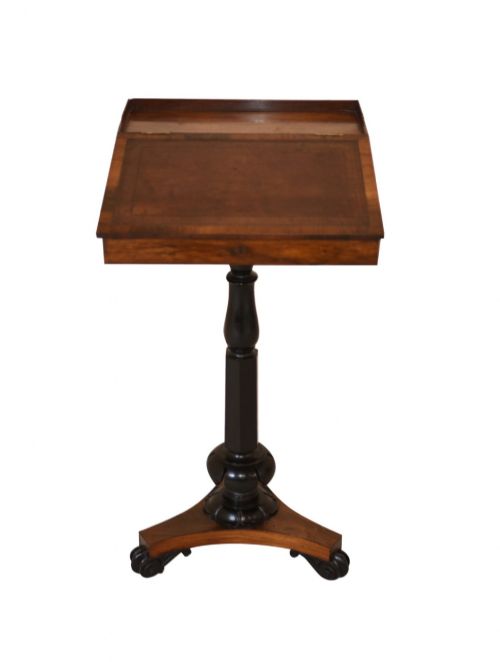
A vintage triform table centres on a distinctive three-sided or three-footed support structure, drawing on historical forms such as Regency, William IV, and Victorian designs. Buyers searching for a vintage triform table encounter pieces ranging from compact occasional stands and plant holders to substantial centre tables and breakfast tables.
The material palette recorded across these pieces relies heavily on figured timbers like mahogany, rosewood, and walnut, frequently complemented by brass, bronze, and marble inserts. Form follows function closely, with pedestal bases branching into three distinct feet that offer both steady balance and sculptural presence in a room.
Materials and construction methods
Cabinetmakers utilised dense hardwoods such as mahogany and rosewood, applying them as solid stock or refined veneers over secondary woods to achieve deep grain patterns. Turning, carving, and joinery shaped the central pillars and the three-way junctions characteristic of the base.
Metal elements including brass, bronze, and silver plating were cast and fitted to provide structural mounts, candle nozzles, or decorative collars. Marble tops and inserts were cut and polished to fit snugly within timber frames, adding weight and a contrasting cool surface.
Vintage Triform Table Retail Price Guide 2026
Typical asking prices for vintage triform table among the pieces listed under this phrase on Sellingantiques today, from the lower quarter to the upper quarter. They describe what is for sale here now, not the wider market.
Listings feature mahogany, rosewood, walnut, and burr elm alongside brass, bronze, and marble elements across the nineteenth and early twentieth centuries.
What distinguishes finer examples
Quality rests in the crispness of the timber carving, the choice of veneer figuring, and the structural integrity where the three feet meet the central column. Finer pieces demonstrate careful proportion between the top and the triform base, ensuring visual balance and physical stability.
The integration of secondary materials such as ormolu mounts, bronze columns, or fitted marble tops marks the upper tier of execution. Attention to the underside and hidden joinery reveals the diligence of the original maker.
The Vintage Triform Table Glossary
- Triform base
- A support structure featuring three distinct feet, legs, or outward-curving brackets radiating from a central vertical shaft. This configuration provides a stable footprint and a distinct silhouette.
- Tilt-top
- A tabletop mechanism hinged to the pedestal so the surface can pivot vertically when not in use. This allowed tables to be stored flat against a wall in smaller spaces.
- Guéridon
- A small French occasional table supported by one or more central columns. These pieces often served decorative purposes holding lamps, plants, or small objects.
- Ormolu
- Gilded bronze or brass applied as mounts, feet, or decorative highlights on furniture and lighting. The technique involved creating a finely chased metal surface covered in a gold amalgam.
Vintage Triform Table: Frequently Asked Questions
What is a triform table?
A triform table is a piece of furniture characterised by a three-sided or three-legged base configuration that supports a central column and surface. These designs appear across various nineteenth-century periods and styles.
They function well as centre tables, occasional tables, or breakfast tables within traditional interiors, offering a compact footprint combined with distinct structural geometry.
How do I style a triform table?
Placing a triform table in the middle of a room allows the three-legged base to be viewed from all angles as a focal point. They also suit corners or window bays where the circular or shaped top creates a balanced display surface.
Keep items placed on the surface proportional to the tabletop, such as a lamp, a bronze candle holder, or a small plant stand arrangement.
Are these tables suitable for daily use?
Solid timber construction and sturdy three-way pedestal bracing make these tables robust enough for everyday domestic placement. Using coasters and placemats protects polished mahogany and rosewood surfaces from moisture and heat.
Routine dusting with a soft cloth maintains the finish without requiring aggressive cleaning methods.