





Vintage Treen Tool
These vintage treen tool pieces are functional wooden objects shaped by hand, offering tactile utility and vernacular charm for any collector.
Vintage Treen Tool
A vintage treen tool encompasses small utilitarian wooden items fashioned for domestic, trade, and ceremonial tasks across past centuries. Buyers searching for a vintage treen tool will encounter objects ranging from domestic sewing apparatus to heavy workshop mallets.
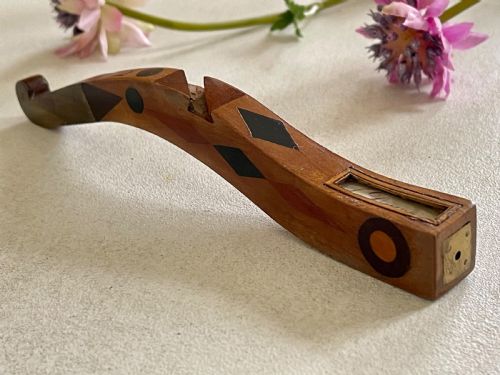
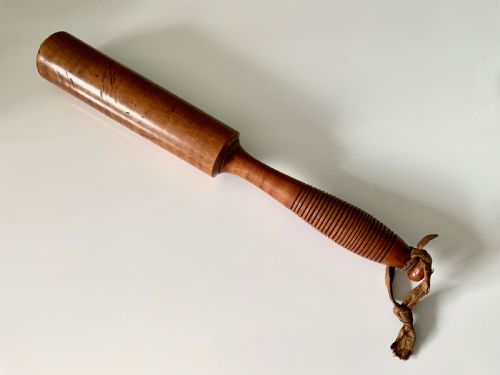
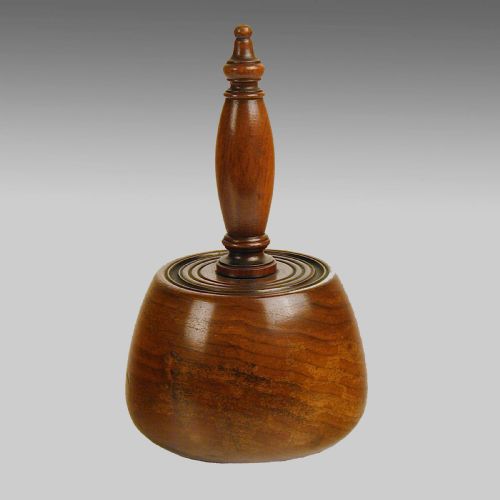
The selection on this page draws primarily from the nineteenth and early twentieth centuries, featuring regional vernacular designs alongside more formal pieces. Common forms include knitting sheaths, string barrels, mallets, and pill rounders originating from British and Scandinavian traditions.
Folk art influences run strongly through many examples, visible in geometric inlay and carved motifs applied to everyday implements. These objects bridge the gap between simple utility and decorative folk sculpture.
Materials and construction methods
Makers utilised dense native hardwoods selected specifically to withstand repeated impact or friction during daily use. Fruitwood, boxwood, lignum vitae, and birch provide the durable foundations seen across these implements.
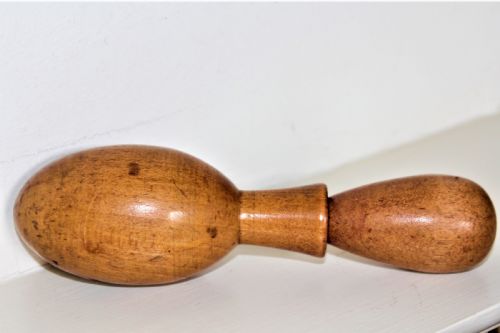
Turning on a lathe formed the balanced bodies of string barrels and sock darners, while hand carving shaped intricate knitting sheaths and mallets. Inlay work in contrasting materials, along with engraved steel details, added ornamentation to functional surfaces.
Vintage Treen Tool Retail Price Guide 2026
Typical asking prices for vintage treen tool among the pieces listed under this phrase on Sellingantiques today, from the lower quarter to the upper quarter. They describe what is for sale here now, not the wider market.
Assessing quality in turned and carved wood
Quality rests in the crispness of the hand-carved detail and the preservation of the original turned profile. Pieces showing deliberate geometric inlay or careful regional shaping stand apart from plain utilitarian equivalents.
The condition of the timber surface dictates much of the appeal, where deep patination earned through handling outweighs mere decorative finish. Marks of tool use and honest wear tell the working history of each implement.
The Vintage Treen Tool Glossary
- Treen
- Small handmade wooden domestic objects. The term derives from old English words for tree or wood.
- Knitting sheath
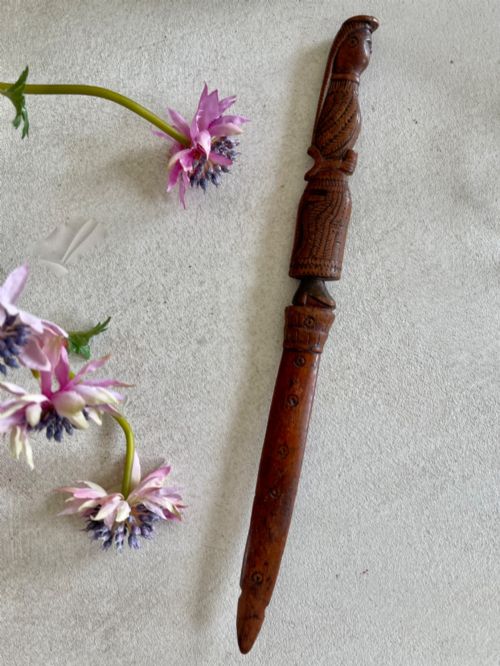
- A carved wooden holder tucked into a belt to support a single knitting needle. These regional items often display intricate folk carvings or inlaid decoration.
- String dispenser
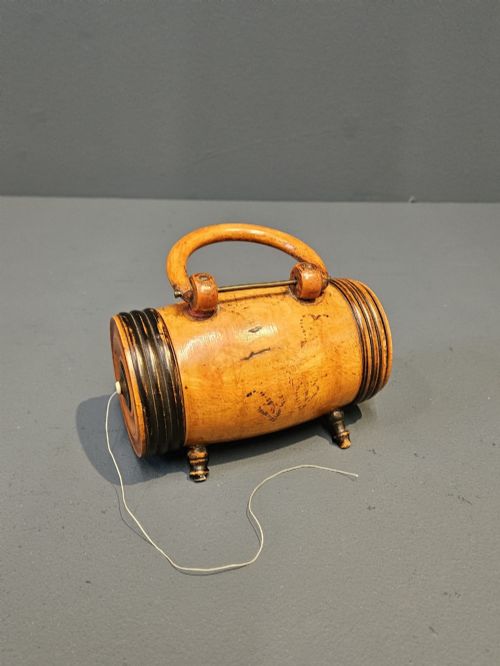
- A turned wooden container designed to hold and feed ball twine through a central aperture. Examples often feature double-ended designs for multiple cord types.
- Mallet
- A heavy wooden hammer used by carpenters, masons, or veterinary practitioners. Dense timbers such as lignum vitae and satin birch resist splitting under repeated impact.
- Pill rounder
- A pharmaceutical tool used by apothecaries to shape medicinal masses into uniform spheres. They are typically fashioned from dense boxwood.
Vintage Treen Tool: Frequently Asked Questions
What is vintage treen?
Vintage treen refers to small, functional wooden objects made for domestic or trade use before the advent of modern plastics. These items include kitchenware, sewing accessories, and desk items.
Over decades of handling and polishing, the timber develops a distinct surface sheen that collectors value. Each piece represents a discarded everyday implement elevated by age and craftsmanship.
How were knitting sheaths used?
Knitting sheaths were tucked into the knitter's apron string or waistband to anchor the working needle securely during rapid production. This allowed workers to knit efficiently while standing or walking.
Carved by hand, many feature regional designs passed down through generations. They remain some of the most decorative examples of domestic wooden folk art.
What woods are common?
Makers chose dense hardwoods that could be turned smoothly on a lathe or carved without splintering. Boxwood, fruitwood, and lignum vitae appear frequently because they hold fine detail and endure heavy wear.
Softer woods like birch and satin birch were also utilised for larger items such as mallets. Each timber species ages differently, contributing to the distinct patination of individual objects.
How do I date wooden tools?
Dating relies on tool marks, regional styles, and the specific purpose of the implement, such as veterinary fleam mallets or apothecary pill rounders. The presence of hand-turned ridges and early steel components helps narrow the era.
Wear patterns from human hands offer further clues to age and frequency of use. Comparing specific carving motifs to documented regional folk art traditions confirms the period.
Are these items restored?
Most pieces retain their original surface finishes and patination accumulated through active service. Minor surface marks are accepted as part of the working history of each object.
Collectors generally prefer examples that show honest patination rather than heavy modern restoration. Preserving the dry, untouched surface maintains the true character of the antique.