



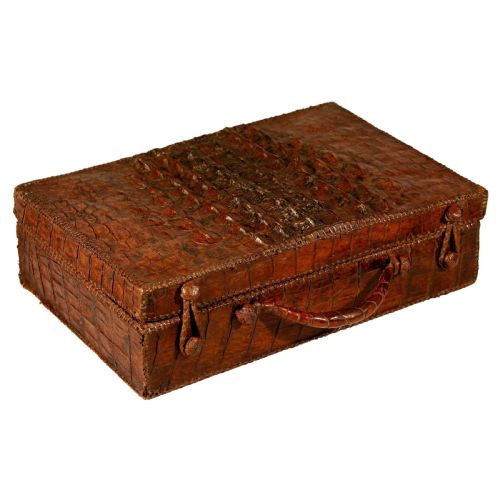


Vintage Travel Suitcase
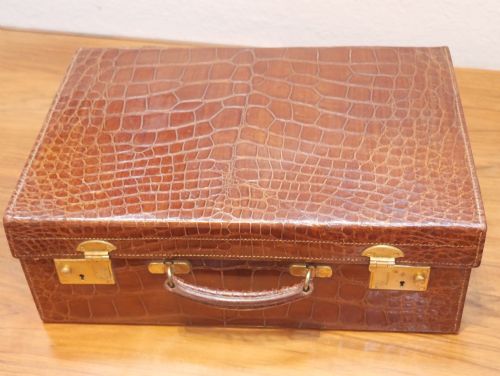
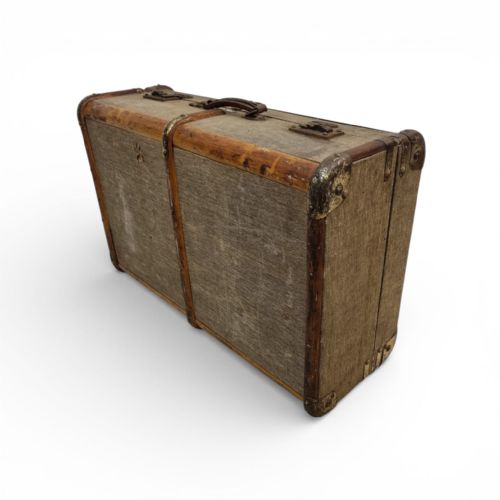
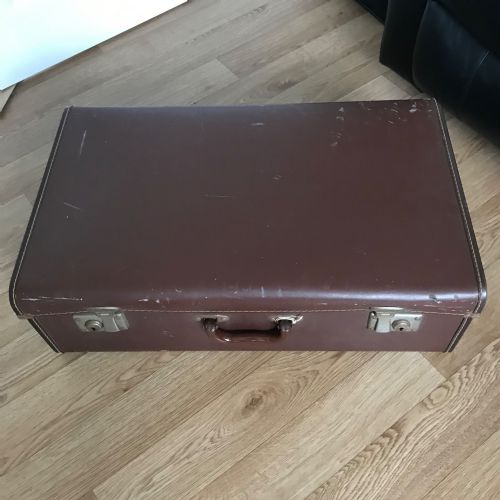
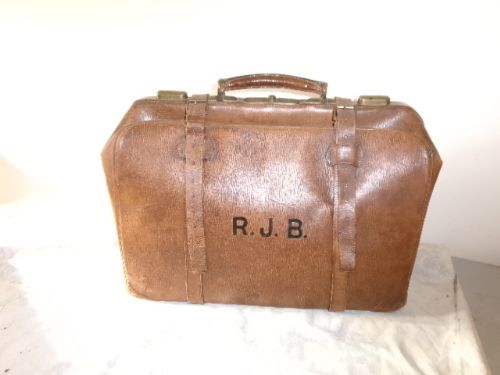
These vintage travel suitcase examples combine leather, vellum and brass to offer functional storage and period charm.
Vintage Travel Suitcase
A vintage travel suitcase is a practical luggage piece or storage chest designed for transit and domestic organisation. When searching for a vintage travel suitcase, buyers encounter various forms including fitted gentleman's cases, weekend overnight picnic cases, and large travel trunks dating from the Victorian and Edwardian eras up to the 1930s.
The selection on this page relies heavily on early twentieth-century examples, with numerous pieces originating from the 1920s and 1930s alongside Victorian and Edwardian designs. Makers such as Drew & Sons, Harrods, and Louis Vuitton appear in the evidence, showcasing how utilitarian objects crossed paths with luxury craftsmanship.
Buyers choose these items for domestic display, shop decoration, or practical storage solutions that retain historical travel labels and monograms. The common thread among them is a robust construction meant for carriage by rail, steamship, or motor car.
Materials and Construction
Constructed primarily from sturdy leather, canvas, and vellum, these cases rely on internal wooden frameworks to maintain rigidity under heavy loads. Brass hardware, including reinforced corners, locks, and clasps, protects vulnerable edges from the rigours of transit.
Specialised variants utilise exotic materials like crocodile skin and hornback alligator leather for luxury commissions. Interiors frequently feature fitted compartments lined in silk, velvet, or leather to secure grooming sets, bottles, and garments during travel.
Vintage Travel Suitcase Retail Price Guide 2026
Typical asking prices for vintage travel suitcase among the pieces listed under this phrase on Sellingantiques today, from the lower quarter to the upper quarter. They describe what is for sale here now, not the wider market.
A well-travelled trunk retains its original steamship labels, preserving decades of unwritten itineraries.
Markers of Quality
Quality rests in the integrity of the primary materials and the precision of the hardware. Thick cowhide, uncompromised vellum, and solid brass locks distinguish high-end commissioned luggage from standard utilitarian pieces.
The presence of original fitted interiors, complete with silver dressing table boxes, glass bottles, or valet trays, elevates a piece significantly. Furthermore, authenticated maker signatures from notable department stores or specialist outfitters indicate superior workshop standards.
Pioneer·Finnigan's Manchester·Drew & Sons·Louis Vuitton·John Pound·Harrods·C.Antrobus·Bick Bros
The Vintage Travel Suitcase Glossary
- Vellum
- A fine parchment made from calfskin, frequently stretched over a wooden core on luxury luggage to provide a lightweight yet durable exterior.
- Steamer trunk
- A lower-profile travel trunk designed to fit beneath the cabin berth of an ocean liner.
- Gladstone bag
- A light portmanteau formed on a flexible metal frame that opens wide into two equal compartments.
- Fitted interior
- An internal arrangement of compartments, trays, and pockets designed to hold specific grooming instruments, bottles, or garments securely.
- Attache case
- A small, thin box-shaped case used primarily for carrying documents and personal items.
Vintage Travel Suitcase: Frequently Asked Questions
How do I date a leather suitcase?
Dating relies on examining the construction methods, materials, and hardware styles. Victorian and Edwardian pieces often feature heavier wooden frames, brass lever locks, and distinct maker stamps.
Later pieces from the 1920s and 1930s may incorporate lighter vellum or canvas bindings alongside Art Deco design influences. Surviving travel labels and railway stamps can also provide a timeline of the piece's active years.
Can I use these suitcases for travel today?
While these pieces were originally built for rigorous journeys by rail and steamship, modern baggage handling requires careful consideration. Many buyers prefer to use them for home storage, display, or occasional weekend trips.
Checking the strength of the original leather handles and the security of the brass locks ensures safe usage for lighter personal items.
How do I clean an old leather trunk?
Cleaning historic leather involves removing surface dust with a soft, dry brush or cloth. Specialist leather balms can then be applied sparingly to nourish the hide and prevent cracking.
Harsh chemical cleaners and excessive water should be avoided to protect the original finish, stitching, and metal hardware.