

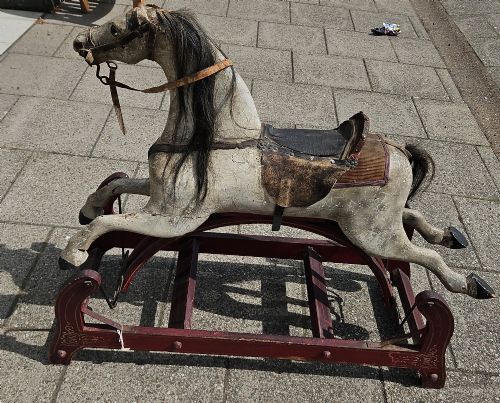


Vintage Toy Rocking Horse
A vintage toy rocking horse brings the charm of traditional play into a room through carved timber and painted detail.
Vintage Toy Rocking Horse
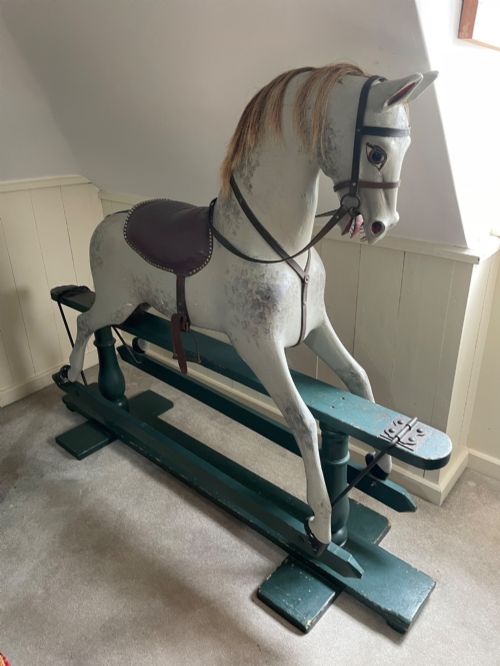
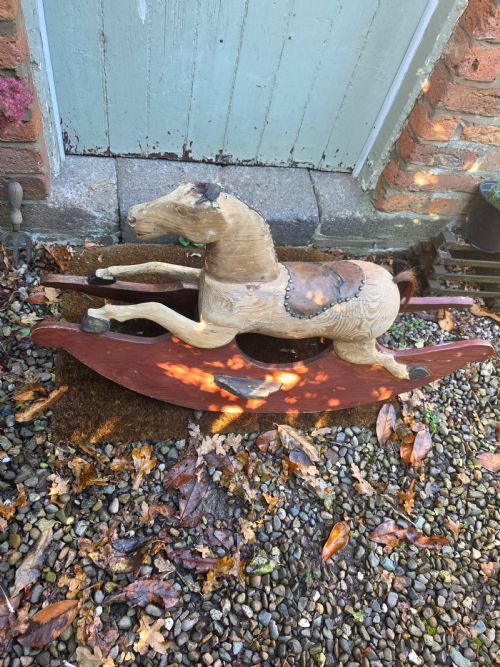
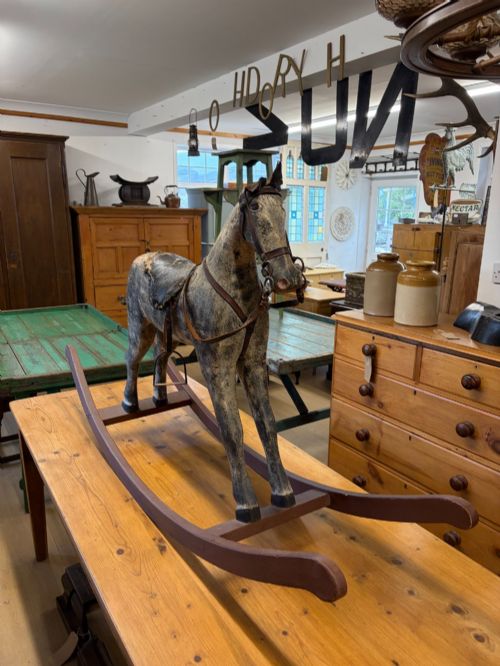
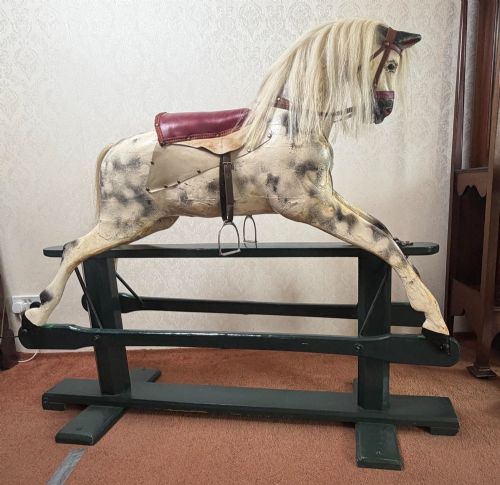
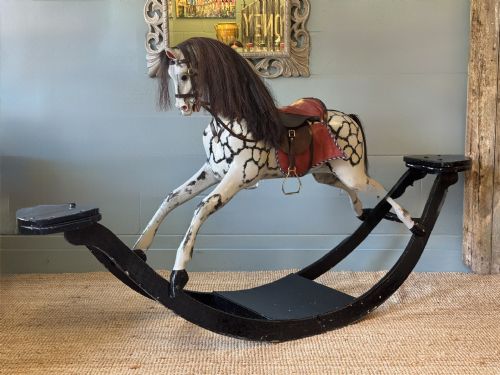
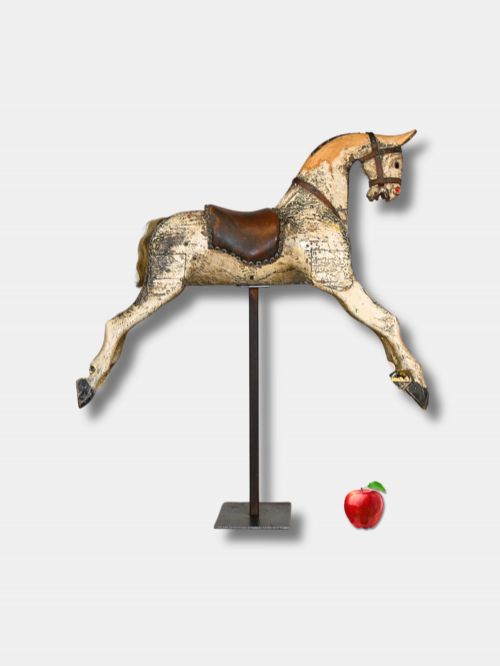
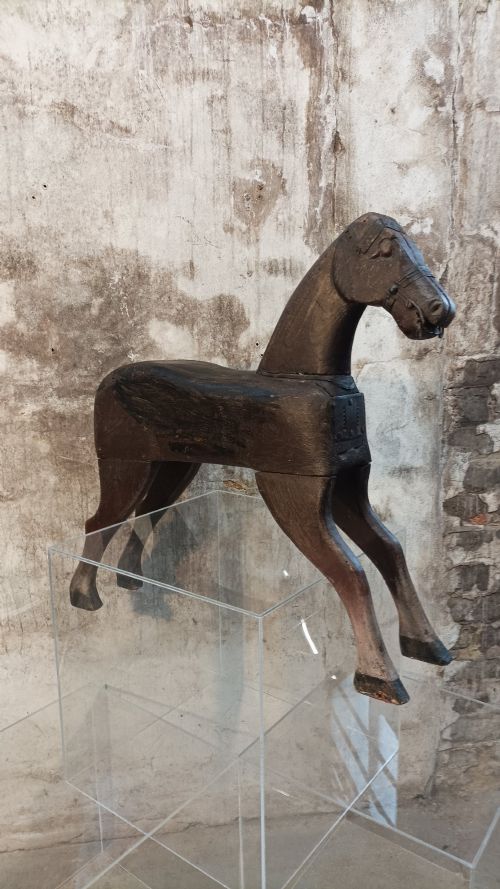
A vintage toy rocking horse is a child's ride-on toy or decorative sculpture shaped from timber, appearing in forms ranging from naive folk art to substantial works by notable makers. When searching for a vintage toy rocking horse, a buyer encounters pieces originating from the nineteenth century up through the interwar period, including Victorian and Edwardian examples. The selection on this page runs from small primitive carvings to large scale ride-on toys mounted on curved wooden rockers or floor stands.
Makers such as G and J Lines, F H Ayres, Collinson, and Lines Bros feature prominently alongside anonymous folk art pieces and Spanish or French animal sculptures. Many examples display original paint surfaces, leather tack, horsehair manes, and iron or steel hardware. The physical presence of these pieces varies from compact decorative objects to extra large playroom centerpieces designed for heavy use.
Construction and materials
Makers built these pieces primarily from carved wood and pine, shaping the bodies and heads by hand before mounting them onto sturdy wooden rockers or rigid stands. Artisans finished the wooden surfaces with coats of paint, frequently creating dappled patterns or retaining primitive folk art pigments that have aged over decades.
Detailing relied on supplementary materials including genuine horsehair for manes and tails, leather for saddles and bridles, and iron or steel for structural reinforcement and brackets. These combined elements provided the mechanical strength needed for children's toys while establishing the tactile texture characteristic of nineteenth and early twentieth century craftsmanship.
Vintage Toy Rocking Horse Retail Price Guide 2026
Typical asking prices for vintage toy rocking horse among the pieces listed under this phrase on Sellingantiques today, from the lower quarter to the upper quarter. They describe what is for sale here now, not the wider market.
Some horses retain decades of nursery dust trapped deep inside their carved wooden bellies.
Judging quality in early ride-on toys
The distinction between standard examples and superior pieces rests on the depth of the carving, the proportion of the animal, and the integrity of the surface finish. Finer makers invested skill into anatomical expression and robust joinery, whereas naive folk art pieces prioritize charm and directness of form over academic accuracy.
Survival of original details heavily influences the character of a piece. The presence of authentic horsehair, original leather tack, and untouched period paint elevates a carving above examples that have undergone extensive repainting or structural replacement.
G and J Lines·F H Ayres·Collinson·Lines Bros
The Vintage Toy Rocking Horse Glossary
- Rockers
- The curved wooden arcs attached to the base of a horse that allow it to swing back and forth during use.
- Folk art
- Objects created by self-taught or traditional artisans outside academic traditions, often displaying a naive and direct aesthetic.
- Tack
- The equipment fitted to a horse, including leather saddles, bridles, and reins.
- Dappled
- A spotted or mottled painted finish designed to imitate the coat pattern of a grey horse.
- Primitive
- An early or simplified style of construction lacking refined academic detailing.
Vintage Toy Rocking Horse: Frequently Asked Questions
How do I date a rocking horse?
Dating relies on examining the construction methods, the style of the carved body, and the materials used for the mane and tack. Earlier nineteenth-century examples often display simpler primitive lines, whereas Victorian and Edwardian pieces show more developed anatomical carving.
Makers' marks or stamps on the wooden stand can also provide a specific period of manufacture. Paint analysis helps determine whether the surface finish dates to the original period of creation or a later restoration.
Were these toys meant for riding?
Most pieces served as functional children's ride-on toys during the nineteenth and early twentieth centuries. Sturdy pine construction and iron or steel hardware allowed them to withstand active play in nurseries and playrooms.
Over time, many transitioned from active playthings into decorative sculptures and folk art objects collected for display. Their robust build quality ensured that a large number survived in usable or collectible condition.
How should I care for original paint?
Preserving an original painted surface requires keeping the piece away from direct sunlight and maintaining stable indoor humidity. Avoid harsh chemical cleaners that can strip or soften historic pigments and varnishes.
Dusting gently with a dry, soft cloth is generally sufficient for routine maintenance. Protecting the wooden frame and leather elements from excessive dryness prevents cracking in the original materials.
What is the difference between a stand and rockers?
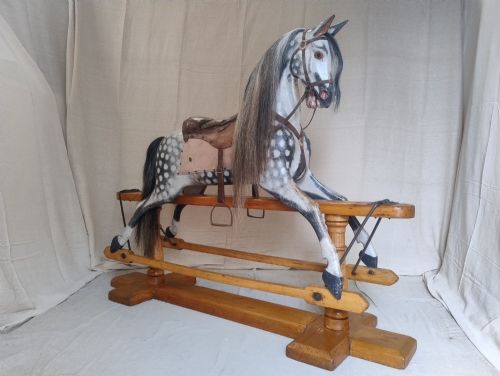
Rockers are curved wooden rails attached directly to the feet of the horse, allowing the entire assembly to rock back and forth on the floor. A stand involves a stationary wooden frame where the horse hangs from swing irons or safety links.
Floor-standing models prevent the horse from moving across the room during use, offering greater stability for children. Both formats appear across different periods depending on the manufacturer and the intended scale of the toy.