




Vintage Town Painting
These vintage town painting works capture the streetscapes and harbours of earlier decades through oils, watercolours, and mixed media.
Vintage Town Painting
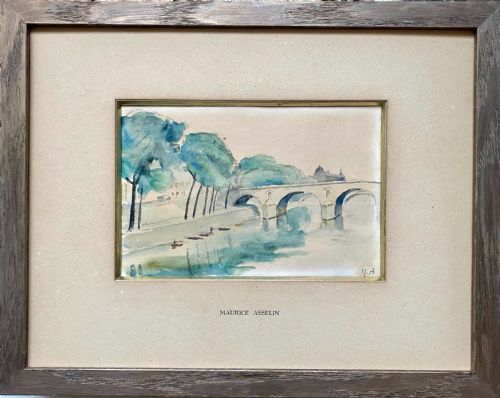
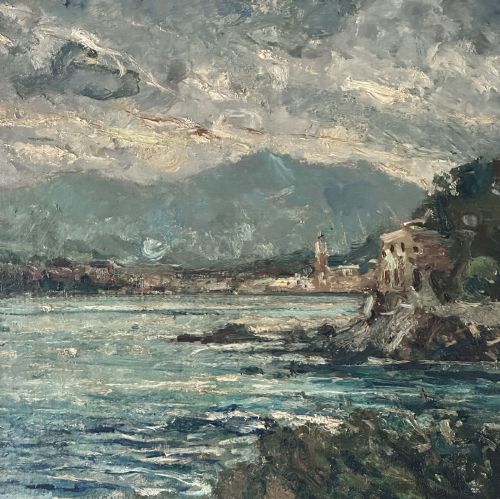
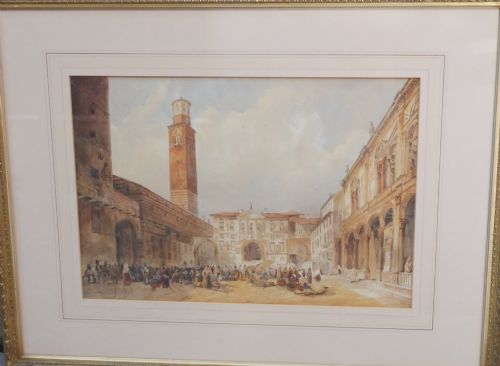
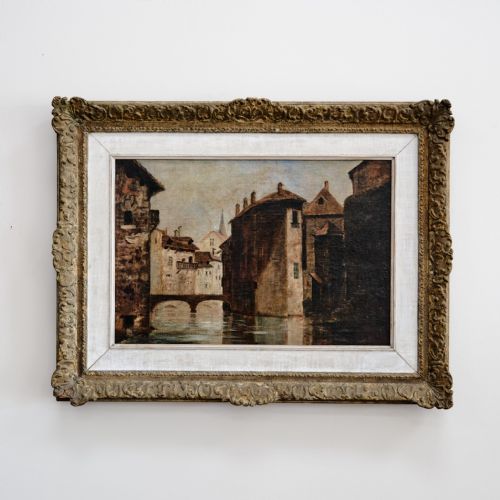
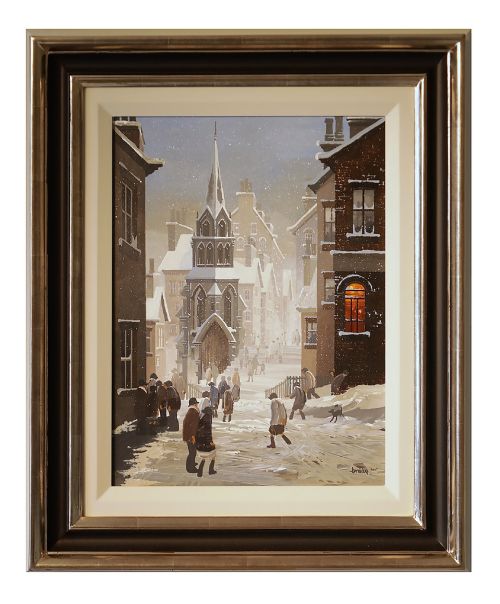
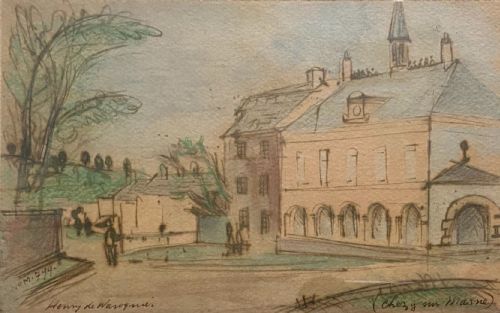
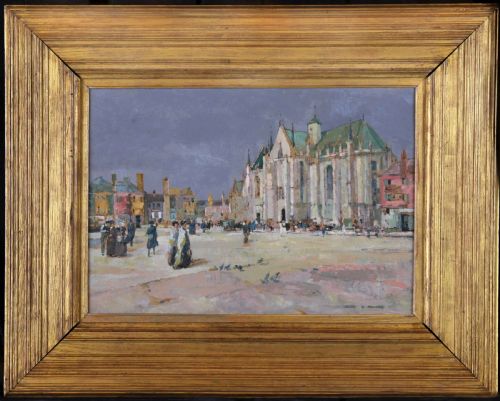
A vintage town painting depicts urban views, streets, harbours, and coastal settlements across the nineteenth and twentieth centuries. These works record architectural changes and daily life in locations ranging from Yorkshire ports to French provincial villages.
The most common examples on this page span the Edwardian period through to mid-century impressionism. Artists utilise both canvas and paper to document specific localities with distinct historical character.
Materials and techniques
Artists apply oil paint to canvas or board, building rich surface textures that hold the light of street scenes and coastal harbours. Watercolour on paper offers a lighter medium, capturing translucent washes of sky and stone in townscapes.
Frames often incorporate wood and glass to protect fragile works on paper from atmospheric moisture and handling. Selected pieces integrate gold leaf highlights to accentuate architectural details within the painted composition.
Vintage Town Painting Retail Price Guide 2026
Typical asking prices for vintage town painting among the pieces listed under this phrase on Sellingantiques today, from the lower quarter to the upper quarter. They describe what is for sale here now, not the wider market.
Listings feature paper, canvas, wood, glass, and gold leaf across the 19th century and the 1900s to 1960s.
Judging quality in town scenes
The strength of a composition lies in the handling of perspective, light, and atmosphere rather than mere topographical accuracy. Superior examples demonstrate confident brushwork and a coherent palette that conveys the specific mood of a location.
Condition plays a role, particularly for works on paper where discolouration or foxing can alter the visual balance. Original framing and clear provenance from known periods further distinguish finer works from standard decorative pieces.
Brian Shields Braaq·Henry de Waroquier·Cecil Rochfort D'Oyly-John·Gustave de Breanski·H.E. Tidmarsh·Job de Vogel·Albert Robert Quinton·Snaffles·V. Zirakian·Walter Emsley·Fred Lawson·Harry Wanless·Maurice Asselin·Cuthbert Crossley·Donald Wood·Augustus William Enness·Allan Douglass Mainds·Rowland Henry Hill
The Vintage Town Painting Glossary
- Post-Impressionism
- An art movement extending beyond impressionism that focuses on symbolic content and structural brushwork. It influences many twentieth-century townscapes.
- Watercolour
- A paint consisting of pigment suspended in a water-soluble vehicle, traditionally applied to paper. It allows for rapid, translucent sketching of architectural subjects.
- Oil on canvas
- Pigment bound in a drying oil applied to a stretched woven fabric support. This medium permits thick impasto application and subtle colour blending.
- Colourist
- An artist whose work prioritises vibrant or expressive use of colour over strict realism. Such paintings often emphasise the subjective mood of a street scene.
- Mixed media
- An artwork employing more than one medium or material, such as ink and watercolour combined on paper. This approach creates varied surface textures.
Vintage Town Painting: Frequently Asked Questions
What periods do these paintings cover?
The works span from the nineteenth century through the 1960s, encompassing Edwardian, post-impressionist, and mid-century modern movements.
Most pieces concentrate on the early to mid-twentieth century, reflecting changing architectural styles and urban expansion.
How do I care for a watercolour painting?
Watercolours require protection from direct sunlight to prevent fading of the pigments and paper over time.
Keep them away from damp environments and ensure they remain sealed behind glass with acid-free mounts.
Are these paintings signed by the artists?
Many works bear the signature or monogram of the artist, sometimes accompanied by a dated location in the title.
Attributions are supported by stylistic evidence from specific regional schools and periods.
What mediums were used for these town views?
Artists worked primarily in oil paint on canvas or board, and watercolour or ink on paper.
Selected works incorporate mixed media and gold leaf details to enhance the depiction of light on buildings.