

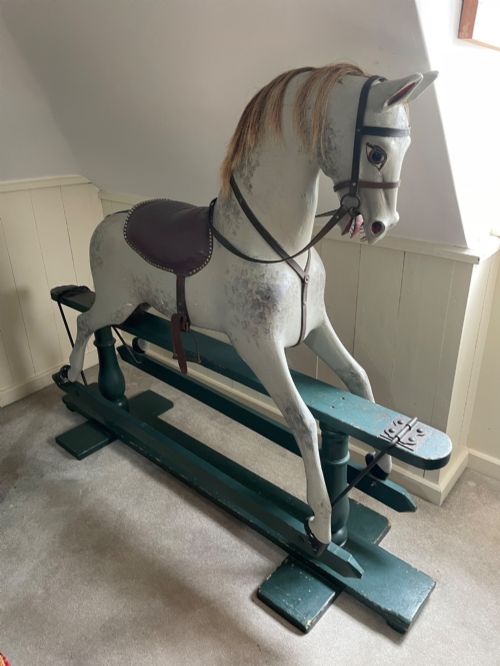
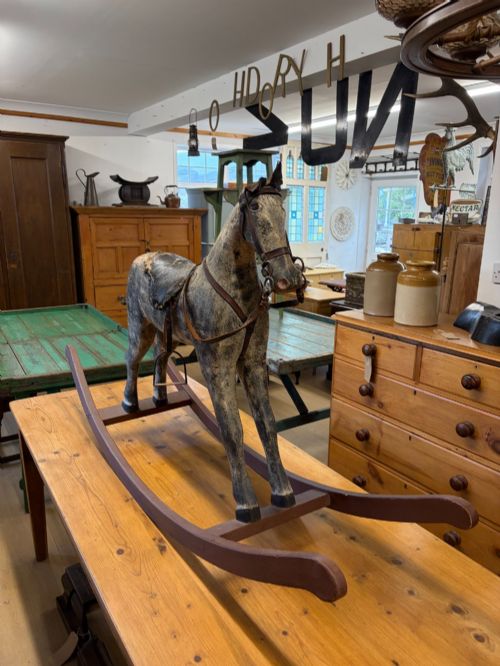
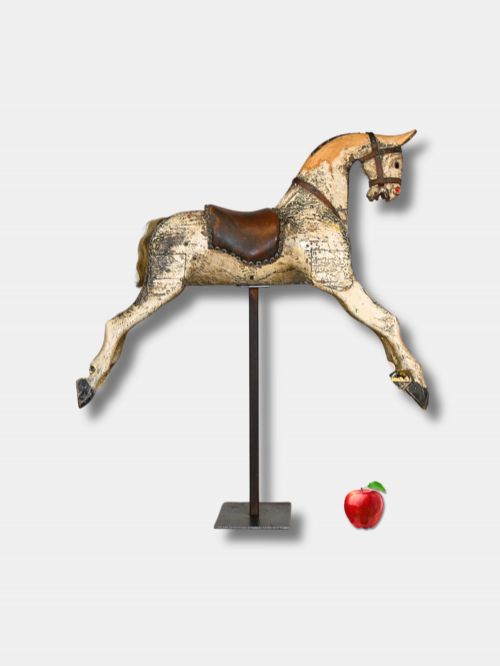
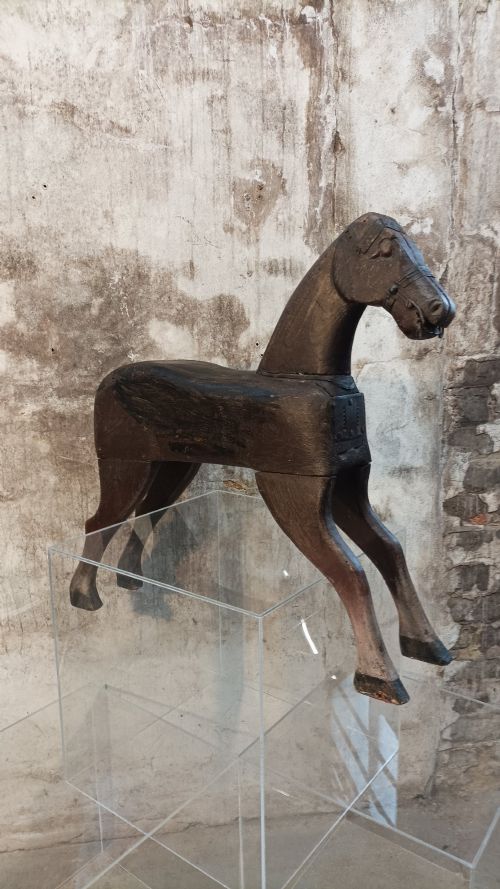
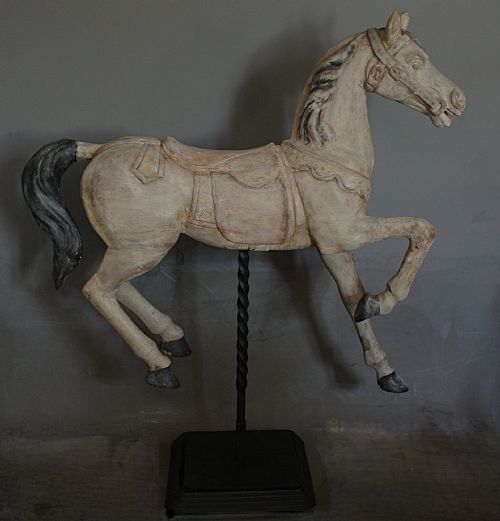


Vintage Timber Rocking Horse
These vintage timber rocking horse examples combine carved wood, genuine horsehair, and weathered paint to bring enduring character into your home.
Vintage Timber Rocking Horse
A vintage timber rocking horse is a tangible piece of childhood history, taking forms that range from simple folk art carvings to substantial Victorian creations. When searching for a vintage timber rocking horse, buyers encounter pieces spanning the nineteenth century through the early decades of the twentieth century. These objects function equally well as sculptural centerpieces in a living space or as nostalgic tokens of past playrooms.
The selections available here lean heavily into nineteenth-century examples and primitive styles, alongside early twentieth-century carousel figures and painted specimens. Common construction materials across these listings include carved pine, iron fixings, leather tack, and authentic horsehairmanes. Originating primarily from English workshops, these items showcase the diverse stylistic interpretations of makers from the Victorian era to the 1930s.
How they were made
Surface decoration relied on traditional paint finishes, which frequently exhibit genuine weathering and patina from decades of use. Craftsmen finished the sculptures with organic additions such as real horsehair for tails and manes, alongside leather components for reins and saddles.
Vintage Timber Rocking Horse Retail Price Guide 2026
Typical asking prices for vintage timber rocking horse among the pieces listed under this phrase on Sellingantiques today, from the lower quarter to the upper quarter. They describe what is for sale here now, not the wider market.
Current listings span the nineteenth century through the 1930s, featuring carved wood, pine, iron, leather, and horsehair.
What varies in quality
The distinction between standard examples and superior pieces rests largely in the depth of the hand carving and the integrity of the original surface finish. Finer sculptures display anatomical precision and spirited posture, whereas simpler folk art interpretations favour naive charm over realistic proportions.
Survival of authentic materials also dictates the standing of a piece. Retaining original paint, early leather tack, and genuine horsehair elevates an item above those that have undergone extensive repainting or modern restoration.
The Vintage Timber Rocking Horse Glossary
- Folk Art
- Objects created by self-taught or traditional artisans, prioritising functional or decorative charm over strict academic proportions. These pieces often display a refreshing disregard for standard anatomical rules.
- Patina
- The surface sheen and colour mellowing developed through age, handling, and exposure to light over many decades. It serves as a visual indicator of genuine antiquity.
- Carousel Horse
- A carved wooden figure originally mounted on a revolving platform ride, sharing materials and sculptural techniques with floor-standing models. They frequently exhibit dynamic, windswept postures.
Vintage Timber Rocking Horse: Frequently Asked Questions
How are these horses dated?
Datings rely on recorded construction methods, nail types, and the evolution of styling from the Victorian period onwards. Evidence from surviving examples helps establish comparative timelines.
Changes in paint chemistry and wood seasoning further assist experts in placing a piece within the nineteenth or early twentieth century.
Can children ride these today?
Most vintage timber rocking horses function primarily as decorative sculptures or collector items rather than robust toys for modern play. Their historical materials require careful handling to preserve their structural integrity.
Displaying them safely away from active playrooms ensures these antique wooden animals survive for future generations.
What is original paint?
Original paint refers to the earliest decorative coating applied to the timber during its creation, untouched by later overpainting. This surface layer often shows natural crackle and wear.
Spotting untouched pigment requires looking beneath later layers and examining how the finish ages around joints and carved recesses.
Where were they made?
The majority of these pieces originate from English workshops, ranging from regional carpenter shops to established makers like G. J. Lines. Regional styles often reflect local tastes and available timbers.
European and British Isles traditions heavily influenced the design vocabulary seen across nineteenth-century folk art pieces.