



Vintage Timber Pew
These vintage timber pew examples bring solid historic character to an entryway or dining table.
Vintage Timber Pew
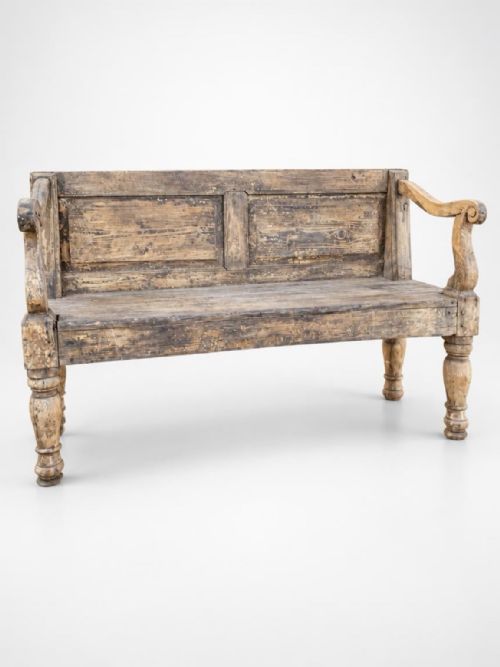
A vintage timber pew search brings up long wooden seating originating from churches, taverns, schools, and domestic halls. You will frequently encounter nineteenth-century pine, oak, and mixed softwood bench forms across these listings.
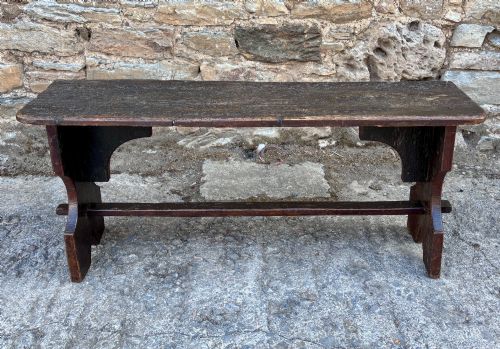
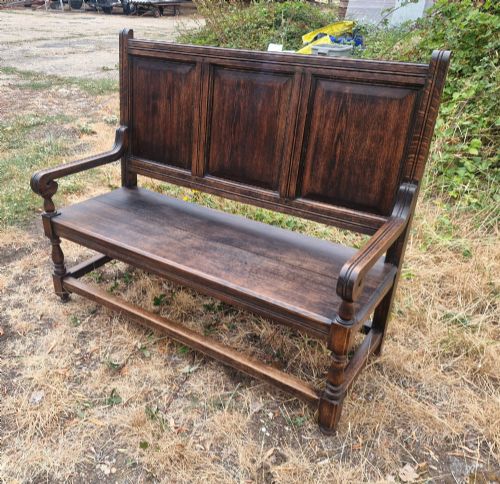
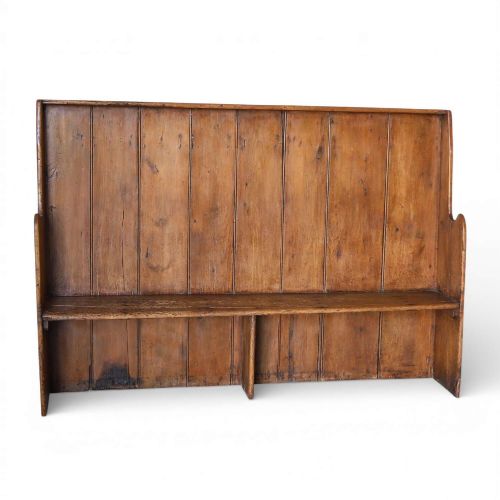
The selection ranges from high-back settles designed to block draughts to simple refectory benches and architectural church pews. Regional variations include English, French, Irish, and Austrian country styles alongside Gothic Revival pieces.
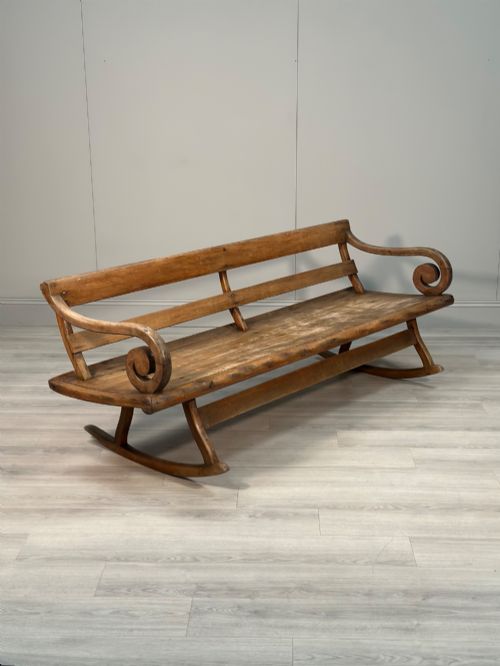
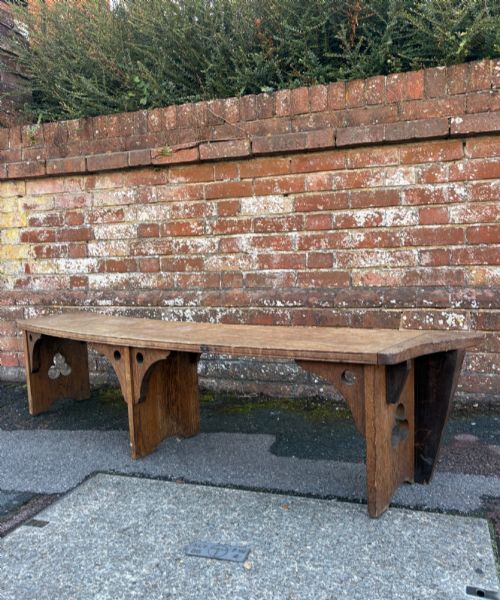
Many items function well in modern hallways or paired with long dining tables, offering substantial seating with built-in history. The forms vary from straight-backed church seating to curved pugin-style benches and rocking settles.
Materials and construction
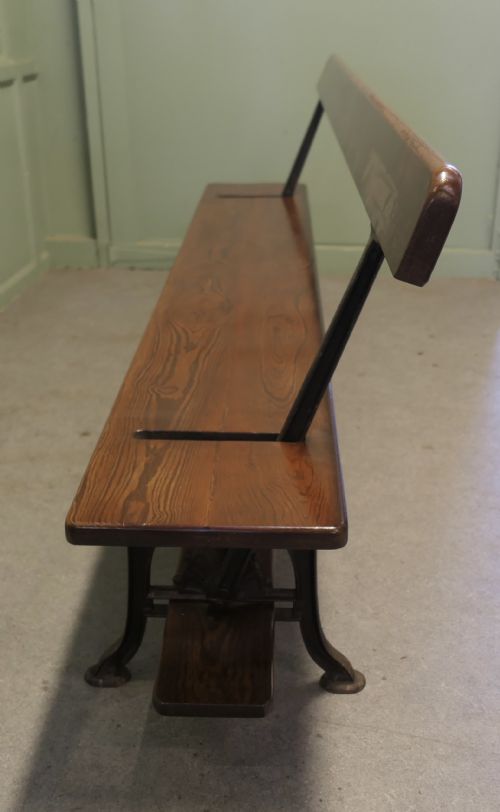
Carpenters built these seating pieces primarily from solid woods such as oak, pine, pitch pine, ash, and elm, often utilising heavy planks for seats and backs. Some examples incorporate cast iron elements or retain traces of original paint alongside exposed wood grain.
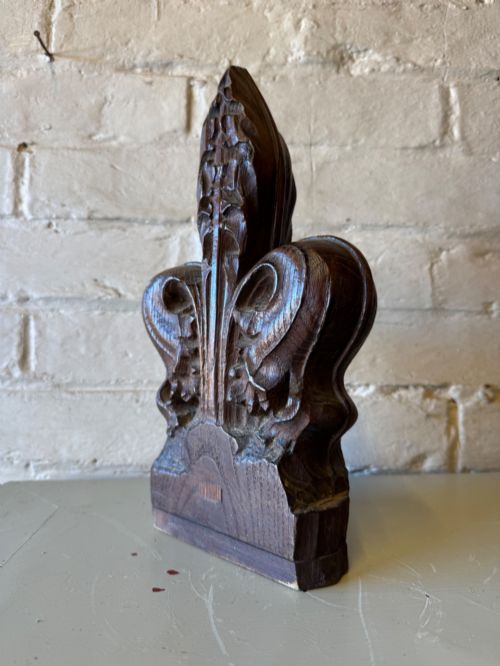
Joinery methods rely on traditional panelled construction, robust framing, and carved details like poppy head finials or trefoil supports. Surfaces exhibit various finishes, from honey brown patinas to bleached chestnut and deliberate painted treatments.
Vintage Timber Pew Retail Price Guide 2026
Typical asking prices for vintage timber pew among the pieces listed under this phrase on Sellingantiques today, from the lower quarter to the upper quarter. They describe what is for sale here now, not the wider market.
Materials span native oak and pine alongside bleached chestnut, ash, elm, and cast iron components.
Quality factors in wooden seating
The grade of timber and the integrity of the original construction dictate the character and longevity of each piece. Denser hardwoods like oak offer greater durability than softer pine variants, though well-weathered softwood holds its own rustic appeal.
Proportion and decorative detail elevate certain benches, seen in carved finials, curved supports, or panelled backs. The condition of the surface patina, whether a natural honey tone or preserved historic paint, significantly shapes the visual weight.
The Vintage Timber Pew Glossary
- Settle bench
- A wooden bench featuring a high back designed to keep out cold draughts, often incorporating a storage box beneath the seat.
- Refectory bench
- A long, straight seating form traditionally used alongside large dining tables in communal halls and refectories.
- Poppy head finial
- An ornamental carved capping ornament, commonly found on the bench ends of Gothic or church seating.
- Trefoil carved supports
- Architectural bracket supports shaped with a three-leaf clover design, frequently seen in Gothic Revival pieces.
Vintage Timber Pew: Frequently Asked Questions
Where should I put a church pew?
These long wooden seats fit well along a hallway wall, in a spacious boot room, or paired with a large dining table. Their linear form makes them practical for narrow spaces where chairs might obstruct movement.
Ensure you measure the available floor space and the length of the seating before purchase, as historical proportions can run surprisingly long or deep.
How do I clean wooden pews?
Dust the timber regularly with a soft, dry cloth to prevent dirt accumulation in carved details and panel grooves. Avoid harsh chemical cleaners that can strip historic wax or dry out aged pine and oak.
Feed the wood occasionally with a suitable beeswax polish to maintain the patina and protect the surface from moisture.
How do I date an old wooden bench?
Examine the tool marks, joinery techniques, and timber types to establish the likely period of manufacture. Nineteenth-century pieces often show machine-sawn consistency alongside hand-finished joints, while seventeenth-century examples display entirely hand-rived wood.
Styles such as Gothic Revival or Arts and Crafts provide further clues through characteristic decorative motifs and structural proportions.