


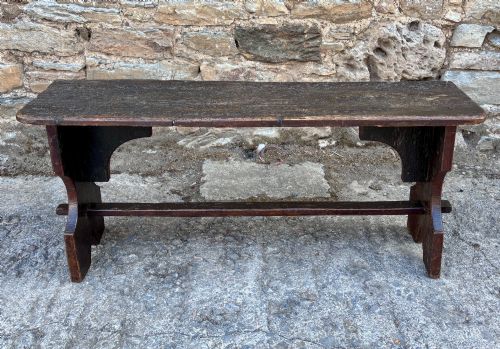
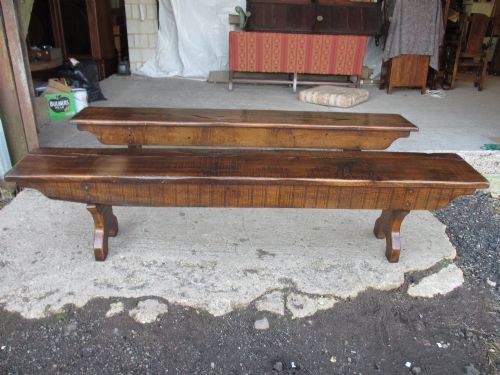
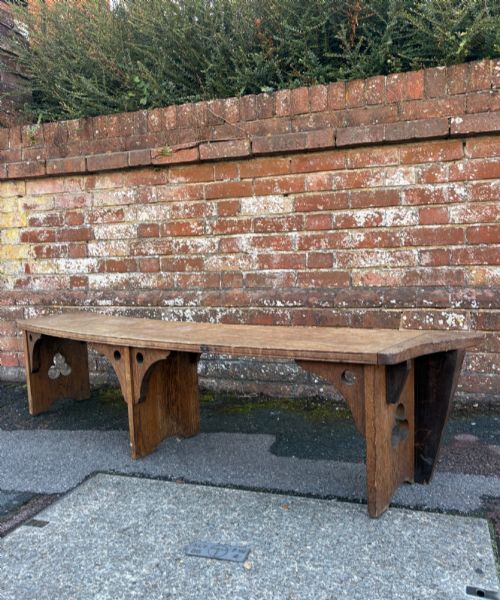
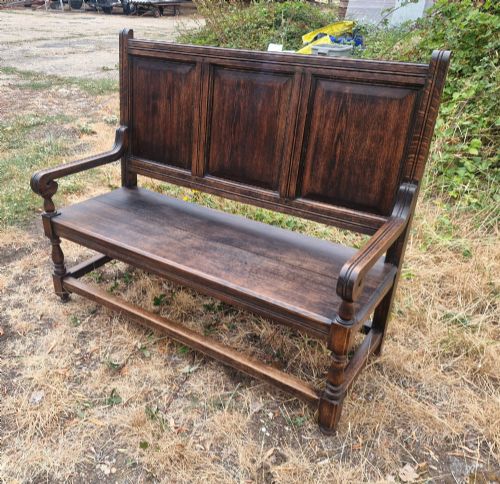
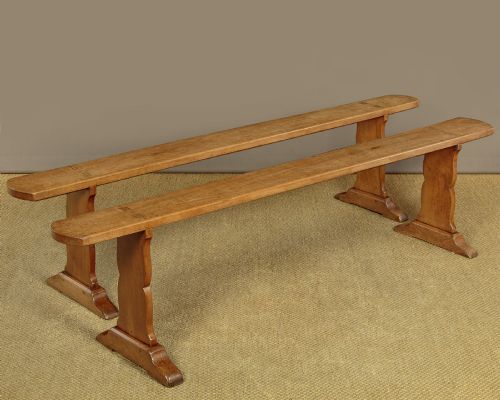


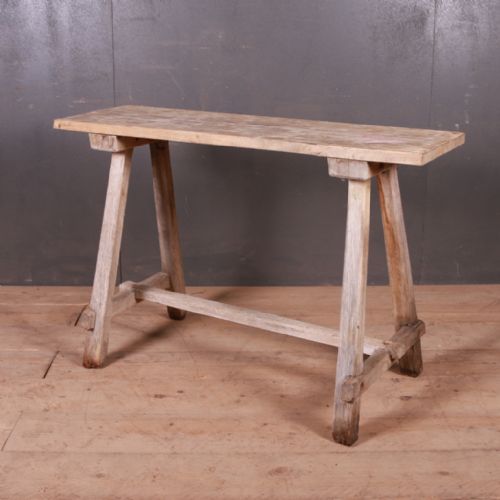
Vintage Timber Hall Bench
These vintage timber hall benches offer sturdy seating and character, grounding an entranceway with practical history.
Vintage Timber Hall Bench
A vintage timber hall bench provides practical seating for an entryway, bringing architectural presence and utility to a transitional space. Buyers searching for a vintage timber hall bench encounter various forms ranging from rustic pine and oak examples to formal walnut and cherrywood designs.
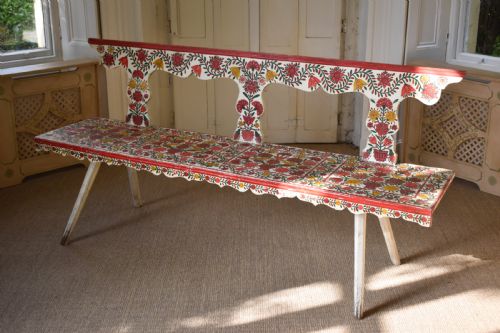
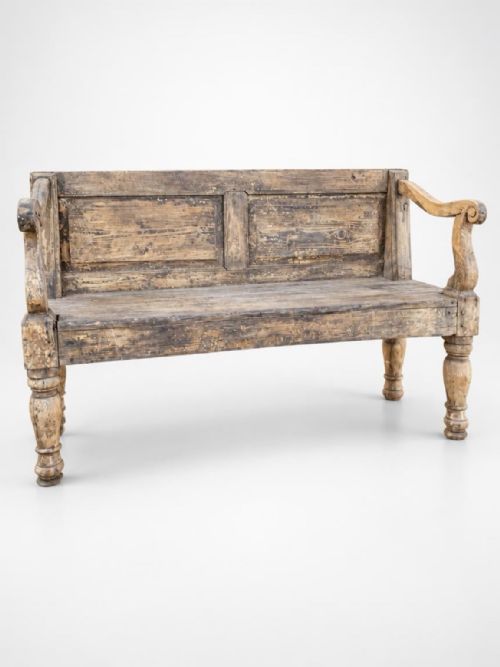
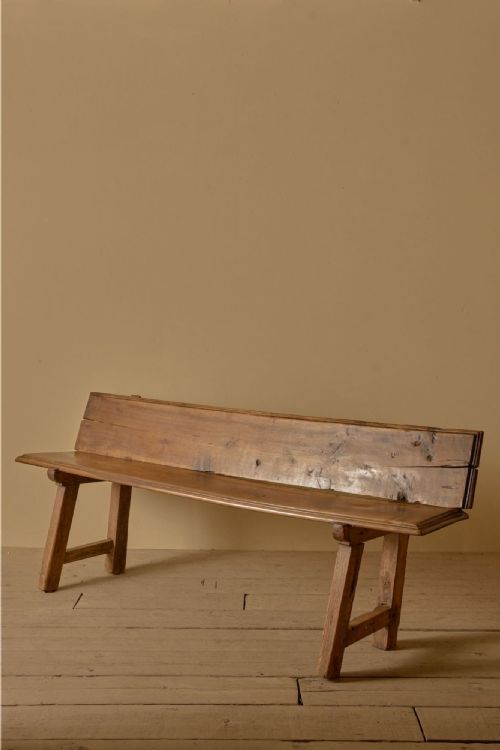
The selection includes regional pieces spanning the eighteenth to the twentieth centuries, featuring high back settles, panelled seats, and trestle-ended benches. Oak and elm are common timbers, often displaying carved details or original painted finishes.
Origin and form dictate the character of each piece, with French country, Arts and Crafts, and Jacobean Revival styles appearing frequently. These items serve equally well in narrow hallways, boot rooms, and large dining spaces.
Materials and construction
Construction relies heavily on dense hardwoods and softwoods such as oak, walnut, elm, and pine, chosen for structural endurance. Master joiners utilised traditional mortise and tenon joints to ensure the heavy frames withstand daily use in busy corridors.
Surface treatments vary from scrubbed natural timber and French polish to original painted finishes and bleached chestnut. Carving, panelled backs, and trefoil supports demonstrate the hand-worked detail applied by period artisans.
Vintage Timber Hall Bench Retail Price Guide 2026
Typical asking prices for vintage timber hall bench among the pieces listed under this phrase on Sellingantiques today, from the lower quarter to the upper quarter. They describe what is for sale here now, not the wider market.
Listings feature oak, elm, walnut, and pine across nineteenth and early twentieth-century periods, including Arts and Crafts and French Country styles.
Evaluating craftsmanship and condition
Quality reveals itself in the integrity of the timber frame and the depth of the original patina developed over generations. Superior examples exhibit precise joinery, well-balanced proportions, and minimal replacement of structural components.
The choice of wood species and the complexity of the carved ornaments, such as Gothic trefoils or shaped trestle ends, elevate certain pieces above standard utilitarian seating. Original paint finishes and unaltered surfaces retain higher historical significance than stripped or heavily restored alternatives.
The Vintage Timber Hall Bench Glossary
- Settle
- A wooden bench with a high back, solid wooden arms, and often a storage box beneath the seat. This form protected sitters from draughts in entrance halls.
- Trestle
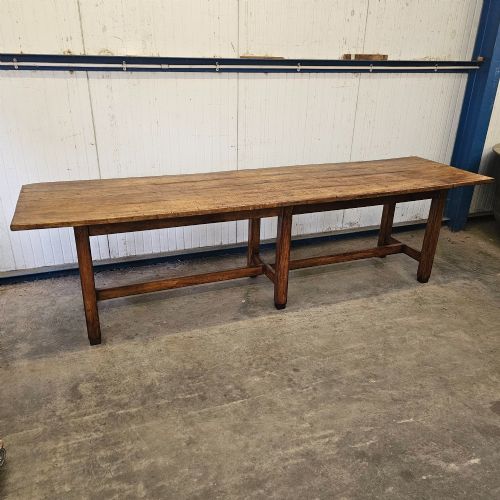
- A support consisting of a horizontal beam fixed to two splayed legs. This construction provides stable floor contact for long dining benches and work tables.
- Trefoil
- An ornamental foliate design with three rounded lobes resembling a clover leaf. It frequently appears pierced through wooden supports in Gothic Revival furniture.
- Panelling
- Flat sheets of timber framed within stiles and rails to form decorative backing. This technique prevents warping while adding architectural texture to hall seats.
Vintage Timber Hall Bench: Frequently Asked Questions
How do I style a hall bench?
Place the bench against a clear wall in an entryway or hallway to create an immediate focal point. Add simple cushions or textiles to soften the timber seat.
Keep surrounding accessories minimal to let the wood grain and period details command attention. Many models also accommodate baskets underneath for discreet shoe storage.
Can I use these benches outside?
Most of these pieces are designed for indoor environments and interior halls rather than exposed outdoor conditions. Fluctuations in moisture and temperature can warp historical timber.
Positioning them in a boot room or sheltered orangery provides the right balance of shelter. Regular indoor maintenance preserves the original finish and wax.
How do I date a timber hall bench?
Examine the tool marks, construction methods, and timber shrinkage to gauge the age of the piece. Hand-cut joinery and signs of historical wear indicate period craftsmanship.
Stylistic markers like Gothic trefoils or Arts and Crafts proportions align with specific late nineteenth or early twentieth-century movements. Comparing the hardware and patina provides further clues to the manufacturing decade.