





Vintage Tier Rack
These vintage tier rack pieces offer tiered storage and display across walnut, oak, and wrought iron forms.
Vintage Tier Rack
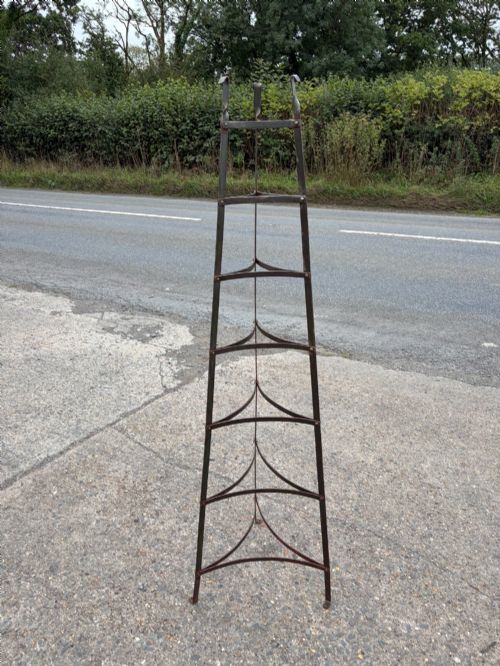
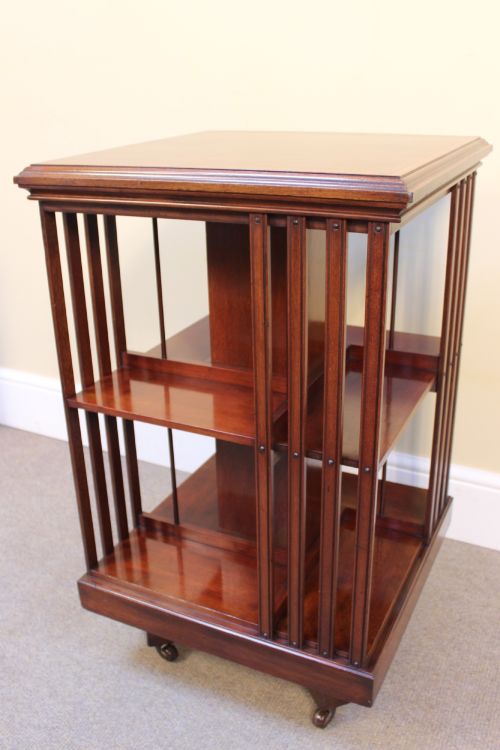
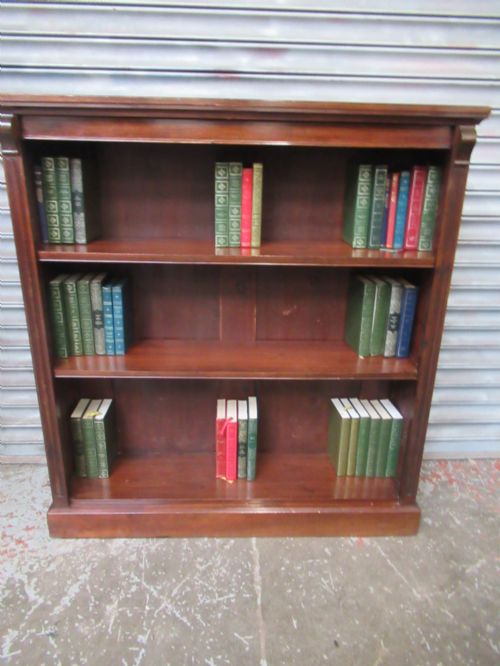
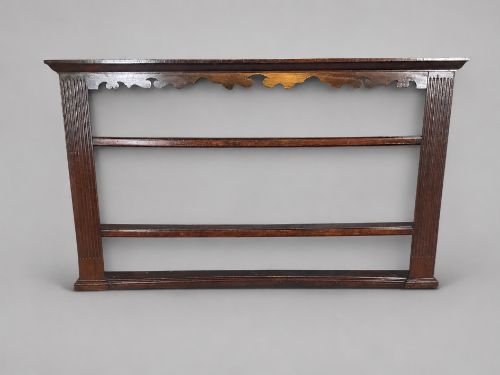
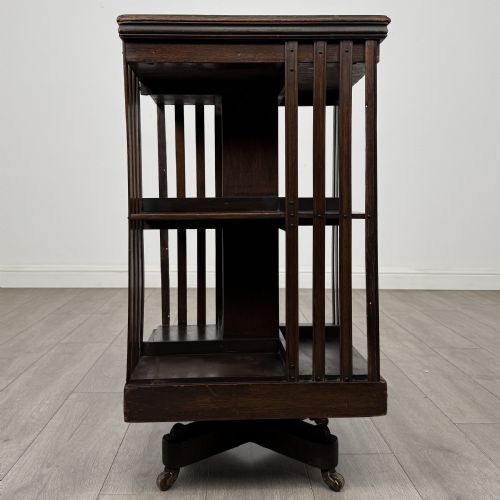
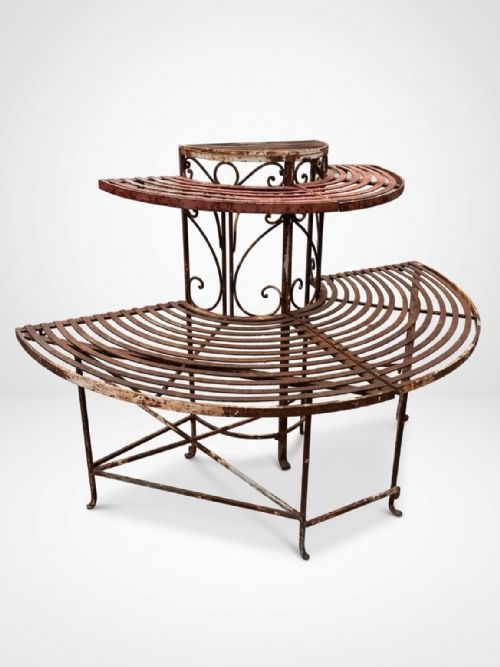
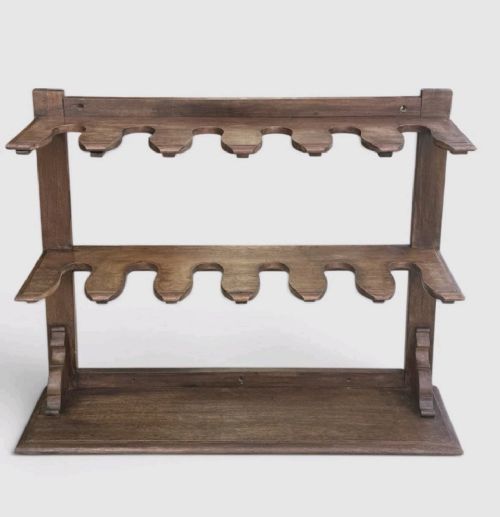
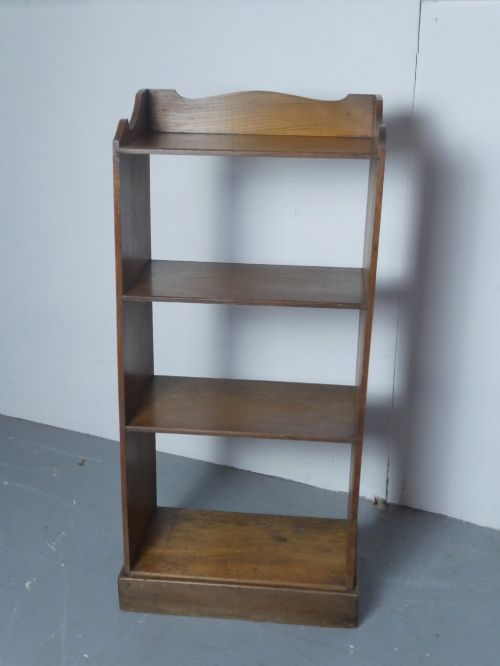
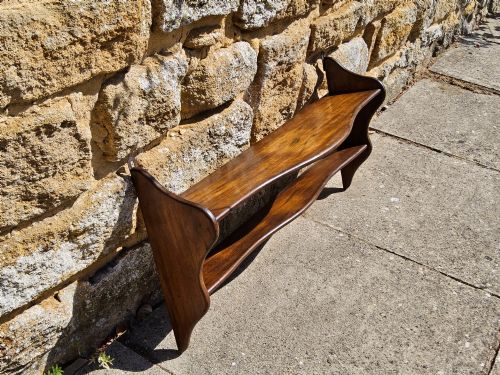
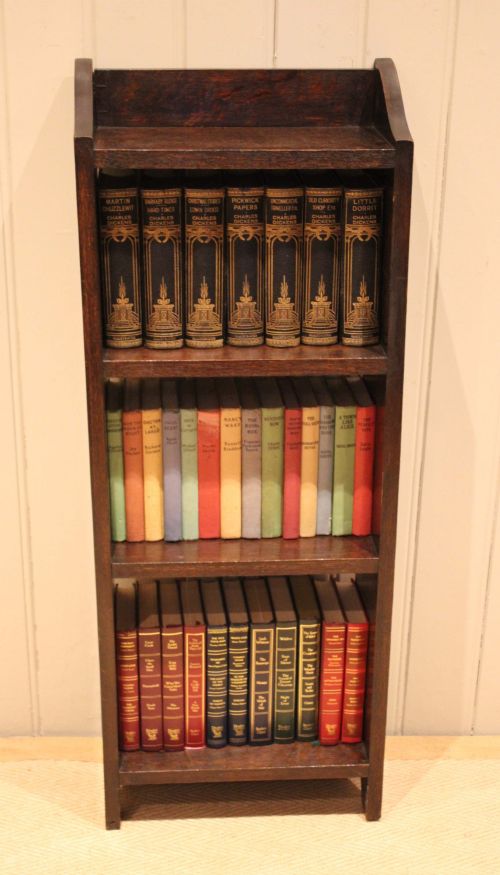
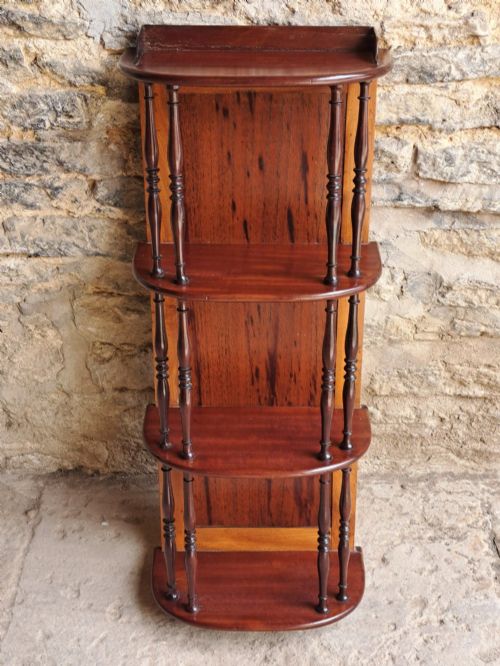
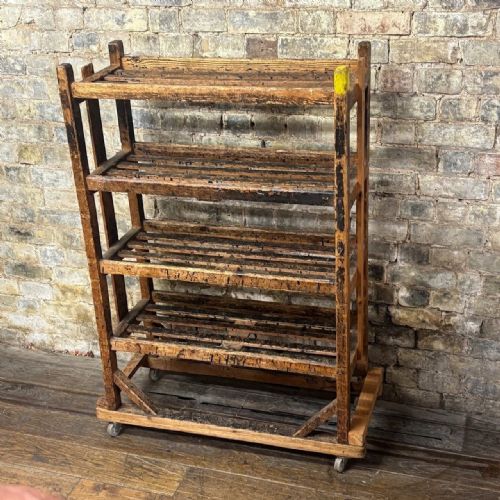
A vintage tier rack covers multi-level storage and display furniture, appearing most frequently on this page as mahogany wall shelves, oak revolving bookcases, and iron pan stands. These items serve to organise books, plants, and household articles across several horizontal surfaces. Buyers seek them to bring practical vertical storage and period character to domestic rooms.
The selections span the nineteenth century through the Edwardian period and the nineteen-twenties, incorporating styles from Regency to Arts and Crafts. Pieces range from delicate rosewood cake stands and walnut whatnots to industrial wooden shoe trolleys and multi-tier iron saucepan racks. Most examples reflect utilitarian origins in domestic kitchens, libraries, and hallways.
Materials and construction
Timbers such as mahogany, oak, walnut, and rosewood form the primary structure for bookcases, shelves, and canterburys, often finished with carved details, raised galleries, or brass mounts. Cabinetmakers joined these woods using traditional joints to support stacked tiers and revolving bookstands.
Metals including cast iron, wrought iron, brass, and chrome appear in heavy-duty pan stands, shop display stands, and plant stands. Blacksmiths and metalworkers shaped these materials into robust frames with multiple tiers and integrated hooks for hanging items.
Vintage Tier Rack Retail Price Guide 2026
Typical asking prices for vintage tier rack among the pieces listed under this phrase on Sellingantiques today, from the lower quarter to the upper quarter. They describe what is for sale here now, not the wider market.
Listings feature oak, mahogany, walnut, wrought iron, and brass across nineteenth-century and Edwardian wall shelves, bookcases, and pan stands.
Evaluating quality and construction
Quality rests on the selection of timber and metalwork, where finely figured burr walnut, rich mahogany, and robust wrought iron denote superior manufacture. The crispness of carved details and the stability of revolving mechanisms or stacked tiers distinguish standard utility items from finer workshop pieces.
Proportion and structural integrity dictate the grade of each piece, ensuring that multi-tier shelves and bookcases remain balanced under weight. Original brass mounts, uncompromised joints, and retained surface patination elevate an example above later alterations or heavy restorations.
The Vintage Tier Rack Glossary
- Whatnot
- An open set of multi-tiered shelves used for displaying ornaments or books. Originating in the eighteenth century, these pieces became popular throughout the Victorian period.
- Canterbury
- A low multi-tiered stand designed for holding sheet music, books, or magazines. They often feature slatted vertical partitions and small carrying legs.
- Étagère
- A piece of furniture consisting of a set of open shelves for displaying small objects. This French term translates literally as a tier stand.
- Revolving bookcase
- A compact bookcase mounted on a low rotating base that allows access from all sides. These typically stand on the floor in oak or mahogany.
- Pan stand
- A heavy iron or metal rack built with multiple tiers to hold cookware in kitchens or sculleries. These industrial pieces feature sturdy frames and storage hooks.
Vintage Tier Rack: Frequently Asked Questions
Where should I place a wall shelf?
Wall hanging shelves suit kitchens, hallways, or living rooms where floor space remains limited. They provide convenient display surfaces for books or decorative objects at eye level.
Ensure the wall fixings match the weight of the timber and the objects placed upon the tiers. Period hanging shelves often require sturdy wall plugs or direct fixing into wall studs.
How do revolving bookcases work?
Revolving bookcases sit upon a concealed central pivot or ball-bearing mechanism that allows the wooden body to turn smoothly. This design enables easy access to books from a seated position.
Most examples date from the Victorian and Edwardian eras, constructed in oak or mahogany with slatted or panelled sides. Regular use benefits from gentle cleaning of the internal mechanism to maintain smooth rotation.
What is a whatnot used for?
A whatnot provides graduated open tiers for displaying decorative ceramics, small books, or collectables. Victorian homes used them extensively in drawing rooms and parlours.
Their slender uprights and multiple shelves offer vertical storage without dominating the room visually. Lighter versions in walnut or mahogany move easily between rooms as occasional furniture.
How do I care for wooden tier racks?
Dust wooden tiers regularly with a soft, dry cloth to prevent dirt accumulation in carved details and joints. Avoid placing timber furniture in direct sunlight or near heat sources to prevent warping.
Apply a traditional beeswax polish occasionally to nourish the grain of mahogany, oak, or walnut surfaces. Check structural joints and wall brackets periodically to ensure safe weight distribution.