





Vintage Tea Tongs
These vintage tea tongs are small domestic implements designed for lifting sugar lumps or tea leaves, offering tactile refinement to any tea service.
Vintage Tea Tongs
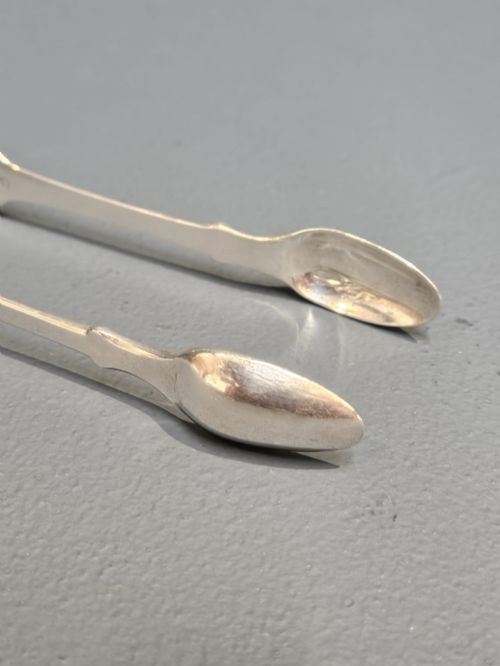
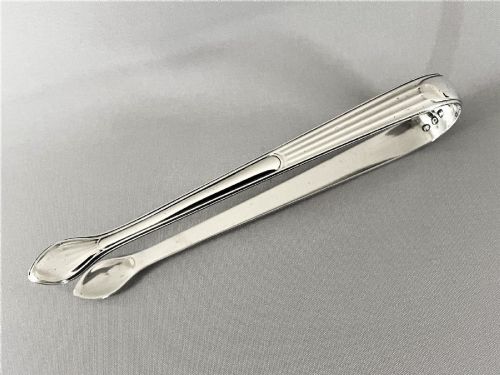
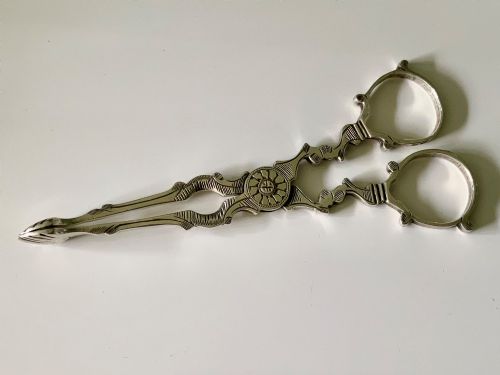
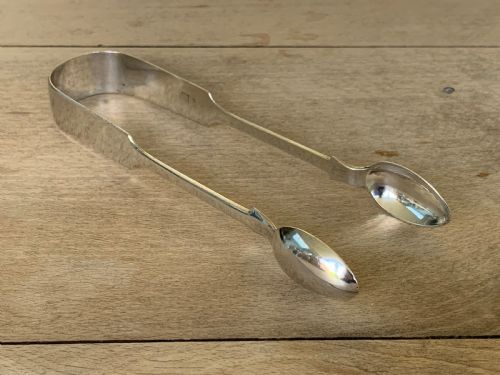
When you search for vintage tea tongs, you find small handheld implements fashioned primarily for transferring sugar lumps or accompanying flatware services. Most examples on this page take the form of sugar tongs, sugar nips, or are paired directly within boxed teaspoon sets.
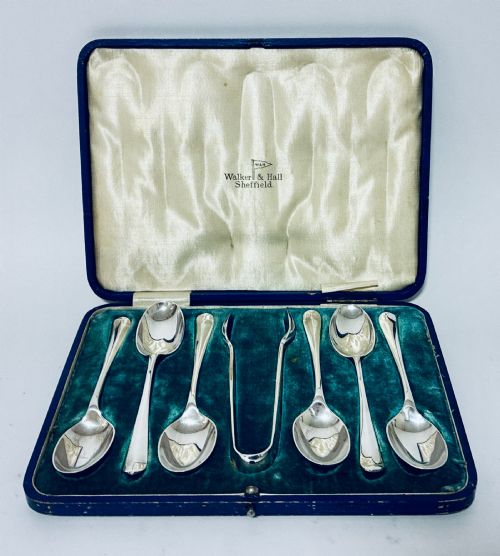
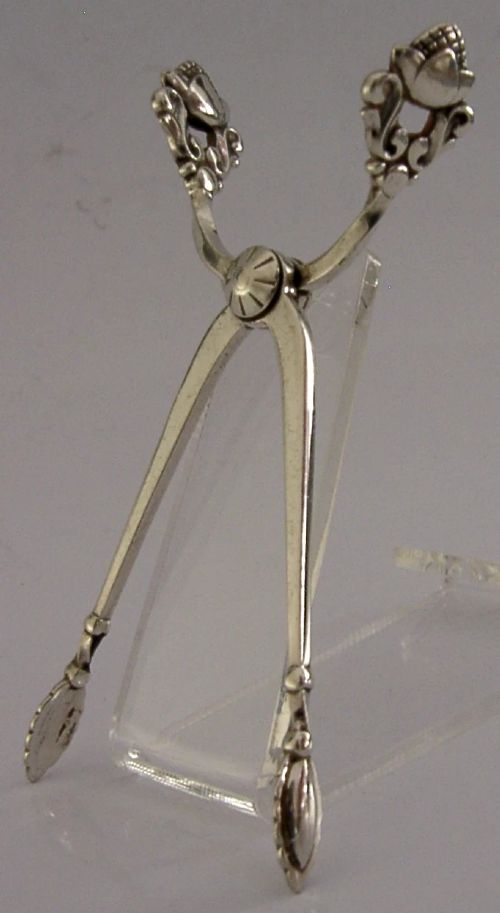
The selections span centuries of domestic design, ranging from 18th Century cast silver specimens to Georgian and Victorian interpretations, extending into Art Deco and Danish Modern variations. You frequently encounter them alongside matching teaspoons or coffee bean spoons within fitted cases lined in velvet, silk, or satin.
These pieces originate from diverse workshops and periods, reflecting the shifting tastes of tea service etiquette. Whether formed in a simple Georgian style or decorated with ornate Victorian chasing, they remain practical tools with a distinct historical lineage.
How they were made
The physical construction relies heavily on silver, sterling silver, and silver-gilt, shaped through casting, hammering, or pressing techniques. Maker workshops utilised the malleability of silver to create spring-action bows and detailed terminal grips.
Cased sets introduce additional materials like leatherette for the exterior casing, paired with internal linings of silk, velvet, or satin to protect the metal. Bakelite appears in select later designs, marking a shift toward modern composite materials in domestic cutlery.
Vintage Tea Tongs Retail Price Guide 2026
Typical asking prices for vintage tea tongs among the pieces listed under this phrase on Sellingantiques today, from the lower quarter to the upper quarter. They describe what is for sale here now, not the wider market.
Some Victorian sets included velvet and satin linings so plush they made gripping the tiny spoons feel like an aristocratic court event.
What varies in quality
The standard of manufacture depends on the crispness of the metalwork, the resilience of the spring action in the bow, and the integrity of any chased or cast ornamentation. Finer examples display balanced proportions and clear hallmarks that indicate the maker and assay office.
Presentation also dictates distinction, particularly in cased sets where the preservation of original silk, velvet, or leatherette linings complements the condition of the silver implements inside.
Bateman Family·Georg Jensen·Josiah Williams & Co·Robert Stebbings
The Vintage Tea Tongs Glossary
- Sugar nips
- Spring-action kitchen and tea implements historically used for snipping sugar from large loaves before the advent of granulated sugar. They share a similar function to later sugar tongs.
- Silver-gilt
- Silver objects that have been coated with a thin layer of gold on the surface. This technique provides the rich appearance of solid gold while utilising silver as the base material.
- Hallmark
- Official stamps applied to precious metals indicating the standard of purity, the assay office, and the year of manufacture. They provide reliable historical data for dating antique silverware.
- Sterling silver
- An alloy comprising silver and other metals, usually copper, standardised to a specific purity for durability and strength. It serves as the primary material for most fine tableware and cutlery.
Vintage Tea Tongs: Frequently Asked Questions
What is the difference between sugar tongs and sugar nips?
Sugar nips generally feature pivot joints or scissor-like handles designed for cutting or grasping sugar lumps from a larger block. Sugar tongs typically rely on a single sprung bow of metal to squeeze and release lumps.
Both tools served the tea table, but nips belong predominantly to earlier domestic traditions before pre-cut sugar cubes became standard.
How do I identify the date of my tea tongs?
Dating relies primarily on hallmarks stamped directly onto the metal surface, which indicate the specific assay office and year cycle. Stylistic clues, such as Georgian engraving or Art Deco geometry, also help narrow down the period.
Consulting standard silver reference guides alongside the maker's mark will usually reveal the exact decade of production.
Were these tongs always sold in sets?
Many vintage tea tongs were produced individually as standalone pieces of silverware for domestic tea service. However, a significant portion were packaged alongside teaspoons, coffee bean spoons, or butter knives in fitted presentation cases.
Cased sets usually featured silk or velvet linings designed to keep the matching cutlery secure during storage.
How should I care for silver tea tongs?
Silver pieces benefit from gentle washing in warm soapy water followed by thorough drying with a soft cloth to prevent tarnishing. Avoid harsh abrasive cleaners that can wear away fine engraving or thin silver-gilt layers.
Storing them in lined cases or anti-tarnish wraps helps maintain the metal surface over time.