



Vintage Tassel Lampshade
These vintage tassel lampshade pieces bring rich fabric and warm light into a room, offering texture and period character.
Vintage Tassel Lampshade
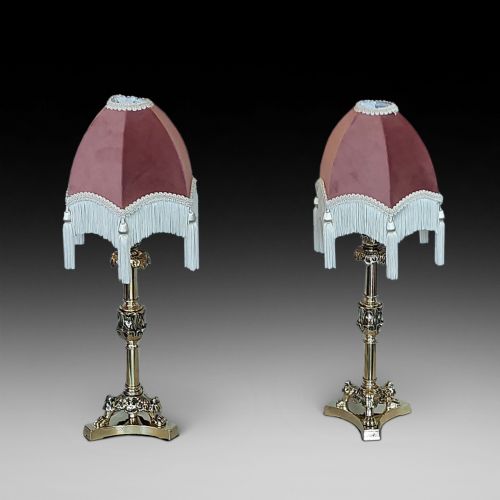
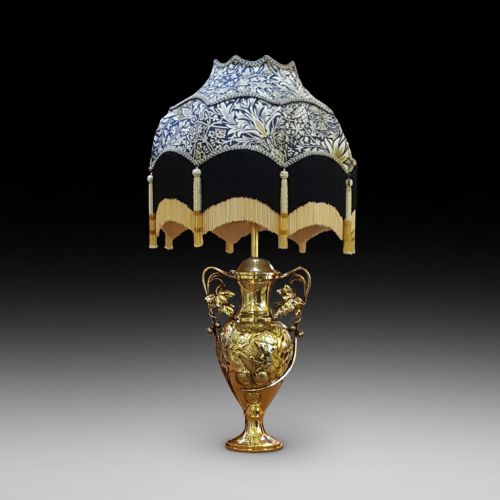
A vintage tassel lampshade search brings up lighting forms designed to create a soft, diffused glow in a traditional interior. The pieces available here consist of table lamps and floor lamps rooted in periods from the 1800s through the Edwardian era and 1920.
Buyers will most frequently encounter brass floor lamps and table lamps constructed from converted candlesticks, beaten copper, and pressed brass. Styles span Victorian, Art Nouveau, Edwardian, and Arts and Crafts designs, alongside French Chateau and Orientalist examples.
The selection reflects both standard table lighting and larger standard lamps that anchor a corner of a sitting room. Each form utilises period metalwork bases paired with fabric elements.
Materials and construction
Makers utilised brass, copper, and gilt metal for the structural bodies, often shaping them through casting, beating, or pressing. These metal bases provide the weight and stability required for tall floor lamps and smaller table lamps.
Textile and glass components form the decorative upper portions, incorporating fabric, silk fringe, glass beads, and thread. These materials work together to diffuse light and introduce tactile richness to the design.
Current listings feature metalwork in brass, copper, and gilt metal across Victorian, Edwardian, and Art Nouveau styles.
Distinguishing quality
Quality rests in the precision of the metalwork, whether seen in the hand-beaten texture of an Arts and Crafts copper body or the crisp detail of pressed brass and cast brass candlesticks. Heavier, more substantial metal components separate finer pieces from lighter alternatives.
The integrity of the construction and the fidelity of the period style, from Art Nouveau curves to Victorian proportions, determine the standing of each lamp. Original conversions and painted Chinoiserie decoration add distinct character to individual examples.
The Vintage Tassel Lampshade Glossary
- Standard lamp
- A tall floor lamp designed to stand on the floor and illuminate a room from a raised height. These pieces often feature heavy brass or copper shafts.
- Converted candlestick
- An earlier lighting device, originally made for wax candles, adapted to hold electrical fittings. This practice repurposes antique metalwork for modern use.
- Pressed brass
- Sheet brass shaped using mechanical presses to create repeatable decorative patterns. It became common in manufacturing during the late 19th and early 20th centuries.
- Beaten copper
- Metal shaped by hand hammering, leaving visible surface marks that define the Arts and Crafts aesthetic. This technique highlights individual artisan workmanship.
Vintage Tassel Lampshade: Frequently Asked Questions
What periods do these lamps come from?
The inventory spans the 1800s, Victorian era, Edwardian period, 1900, and 1920. These dates cover a range of historical revivals and early modern design movements.
Buyers will find that each era brings distinct metalworking techniques and stylistic details to the lamps.
How were these lamps originally used?
Table lamps and floor lamps provided ambient illumination in parlours, drawing rooms, and boudoirs before modern overhead lighting became standard.
Floor lamps stood beside armchairs for reading, while smaller table lamps rested on side tables to soften corners.
How do I clean a brass lamp base?
Dust the metal gently with a soft, dry cloth to remove everyday particles without disturbing the surface patina. Avoid harsh chemical polishes that strip away the aged character accumulated over decades.
Allow the natural finish to remain intact to preserve the historical appearance of the piece.
Are these lamps safe for modern electrical use?
Many older lamps have been adapted from candlesticks or rewired over time to function with contemporary electrical standards. It is advisable to have a qualified electrician inspect older wiring before daily use.
This ensures the internal components meet current safety requirements while keeping the antique exterior unchanged.