




Vintage Tapestry Throw Pillows
Vintage tapestry throw pillows bring historic textile artistry directly onto a sofa, offering rich pattern and texture.
Vintage Tapestry Throw Pillows
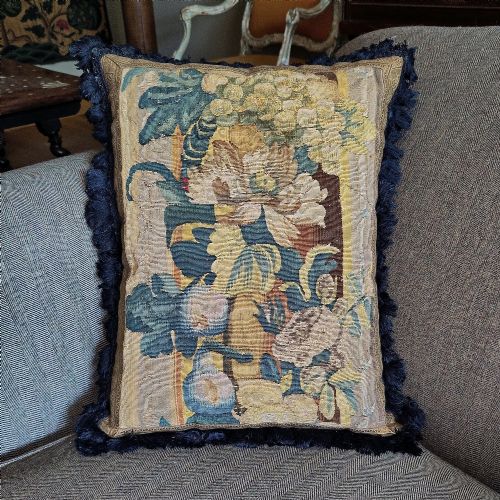
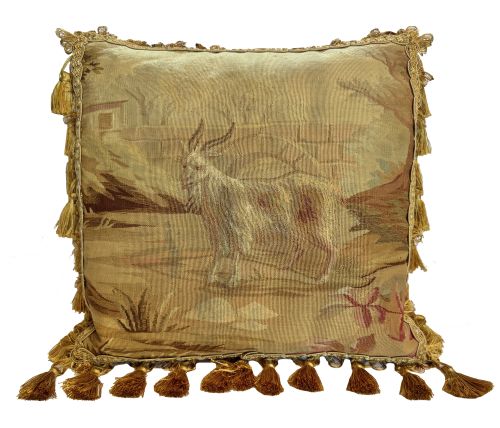
Vintage tapestry throw pillows encompass cushions fashioned from historic woven fragments, including 17th century Flemish tapestry borders and later French Aubusson examples. These pieces repurpose antique textile artistry into functional home furnishings that anchor a seating arrangement.
Buyers encountering vintage tapestry throw pillows on this page will most frequently meet pieces utilising 19th century Aubusson designs alongside various kilim cushions. Such items transform fragments of historical weaving into decorative cushions suited for daily interiors.
How they were made
These pieces rely on wool, silk, and cotton woven by hand into complex pictorial or geometric patterns. Artisans constructed the textile panels centuries before mounting them as cushions.
Finishing touches often include passementerie trim, securing the edges of fragile historical fragments. Linen backing frequently supports the vintage textile face, providing structural stability.
Vintage Tapestry Throw Pillows Retail Price Guide 2026
Typical asking prices for vintage tapestry throw pillows among the pieces listed under this phrase on Sellingantiques today, from the lower quarter to the upper quarter. They describe what is for sale here now, not the wider market.
Listings feature items spanning the seventeenth through the nineteenth centuries, incorporating wool, silk, cotton, and linen materials.
What varies in quality
The distinction between ordinary and exceptional examples rests upon the integrity of the textile weave and the historical importance of the fragment. Intricate pictorial detail in Aubusson or Flemish borders commands greater visual weight than simpler geometric kilim work.
Original material survival dictates the caliber of each cushion, particularly when passementerie edging remains intact alongside the main textile face. Condition of the underlying wool and silk fibres ultimately defines the piece.
The Vintage Tapestry Throw Pillows Glossary
- Aubusson
- A style of tapestry woven in the French town of Aubusson, known for floral and pictorial scenes. These panels frequently appear repurposed as cushion faces.
- Flemish tapestry
- A historic weaving tradition originating in Flanders, celebrated for elaborate figurative borders and pastoral scenes. Fragments of these works often form antique cushions.
- Kilim
- A flatwoven carpet or rug tradition originating in Anatolia, utilising traditional tribal motifs. These durable textiles are frequently fashioned into decorative cushions.
- Passementerie
- Decorative trims such as tassels, fringes, and corded edgings applied to textiles. These elements finish the borders of antique cushions.
Vintage Tapestry Throw Pillows: Frequently Asked Questions
Are these pillows made from original antique fragments?
Many examples incorporate genuine historic textile fragments salvaged from older wall hangings, rugs, or borders. These pieces are then mounted onto supportive backing fabrics to create usable cushions.
This method preserves deteriorating works of art in a functional format. The age of the face textile typically defines the period of the piece.
How do I style a tapestry cushion?
Pair these textured cushions with neutral leather or linen sofas to let the historic patterns stand out. Mixing floral Aubusson designs with geometric kilim pieces creates visual depth.
Allow the rich colours of the wool and silk to dictate surrounding room accents. Their substantial presence suits traditional and eclectic interior schemes alike.
What is the difference between Aubusson and kilim cushions?
Aubusson cushions originate from French weaving traditions and typically display pictorial floral or pastoral motifs in soft wool and silk. Kilim cushions stem from Anatolian traditions and feature flatwoven geometric patterns.
Each style offers a distinct aesthetic, ranging from ornate French Rococo elegance to rustic tribal charm. The choice depends entirely on the desired interior atmosphere.