

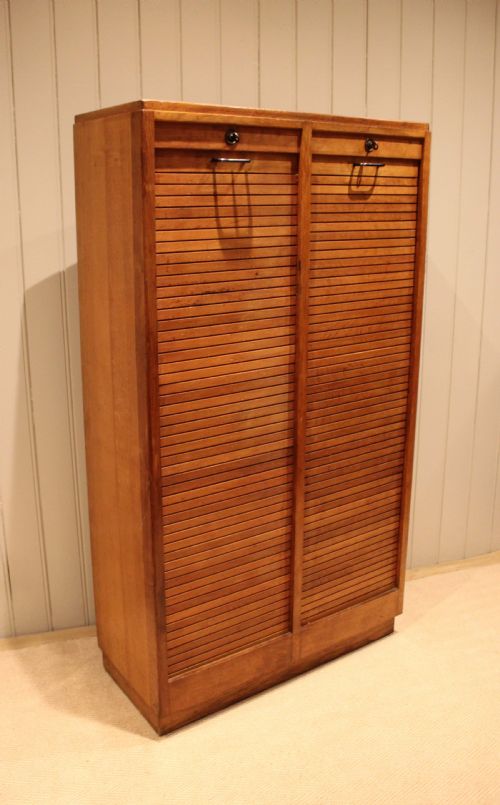
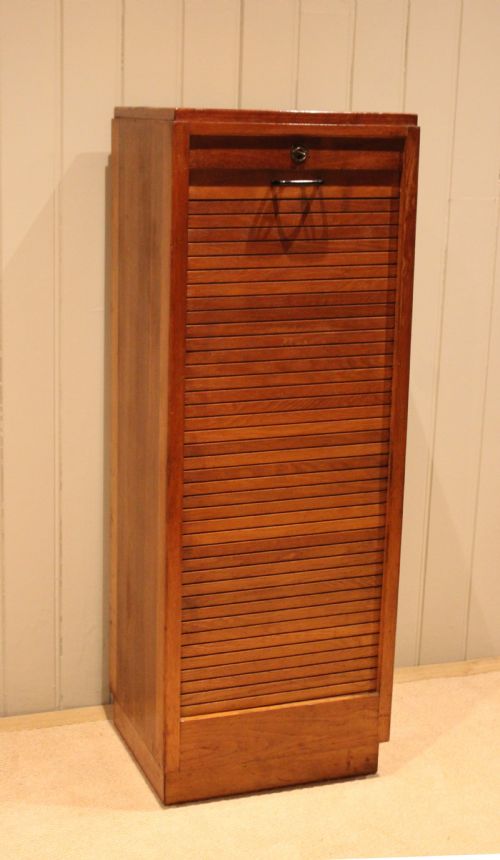


Vintage Tambour Filing Storage
Vintage tambour filing storage offers clever slatted roll-front doors that conceal business papers while saving precious floor space in compact rooms.
Vintage Tambour Filing Storage
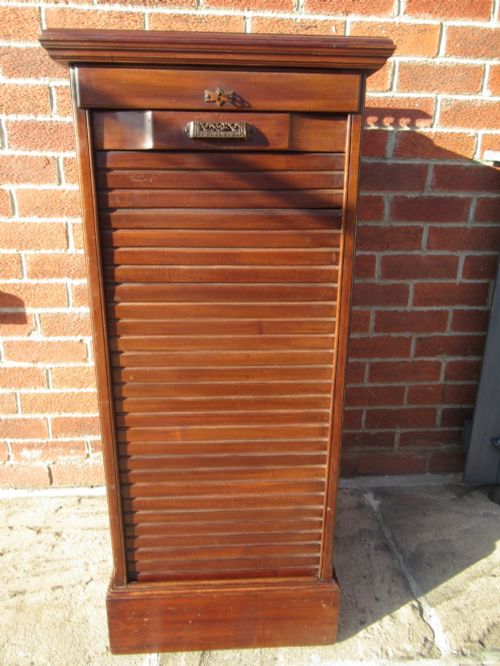
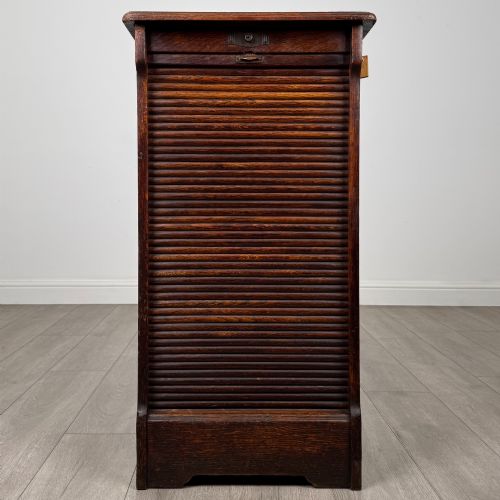
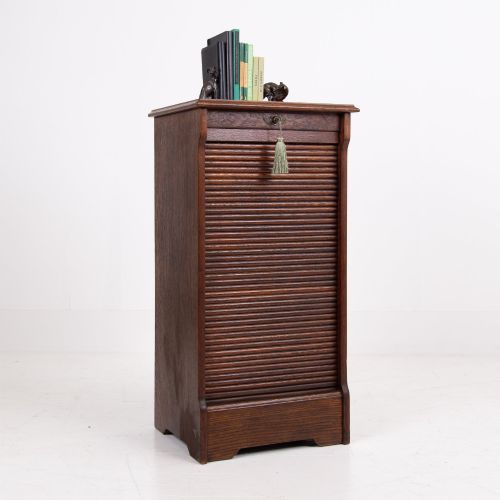
Vintage tambour filing storage consists of practical office furniture designed with flexible slatted doors that slide smoothly around a track to reveal internal shelving or document slots. When you search for vintage tambour filing storage, you encounter sturdy vertical cabinets built to keep office paperwork tidy without requiring clearance for swinging doors.
How they were made
Cabinet makers constructed the primary carcases of these pieces using solid timbers such as oak and mahogany, occasionally employing pine or steel for structural support. Brass hardware appears on handles and label holders, whilst canvas backing sometimes reinforces the flexible slatted tambour doors.
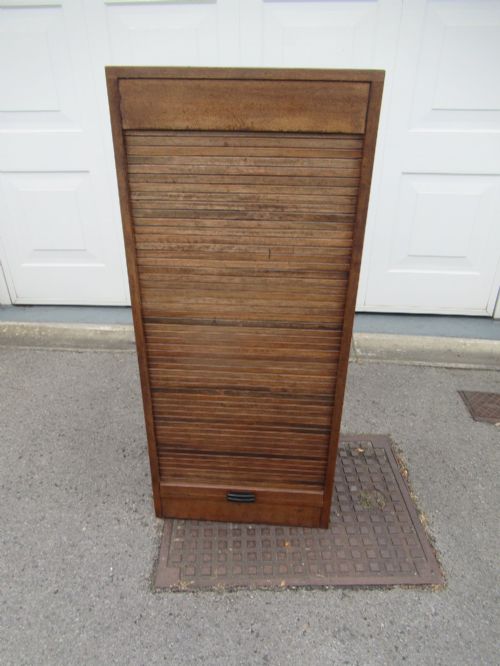
The distinctive roll-front mechanism relies on narrow wooden strips glued to a flexible fabric or canvas backing, allowing the door to curve around internal tracks. Carpenters joined the cabinet bodies using durable traditional joinery to withstand daily office use.
Vintage Tambour Filing Storage Retail Price Guide 2026
Typical asking prices for vintage tambour filing storage among the pieces listed under this phrase on Sellingantiques today, from the lower quarter to the upper quarter. They describe what is for sale here now, not the wider market.
Listings span the Edwardian period, nineteen-hundreds, nineteen-twenties, nineteen-thirties, and nineteen-forties, utilising oak, mahogany, pine, brass, steel, and canvas.
What varies in quality
The standard of timber selection sets apart different examples, with figured oak or rich mahogany representing the upper tier of production. Plain pine utility pieces from later decades prioritize straightforward function over decorative grain.
The smoothness of the sliding mechanism distinguishes finer cabinets from more utilitarian ones. A well-fitted tambour door glides effortlessly along its tracks without catching, reflecting precise initial carpentry.
The Vintage Tambour Filing Storage Glossary
- Tambour
- A flexible door formed of narrow vertical strips of wood attached to canvas, allowing it to slide around a curved track. This clever design saves space in tight office environments.
- Art Deco
- A design style emerging in the early twentieth century characterised by sleek geometric lines and modern ornamentation. Cabinets in this style bring a distinct period aesthetic to office storage.
- French Utility
- A functional design classification originating in France during the nineteen-forties. Pieces from this movement focus on honest construction and straightforward practicality.
Vintage Tambour Filing Storage: Frequently Asked Questions
How do tambour doors work?
Tambour doors are constructed from many narrow wooden slats glued to a flexible canvas backing. This allows the entire panel to bend smoothly around a track inside the cabinet body.
When pushed, the door disappears into the side or back of the cabinet, keeping the contents accessible without taking up extra room in front of the unit.
What periods do these cabinets span?
The pieces available here generally date from the Edwardian period at the start of the twentieth century through the nineteen-thirties and nineteen-forties. Earlier examples often feature rich dark oak, whilst mid-century utility pieces showcase simpler lines.
Stylistic influences range from classic Edwardian craftsmanship to geometric Art Deco touches and practical French utility designs.
How can I use a filing cabinet at home?
These compact cabinets provide practical storage for paperwork, stationery, and modern clutter in a home study or living room. The vertical orientation maximises storage capacity while occupying a minimal footprint on the floor.
The enclosed roll-front design keeps documents hidden from view, maintaining a tidy appearance in domestic interiors.
What timbers were commonly used?
Oak is the predominant timber found in these office cabinets, appearing in light, dark, and figured varieties. Mahogany and pine also feature alongside metal and canvas elements.
Brass handles and label frames frequently complement the wooden carcases, adding subtle metallic detail to the functional design.