
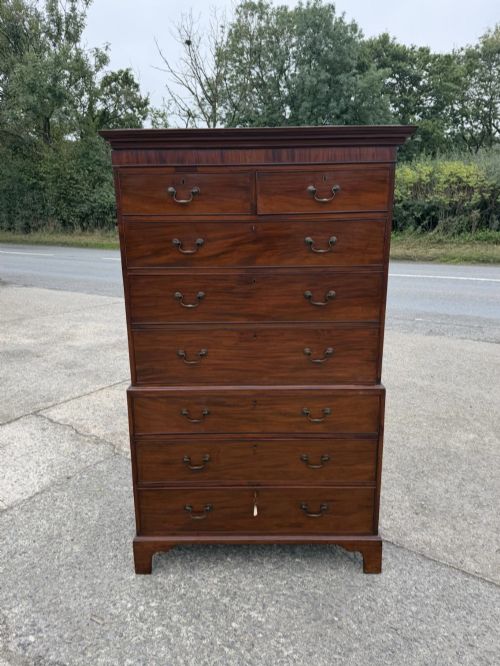
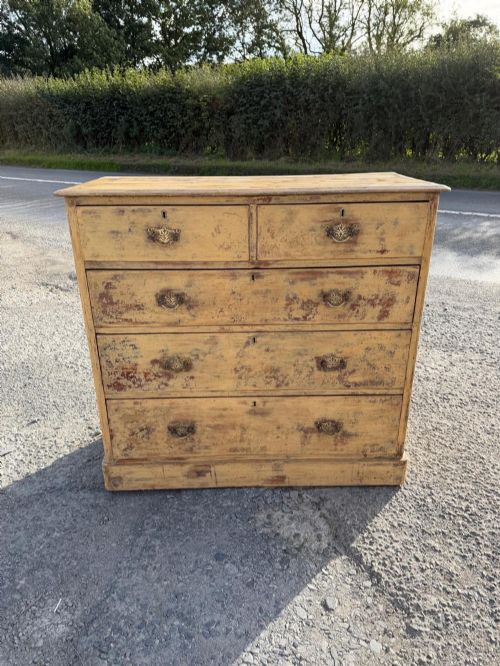
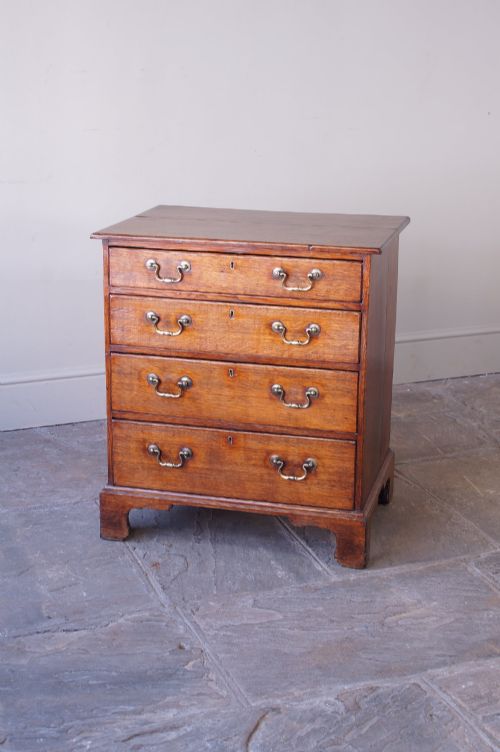
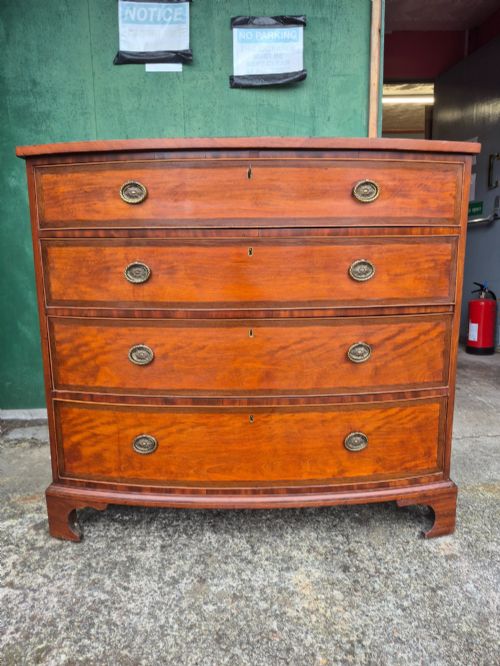
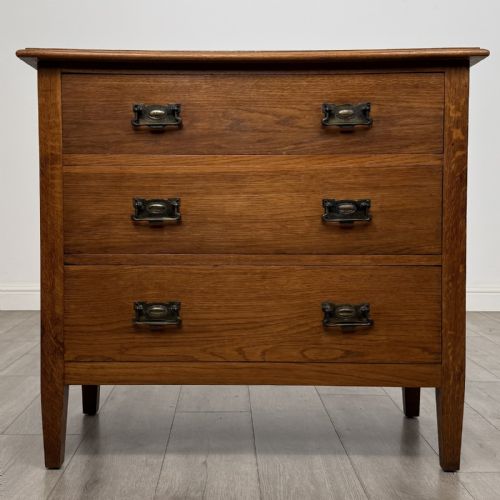
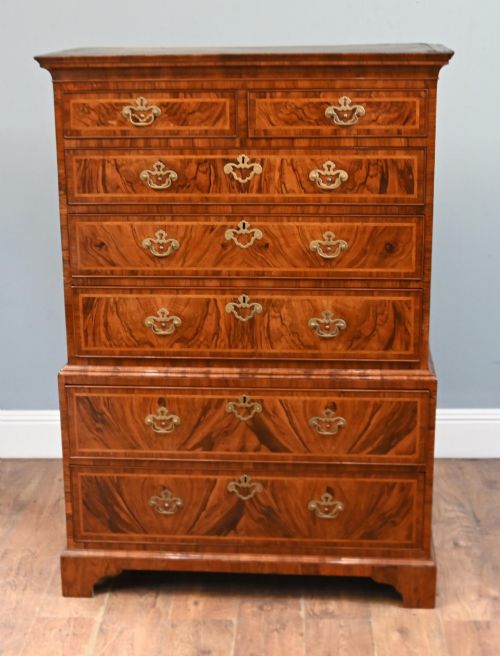
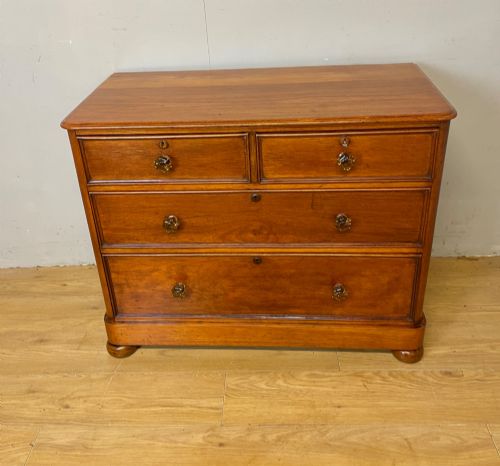
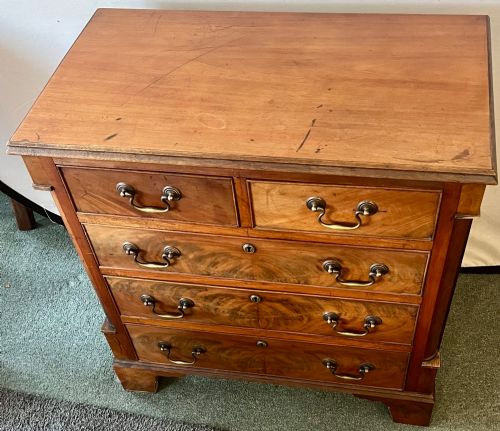
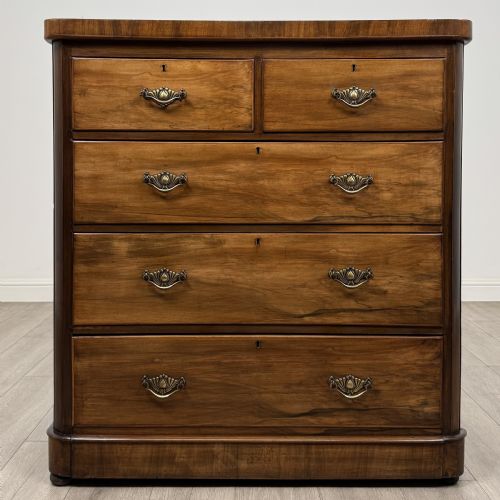
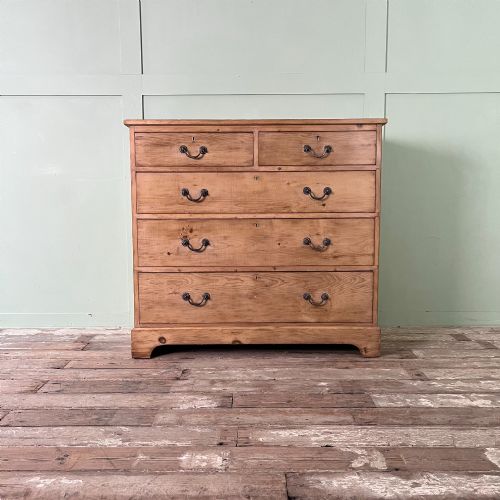
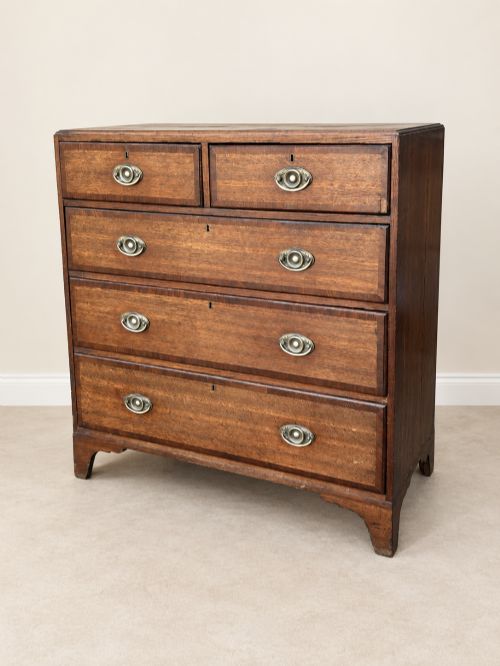
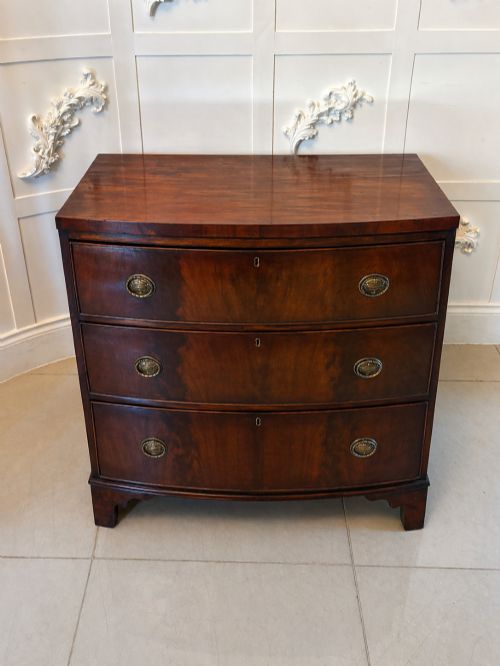
Vintage Tallboy Chest Drawers
These vintage tallboy chest drawers offer vertical storage built in mahogany, oak, walnut, and pine across several historic periods.
Vintage Tallboy Chest Drawers
A vintage tallboy chest drawers combines the height of a tallboy or chest on chest with the deep storage capacity of traditional drawer units, designed to maximise vertical space in a room. Buyers searching this phrase encounter forms spanning Georgian, Victorian, Edwardian, and Art Deco eras.
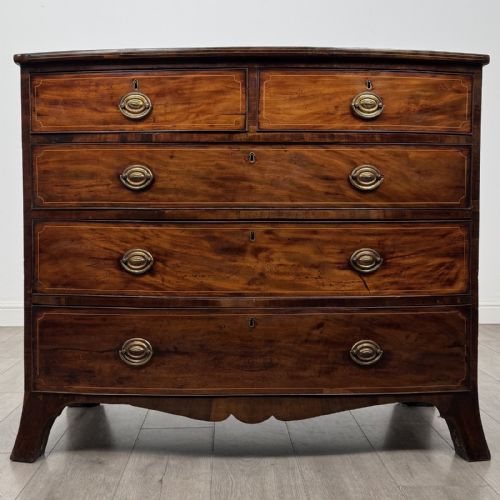
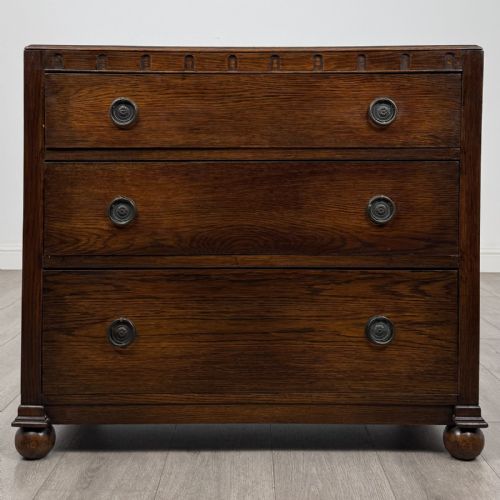
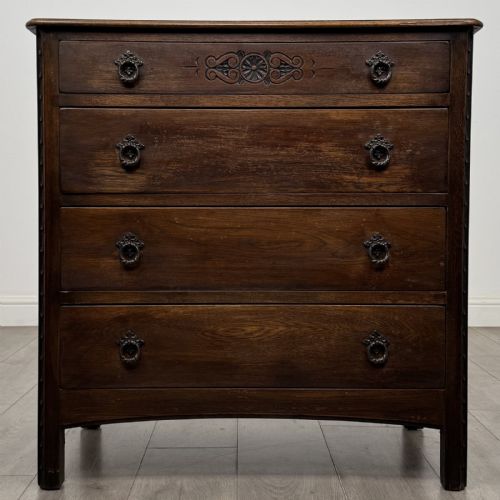
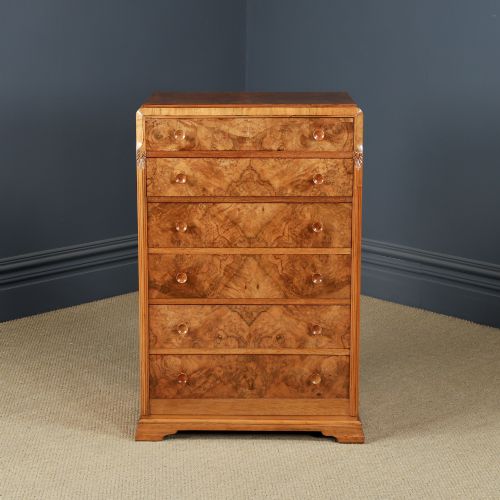
The selection ranges from George III mahogany examples and Regency flame mahogany pieces to Edwardian oak furniture, 1930s walnut designs, and utilitarian pine units. Taller configurations like the Wellington chest and chest on chest appear frequently alongside narrow Georgian style iterations.
How they were made
Cabinet makers utilised solid timbers such as mahogany, oak, pine, and walnut, frequently applying flame mahogany veneer, burr walnut, or satinwood banding to prominent exterior surfaces. Brass handles, escutcheons, and iron hardware provide functional and decorative contrast to the timber.
Joinery methods rely on traditional drawer construction, often featuring tongue and groove joints, internal dust boards, and graduated drawer heights. Certain pieces incorporate specialised forms like brushing slides, bonnet tops, or locking mechanisms associated with Wellington chests.
The inventory spans the 18th century, Georgian, Regency, Victorian, Edwardian, and Art Deco periods.
What varies in quality
Quality shifts according to the selection of timber veneers and the precision of the cabinetwork, from figured walnut and flame mahogany to plain utilitarian pine. Higher grade items display carefully matched grain patterns across multiple drawers and refined proportions.
The integrity of the internal construction, including smooth drawer action and original brass fittings, distinguishes standard regional pieces from superior metropolitan workshop productions.
T G Seddon·Sir Clough Williams Ellis
The Vintage Tallboy Chest Drawers Glossary
- Tallboy
- A tall chest of drawers, often constructed as one cabinet stacked upon another, designed to provide substantial storage within a compact floor footprint.
- Chest on chest
- A two-part tall cabinet where a smaller upper chest sits directly upon a deeper lower chest, characteristic of Georgian and later furniture.
- Wellington chest
- A tall, narrow locking chest of drawers secured by a hinged vertical side pilaster locking bar, originating in the nineteenth century.
- Bow front
- A convex curved cabinet front popular during the Regency and Georgian periods that softens the rectangular profile of a chest.
- Brushing slide
- A pull-out shelf integrated above the top drawer of a chest, historically utilised for folding clothes or writing.
Vintage Tallboy Chest Drawers: Frequently Asked Questions
How do I identify a Georgian tallboy?
Georgian tallboys typically feature distinct architectural proportions, often constructed as a chest on chest using solid mahogany with cockbeaded drawer edges and bracket feet.
Closer inspection reveals hand-cut dovetailing and period brass drop handles or batwing plates that differ from later Victorian and Edwardian manufacturing methods.
Where should I place a tallboy?
A tallboy suits bedrooms, dressing rooms, or hallways where floor space is limited but vertical storage volume is required.
Ensure adequate clearance for opening drawers and allow sufficient wall space to accommodate the height of tall chest on chest or Wellington configurations.
What is the difference between a tallboy and a standard chest?
A tallboy is noticeably taller and narrower than a standard chest of drawers, historically combining wardrobe-like capacity within a chest footprint.
Standard chests remain lower to the waist or shoulders, whereas tallboys often require additional height or a two-section stacked construction.
How do I care for antique veneer?
Antique veneer requires stable indoor humidity away from direct sunlight and heat sources to prevent timber shrinkage and lifting.
Dust regularly with a dry cloth and occasionally apply appropriate wax polish to nourish the timber surface without building up excessive residue.