


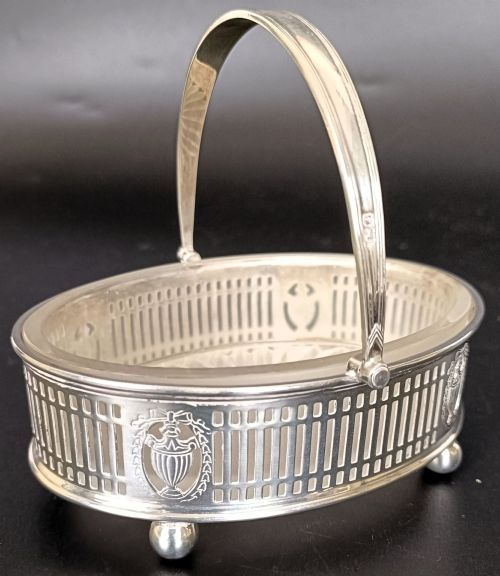


Vintage Swing Handle Basket
A vintage swing handle basket brings tangible utility and period charm to a table, spanning formal silver cake vessels to sturdy copper cauldrons.
Vintage Swing Handle Basket
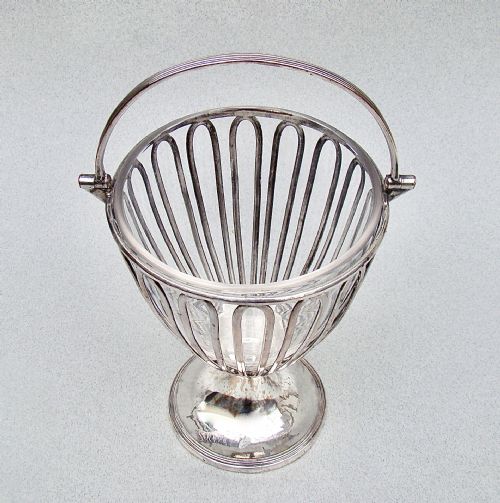
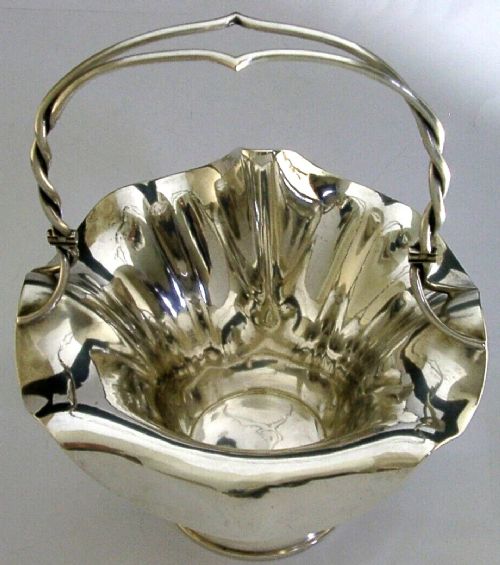
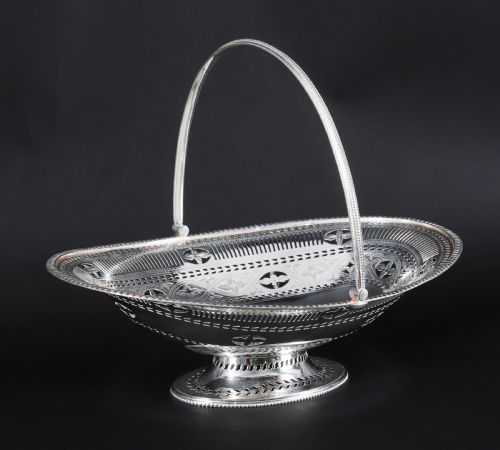
A vintage swing handle basket represents a diverse category of domestic metalware designed for serving fruit, bread, cakes, or sugar, distinguished by a flexible arching handle that lowers to either side. These objects appear across multiple eras, including Georgian, Victorian, Edwardian, and later twentieth-century periods.
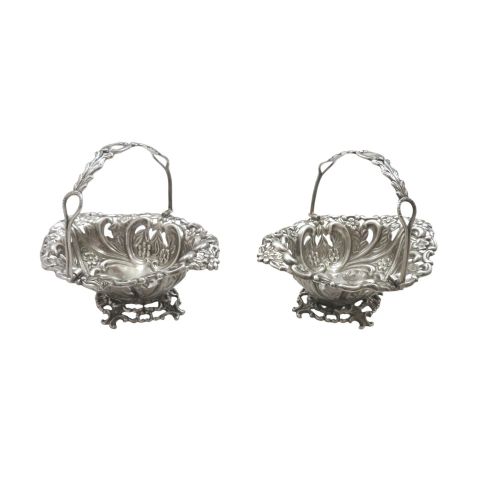
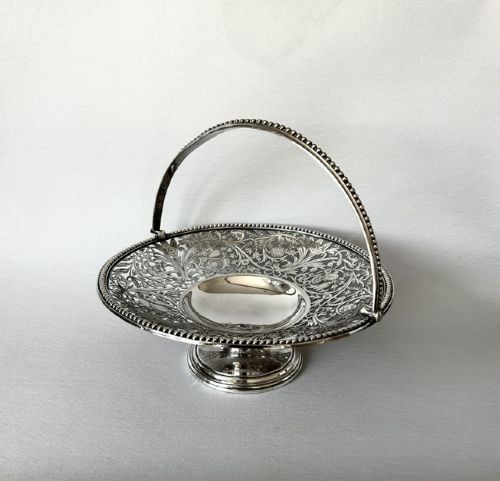
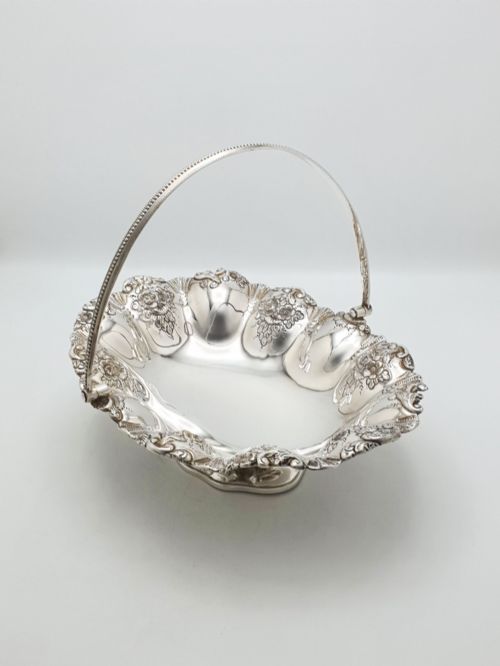
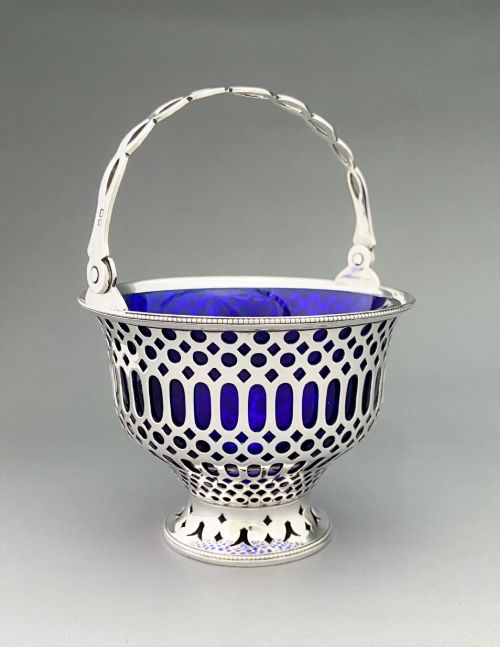
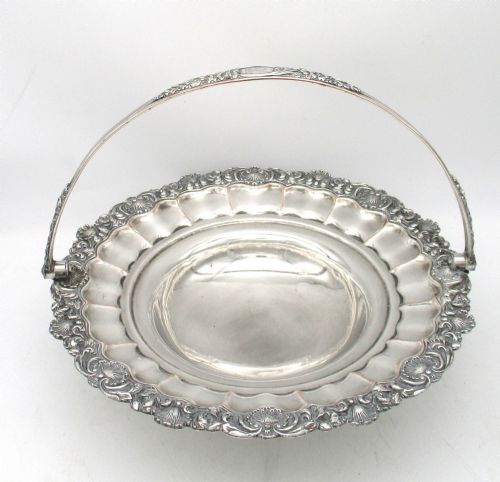
The version most commonly encountered on this page is the silver plated or sterling silver fruit or cake basket, often featuring decorative pierced work, repoussé rims, or swing handles originating from the nineteenth and early twentieth centuries. Alongside these silver table pieces, domestic forms range into copper cauldrons with wrought iron handles and hammered pewter bowls.
Makers and workshops across Georgian, Victorian, and Edwardian periods produced these vessels in various shapes, from oval fruit containers to large round bread receptacles and wirework sugar vases. Each piece reflects the dining and serving customs of its respective era, utilising distinct ornamental styles such as Art Nouveau, Neo-Classical Revival, and George V designs.
Materials and Techniques
Silversmiths and metalworkers utilised solid silver, sterling silver, silver plate, and Old Sheffield Plate, alongside copper, wrought iron, and pewter. Silver plated items often combined a base metal core with an applied silver layer, whilst Old Sheffield Plate fused a silver sheet onto a copper base.
Manufacturing techniques relied heavily on piercing, wirework, hammering, and repoussé decoration. Artisans hand-pierced metal walls to create intricate openwork patterns, shaped rims with floral repoussé motifs, or hammered pewter into footed bowls, attaching the movable swing handles securely to the main body.
Vintage Swing Handle Basket Retail Price Guide 2026
Typical asking prices for vintage swing handle basket among the pieces listed under this phrase on Sellingantiques today, from the lower quarter to the upper quarter. They describe what is for sale here now, not the wider market.
Listings feature periods spanning from Georgian and Victorian eras through Edwardian times to the 1930s.
Markers of Quality
Quality in a vintage swing handle basket is evident in the crispness of the piercing, the weight of the metal, and the structural integrity of the handle mechanism. Heavier silver gauges and well-balanced proportions separate finer table service items from simpler utilitarian wares.
The refinement of decorative details, such as chased floral rims, cast silver mounts, or hand-hammered surfaces, distinguishes superior craftsmanship. Pieces bearing clear hallmarks or maker marks also demonstrate a higher standard of period production.
Elkington·James Dixon
The Vintage Swing Handle Basket Glossary
- Swing handle
- A movable arching metal handle attached to opposite sides of a basket or bowl, designed to drop flat against the rim.
- Old Sheffield Plate
- An early method of fusing a thin sheet of silver to a thick copper ingot, creating plated metal where the copper edge occasionally shows through wear.
- Repoussé
- A metalworking technique where the artisan hammers or pushes the design from the reverse side to form raised ornamentation on the front.
- Pierced work
- Openwork patterns cut through the metal wall of a basket, frequently utilised to lighten the visual weight of silver fruit and cake vessels.
- Wirework
- An arrangement of soldered metal wires forming open geometric or floral patterns, common in sugar vases and lighter baskets.
Vintage Swing Handle Basket: Frequently Asked Questions
What were vintage swing handle baskets used for?
These vessels served primarily on dining tables for presenting fruit, bread, cakes, or sugar during formal meals and afternoon tea.
The movable handle allowed servants or guests to lift the basket easily and passed food conveniently around the table.
How do I date a silver basket?
Dating relies on reading hallmarks, maker marks, and stylistic clues such as Neo-Classical pierced designs or Art Nouveau flowing lines.
Changes in metal composition, such as the presence of Old Sheffield Plate versus later silver plate, also indicate specific nineteenth-century periods.
Can I use these baskets for daily dining?
Many solid silver and silver plated baskets remain robust enough for regular serving duties on a modern dining table.
Careful hand washing without abrasive cleaners preserves the silver plating and the polished finish of the metal.
How do I distinguish sterling silver from silver plate?
Sterling silver pieces typically display official assay office hallmarks indicating silver purity, whereas silver plated items carry manufacturer marks or trade designations.
Close inspection around high points often reveals the underlying copper or base metal if the silver plating has worn thin over generations of use.