




Vintage Surveying Level
These vintage surveying level instruments are precision brass and timber tools built for mapping and measurement.
Vintage Surveying Level
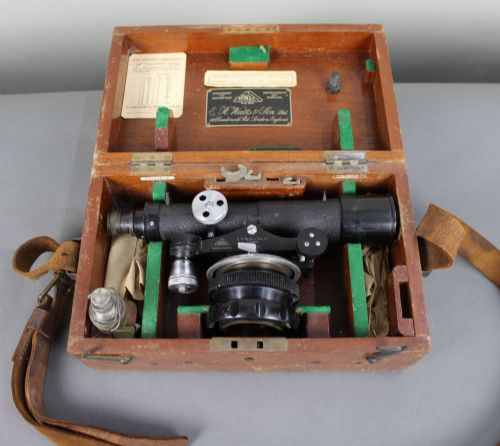
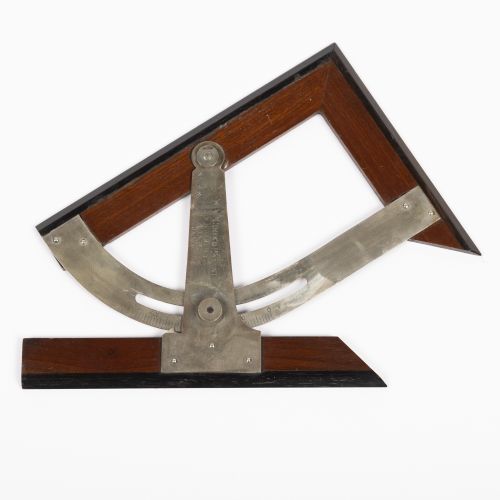
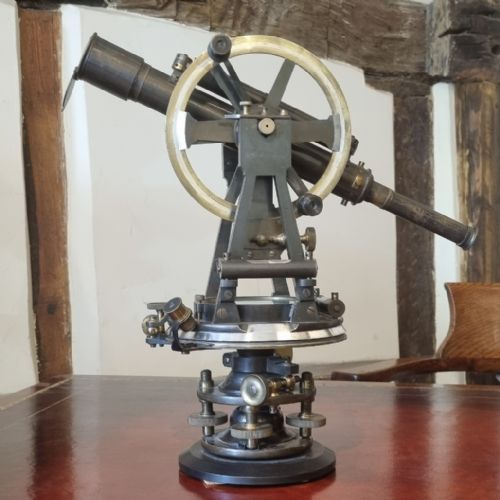
When you search for a vintage surveying level, you encounter brass and timber scientific instruments dating from the eighteenth century to the early twentieth century. These mechanical tools include theodolites, transit instruments, drainage levels, and clinometers housed in fitted wooden cases.
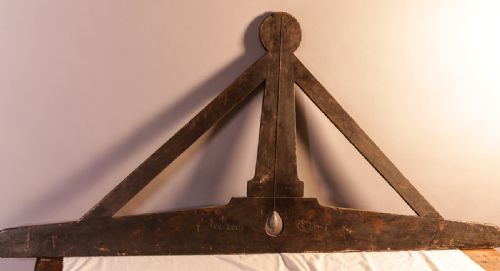
The pieces on this page span Georgian, Victorian Scientific, and Industrial Scientific styles. You will find items ranging from early architects levels to precision instruments signed by notable makers.
Most examples combine polished metal optics with mahogany or boxwood components designed for fieldwork. They reflect an era when site measurement relied entirely on mechanical accuracy and graduated silvered metal dials.
Materials and construction
The manufacturing process involved precise metalworking and hand-engraved graduations on dials and vernier plates. Makers integrated steel components for strength and utilised specialised internal lenses to achieve clear sighting.
The listings span from the eighteenth century to the twentieth century, utilising brass, mahogany, glass, and boxwood.
Assessing quality in scientific instruments
Quality in a vintage surveying level rests on the precision of its mechanical movement and the clarity of its signed inscriptions. Finely engraved silvered metal dials and smooth focusing adjustments distinguish superior workshop production from standard utility pieces.
The survival of original fitted timber cases and supplementary lenses elevates an instrument. Superior examples bear the distinct signature of a recognised maker on the brass body, marking them out as high-grade scientific apparatus.
W S Jones·L Casella and Co·Cooke Troughton and Simms·Negretti and Zambra·Elliott Bros of London·Alexander Adie of Edinburgh·W H Harling·WF Stanley
The Vintage Surveying Level Glossary
- Theodolite
- A precision instrument for measuring horizontal and vertical angles. It mounts on a tripod and incorporates telescope sights alongside graduated metal circles.
- Clinometer
- A tool used for measuring angles of slope or tilt relative to gravity. These often appear in pocket sizes or integrated into folding boxwood frames.
- Vernier
- A secondary sliding scale that allows readings to a fraction of the main graduated division. This device ensures high precision on scientific instruments.
- Transit Instrument
- A telescope that rotates on an axis perpendicular to its mounting, used for observing celestial bodies or establishing a line of sight.
- Altazimuth
- A mounting that allows the telescope to move in both altitude and azimuth directions. This setup facilitates comprehensive coordinate measurement.
Vintage Surveying Level: Frequently Asked Questions
What is a vintage surveying level?
A vintage surveying level is a mechanical scientific instrument used by engineers and architects to measure elevations and establish horizontal planes.
These pieces typically feature brass telescopes, glass optics, and graduated metal dials housed within protective wooden cases.
Are these instruments still accurate?
While many retain their mechanical functionality, they are primarily valued as historic scientific artefacts and decorative collector pieces.
Calibration can drift over centuries, so modern users treat them as examples of historical engineering rather than primary fieldwork tools.
How should I display one?
These instruments suit placement on desks, shelves, or specialised display cabinets where their polished brass surfaces can be appreciated.
Keeping them away from direct sunlight and excessive moisture helps preserve the original timber cases and delicate silvered metal.