

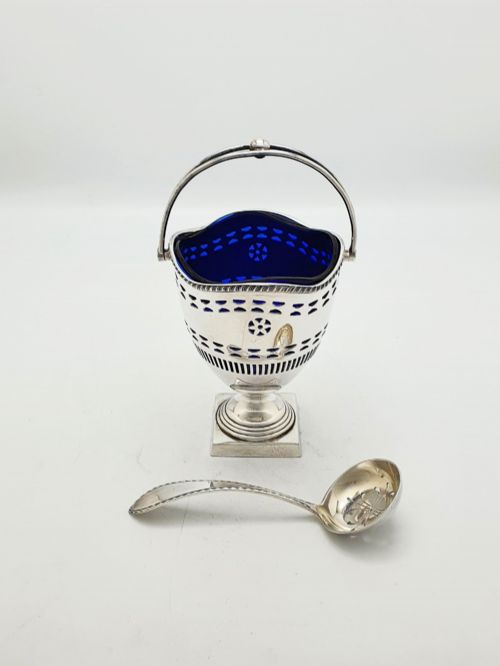
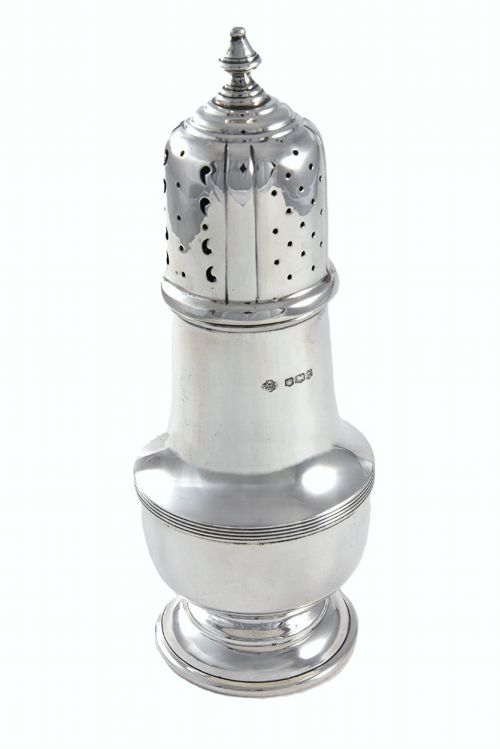


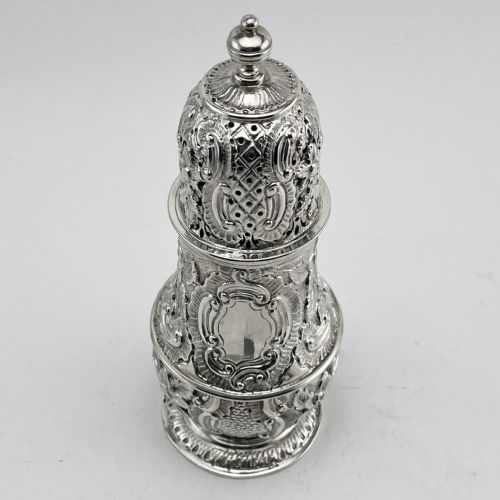


Vintage Sugar Sifter
These vintage sugar sifter pieces are refined tabletop vessels and spoons designed to dust fine sugar over pastries, desserts and fruit.
Vintage Sugar Sifter
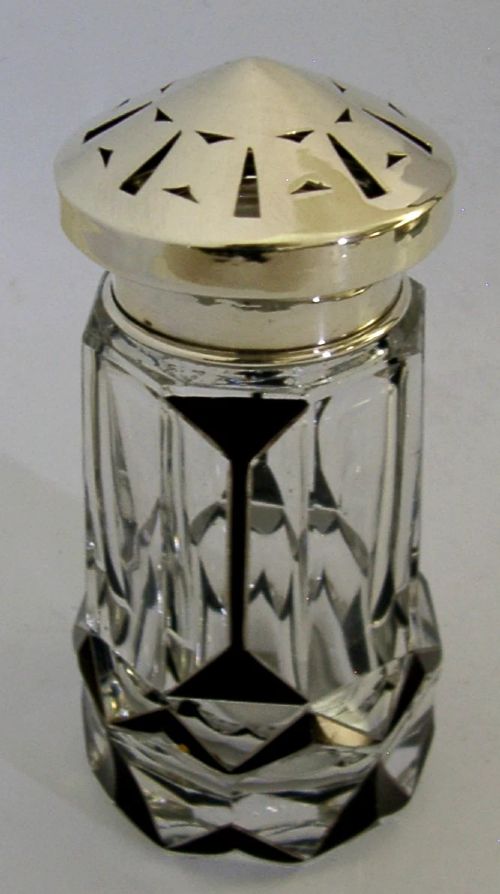
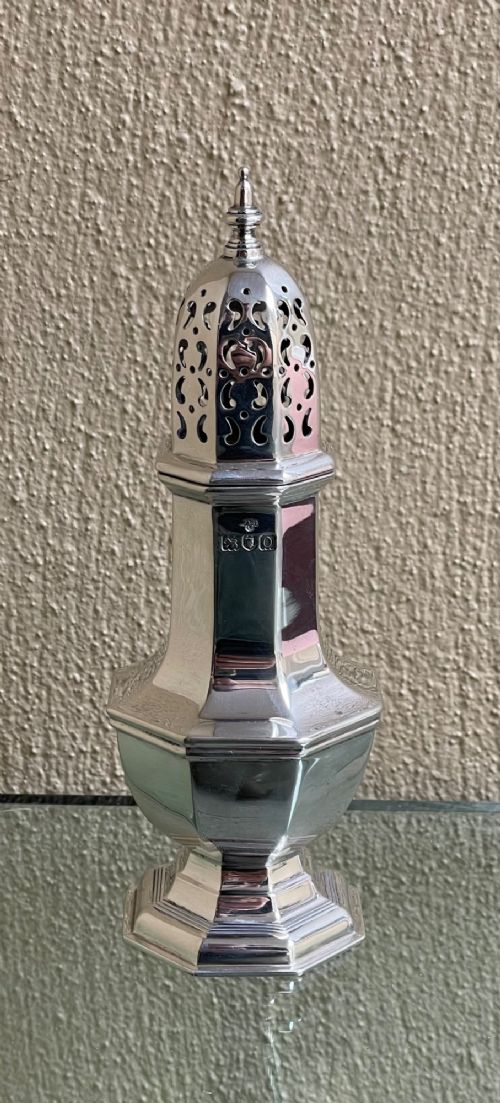
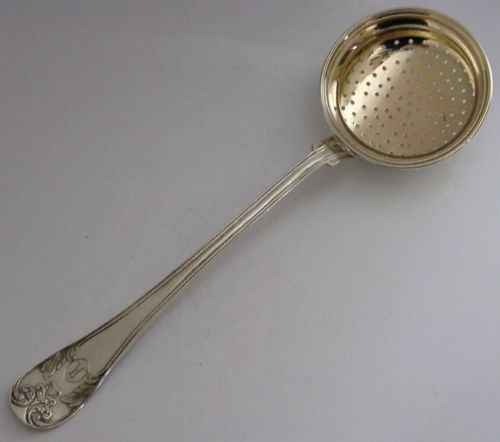
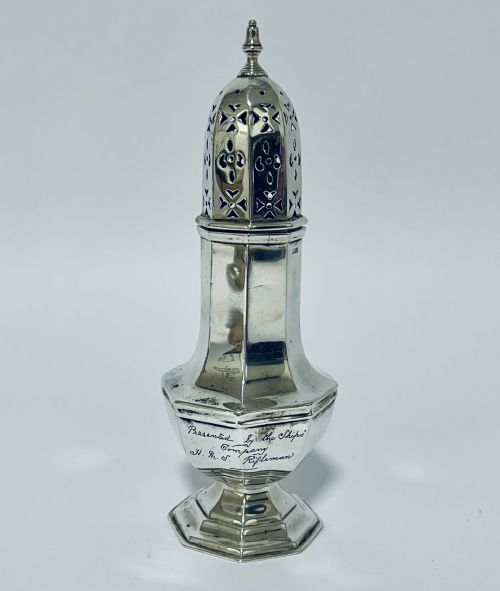
A vintage sugar sifter covers a diverse group of table accessories intended for dispensing powdered or granulated sugar. The forms range from tall lidded shakers and casters to specialised spoons and pierced bowls paired with liners.
The selection on this page draws from multiple periods, including the Victorian era, the Edwardian period, and the Art Deco style of the twentieth century. Solid silver and silver plate appear frequently alongside glass liners and gilt finishes.
Traditional forms include standard casters with perforated tops, polygon sides, and cornucopia shapes, as well as distinct strainer ladles and cranberry or cobalt glass bowls.
What varies in quality
The distinction between standard examples and finer items rests upon the weight of the metal, the crispness of the piercing, and the integrity of the hallmarks. Heavy gauge solid silver and detailed hand-pierced lids command greater attention from collectors.
Design execution also separates ordinary production from exceptional pieces, especially where makers employ geometric polygon sides, figurative cornucopia motifs, or combined glass and metal construction.
Vintage Sugar Sifter Retail Price Guide 2026
Typical asking prices for vintage sugar sifter among the pieces listed under this phrase on Sellingantiques today, from the lower quarter to the upper quarter. They describe what is for sale here now, not the wider market.
Listings span the nineteenth century, Edwardian era, and Art Deco period, utilising sterling silver, silver plate, and coloured glass.
The Barker Brothers·James Dixon & Sons Ltd·Evald Nielsen·Horace Woodward & CO LTD·Roberts & Belk·Berthold Muller Hanau
The Vintage Sugar Sifter Glossary
- Caster
- A lidded vessel with a perforated top used for sprinkling sugar or spices. They often feature bulbous or tapering bodies.
- Silver Plate
- A base metal coated with a thin layer of silver. This technique offered an accessible alternative to solid silver.
- Silver Gilt
- Silver that has been plated or coated with a thin layer of gold. It creates a warm, rich surface appearance on the interior or exterior of vessels.
- Hallmark
- An official stamp applied to precious metals indicating purity, origin, and assay office. These marks help verify the age and metal content of antique items.
Vintage Sugar Sifter: Frequently Asked Questions
What is a vintage sugar sifter used for?
These vessels and spoons dispense fine sugar onto desserts, pastries, and fresh fruit at the dining table. They allow for an even, controlled dusting without clumping.
Historically, they held castor sugar during formal tea and dinner services before pre-packaged fine sugars became common.
How do I tell Edwardian pieces from Victorian ones?
Victorian pieces often display heavier ornamentation, floral motifs, and revivalist styles such as Rococo revival. Hallmarks and date letters stamped on the metal provide the exact year of manufacture.
Edwardian items frequently lean towards lighter, refined proportions and simpler classical revivals following the turn of the twentieth century.
Are these pieces made of solid silver?
The inventory includes both solid sterling silver items and silver plate wares. Hallmarks on the metal will indicate sterling standard or plated composition.
Glass elements like cobalt and cranberry glass liners are often paired with silver or plated frames and spoons.
How do I clean a vintage sugar sifter?
Polishing should be done gently with a specialised silver cloth to preserve hallmarks and delicate pierced details. Avoid harsh abrasive cleaners that can damage thin silver plate.
Glass liners can usually be removed and washed separately in warm soapy water.