
Vintage Study Writing Table
A vintage study writing table provides a practical workspace, drawing on nineteenth-century and early twentieth-century designs crafted from mahogany, oak, and walnut.
Vintage Study Writing Table
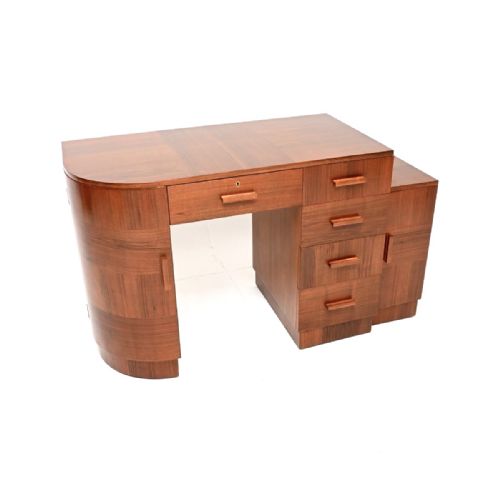
A vintage study writing table encompasses freestanding desks, library tables, and pedestal forms designed for domestic work and correspondence. The pieces appearing here span the Victorian, Edwardian, and Art Deco periods, originating from English and French workshops.
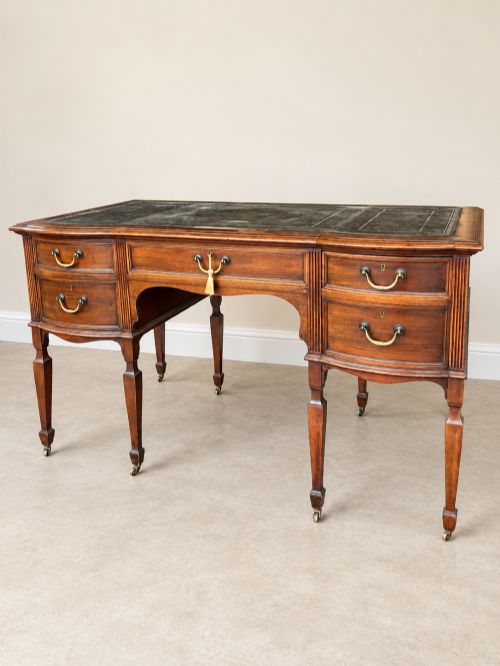
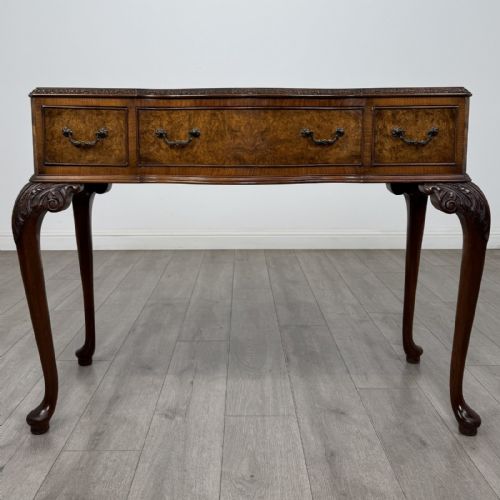
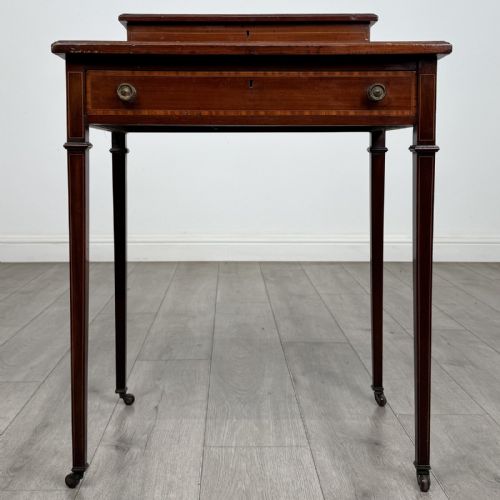
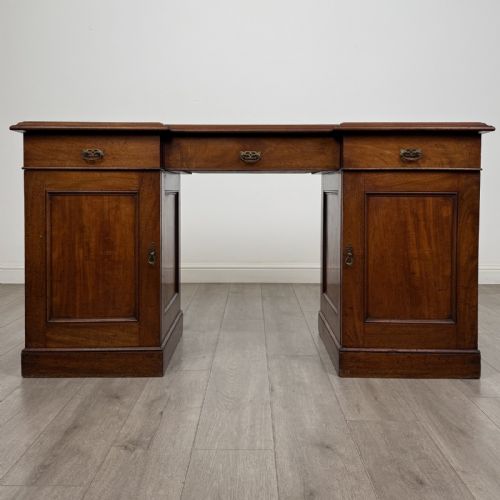
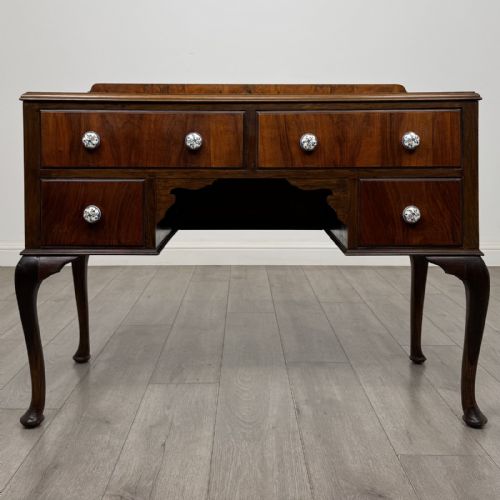
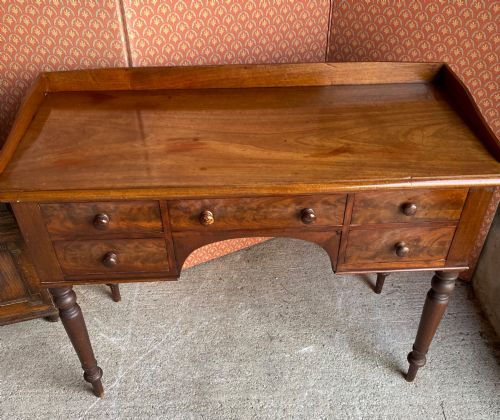
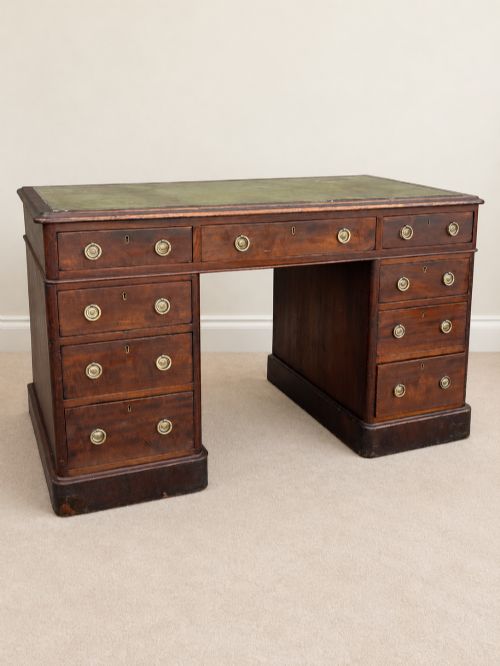
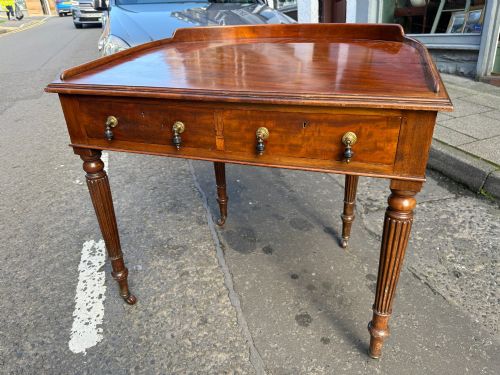
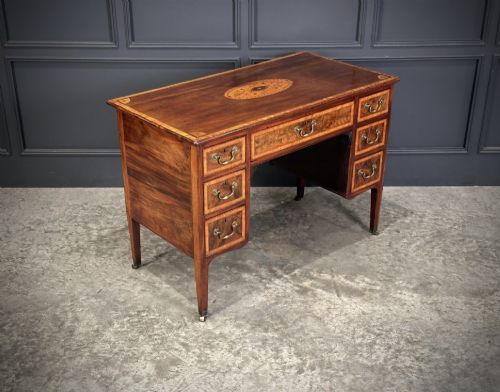
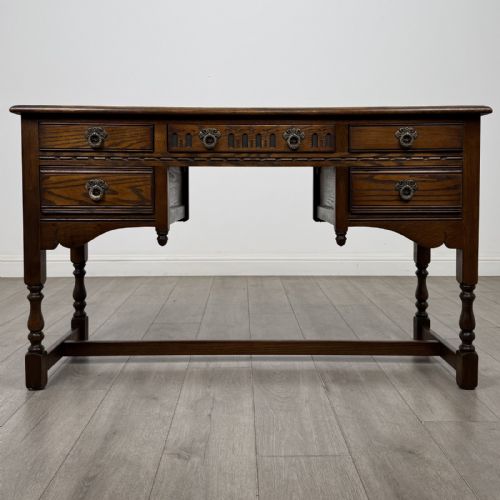
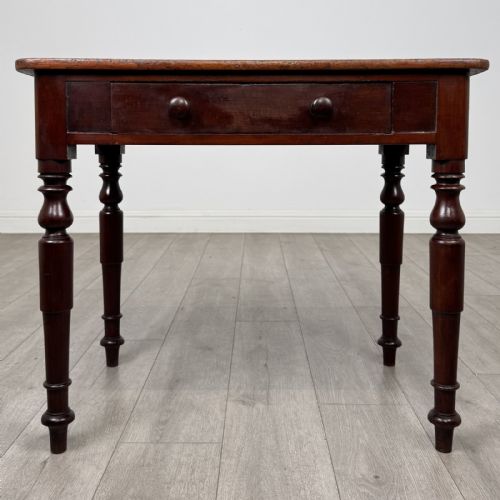
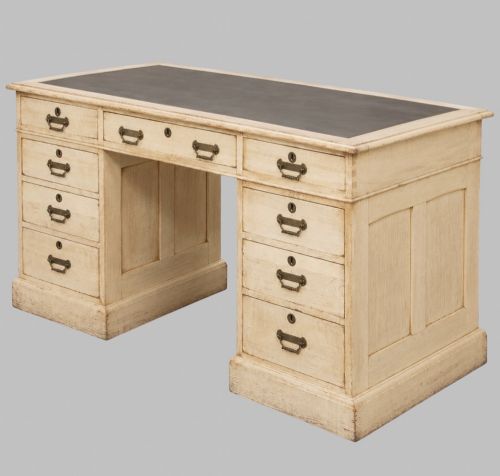
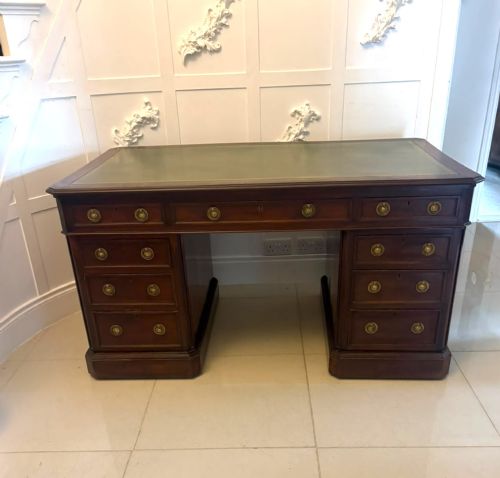
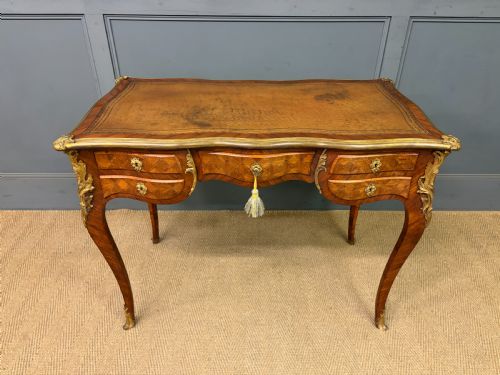
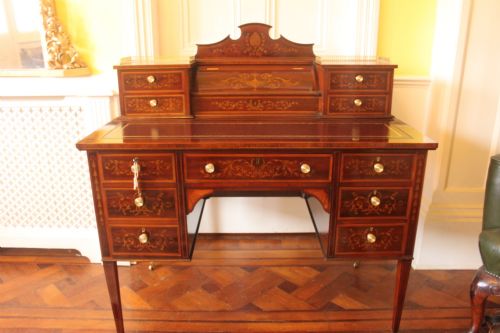
The version most frequently met on this page is the Edwardian or Victorian pedestal desk in mahogany or oak, often fitted with inset leather writing surfaces and multiple drawers. Alternative forms include compact writing tables with turned or cabriole legs and walnut desks featuring inlaid details.
Makers such as Edwards & Roberts and Howard and Sons occasionally appear among these listings alongside utilitarian pine and pitch pine examples. Buyers encounter everything from simple Arts and Crafts oak tables to elaborate gilt-mounted French parquetry pieces.
Materials and construction methods
Timber selection defines these desks, with solid mahogany, oak, and walnut forming the structural framework, while burr walnut and rosewood provide decorative veneered surfaces. Secondary woods such as pine appear in drawer linings and internal partitions.
Surface details frequently incorporate inset writing panels of red or green leather, sometimes accompanied by brass or ormolu mounts and original hardware. Joinery methods rely on traditional drawer construction and turned or carved pillars supporting the superstructure.
The listings span the Victorian, Edwardian, and Art Deco eras, featuring forms built from mahogany, oak, walnut, and pine.
Assessing craftsmanship and finish
Quality reveals itself in the selection of figured timbers and the precision of inlaid marquetry or parquetry work. Superior examples exhibit refined carving on pillars and legs alongside original hardware and intact leather writing surfaces.
Construction integrity separates standard utility pieces from fine cabinetwork, visible in the snugness of drawer joints and the weight of the timber utilised. Maker attribution, when present through stamps or labels, further distinguishes the work of notable London firms.
Edwards & Roberts·Howard and Sons·Trollope & sons
The Vintage Study Writing Table Glossary
- Pedestal desk
- A heavy freestanding desk comprising two banks of drawers supporting a single top. This form offers substantial storage alongside a central kneehole.
- Partners desk
- A large two-sided table designed for two people to work opposite one another. These pieces feature drawers on both longitudinal faces.
- Parquetry
- Geometric wood mosaic work used for decorative surface patterns. Craftsmen arrange contrasting timbers like walnut and exotic veneers to form intricate geometric designs.
- Ormolu
- Gilded bronze mounts applied to furniture for decorative effect. This technique appears frequently on French revival pieces from the nineteenth and early twentieth centuries.
- Roll top desk
- A cylinder-topped writing desk that conceals the work surface and pigeonholes when closed. The mechanism uses a flexible tambour shutter made of narrow wooden slats.
Vintage Study Writing Table: Frequently Asked Questions
What is a vintage study writing table used for?
These pieces serve as functional home office desks and writing stations. They provide flat writing surfaces and drawer storage for daily paperwork.
Historically, they accommodated correspondence and administrative tasks in private libraries and studies. Today, they integrate into modern workspaces while retaining period character.
How do I identify a Victorian desk?
Victorian desks typically feature dense timbers such as mahogany and walnut, accompanied by substantial pedestals and deep drawers. They often incorporate turned wooden pulls or brass handles.
Construction from this era relies on heavy solid wood frames and traditional dovetail joinery. Many examples include inset leather surfaces in red or green shades.
Are Edwardian desks different from Victorian ones?
Edwardian desks often display lighter proportions, utilising oak, pine, or inlaid mahogany with slender cabriole or tapered legs. The aesthetic reflects a shift towards brighter, less imposing study furniture.
Inlaid satinwood and rosewood details frequently appear alongside Arts and Crafts influences. These pieces generally date from the turn of the twentieth century.
What woods were used for these desks?
Cabinetmakers primarily employed mahogany, oak, and walnut as structural and surface timbers. Burr walnut and rosewood provided decorative veneers for top surfaces and drawer fronts.
Secondary woods like pine appear within drawer carcases and internal framing. Brass, ormolu, and leather complete the primary material palette.