





Vintage Storage Tin
These vintage storage tin examples are practical containers that bring character and historic craft to everyday interiors.
Vintage Storage Tin
When searching for a vintage storage tin, collectors encounter a diverse array of functional metal containers spanning from the eighteenth century through to the early twentieth century. The selection includes domestic tea canisters, legal document tins, kitchen bins, and military hat boxes that served specific organisational purposes in past centuries.
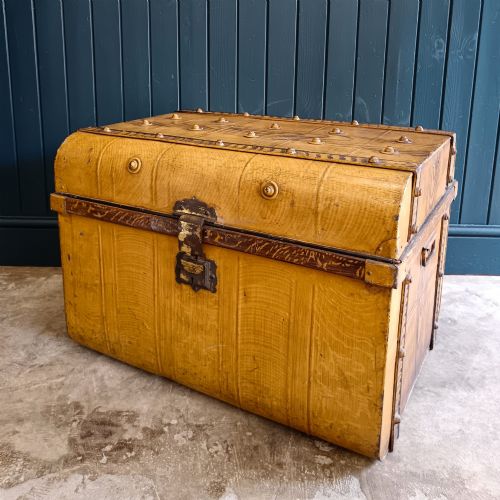
The most common versions met on this page are painted toleware items, nineteenth-century trunks, and early twentieth-century biscuit tins produced by prominent makers. These objects range from modest household utility pieces to decorative novelty shapes designed to imitate books, satchels, and carved wooden boxes.
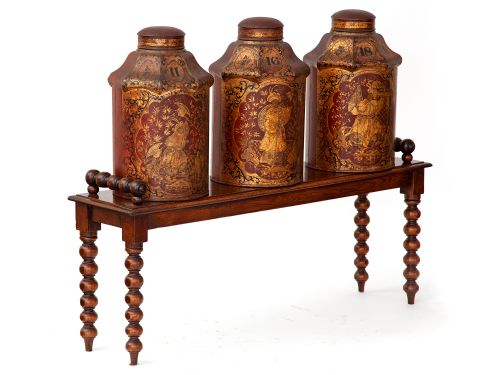
Origins stretch across British, French, and colonial workshops, capturing shifts in domestic storage habits over several eras. Buyers find both individual items, such as large steamer trunks, and matched sets like solicitor document tins or tea canisters.
How they were made
Makers utilised sheet metal, iron, and tinplate as the primary structural bases, shaping them into rigid containers designed for heavy daily use. To achieve decorative finishes, artisans applied paint, lacquer, and specialised toleware techniques directly onto the metal surface.
Surface ornamentation often involved simulated finishes such as faux-wood graining and faux-tortoiseshell, alongside hand-painted chinoiserie and floral motifs. Soldered joints, hinged lids, and secure clasps completed the construction, ensuring durability for transport and storage.
Vintage Storage Tin Retail Price Guide 2026
Typical asking prices for vintage storage tin among the pieces listed under this phrase on Sellingantiques today, from the lower quarter to the upper quarter. They describe what is for sale here now, not the wider market.
Listings span from the 18th century through the 1930s, featuring materials such as toleware, tinplate, brass, and painted sheet metal.
What varies in quality
The degree of artistic execution in the surface paintwork separates standard utility boxes from superior examples. Hand-painted details, intricate faux-wood graining, and well-preserved lacquered finishes indicate higher craftsmanship by skilled decorators.
Completeness and originality drive distinction, particularly in matching sets of tea canisters or document tins that survive together. Structural integrity of the metal body, functioning original hinges, and legible manufacturer markings also determine the standing of an individual piece.
The Vintage Storage Tin Glossary
- Toleware
- Painted or lacquered metalware, typically iron or tinplate, popular in domestic settings throughout the eighteenth and nineteenth centuries. This technique allowed metal items to mimic more expensive decorative arts.
- Tinplate
- Thin sheet iron or steel coated with tin to prevent corrosion. It served as the primary material for lightweight containers, biscuit tins, and storage boxes.
- Chinoiserie
- European decorative style reflecting Chinese artistic influences, frequently seen in hand-painted motifs on tea canisters and boxes. It gained particular favour during the Regency and Victorian periods.
- Steamer trunk
- A large, robust storage chest designed for travel on steamships or trains. These reinforced metal and wooden trunks often featured domed or flat tops for stacking.
- Hat box
- A specialised rigid container built to protect brimmed headwear during transport or storage. Military and civilian variants were constructed from metal, leather, or painted toleware.
Vintage Storage Tin: Frequently Asked Questions
What were vintage storage tins used for?
These metal containers served a multitude of practical household and commercial functions, ranging from dry food storage in kitchens to safeguarding legal papers in solicitor offices.
Specialist variants were manufactured to transport military uniform items, store tobacco in shops, or keep biscuits fresh in middle-class parlours.
How do I date a painted toleware tin?
Dating relies on observing the underlying metal construction, the style of the hand-painted decoration, and the type of fasteners used.
Earlier eighteenth and early nineteenth-century pieces often display distinct hand-mixed pigments and heavier iron bases, whereas twentieth-century examples shift towards mechanised lithography and standardised shapes.
Are novelty biscuit tins collectible?
Novelty biscuit tins produced by confectioners are highly sought after by collectors for their imaginative shapes.
Manufacturers created containers moulded to look like leather satchels, books, or carved wooden boxes to encourage display and reuse once the biscuits were consumed.
How should I clean a painted metal tin?
Maintenance requires gentle removal of surface dust using a dry microfibre cloth or a soft brush.
Moisture and abrasive cleaning agents must be avoided to protect historic paint surfaces, lacquers, and delicate faux-finishes from irreversible damage.