



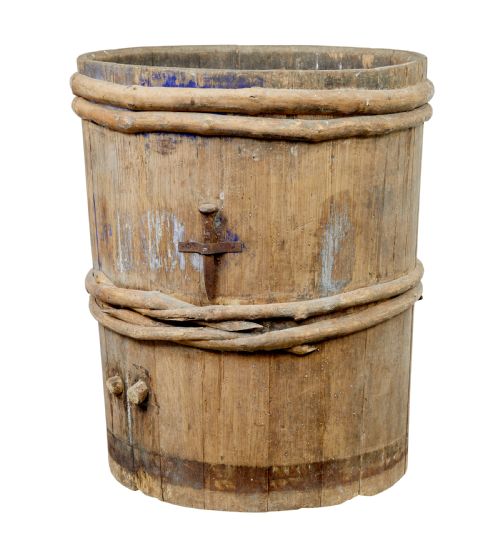


Vintage Storage Barrels
These vintage storage barrels bring functional heft and rich timber grain into a room, offering robust utility wrapped in age and character.
Vintage Storage Barrels
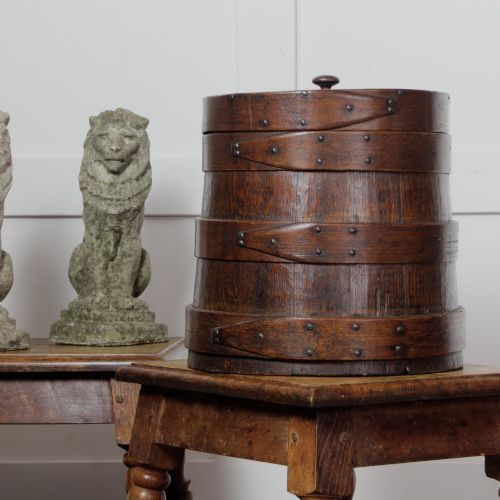
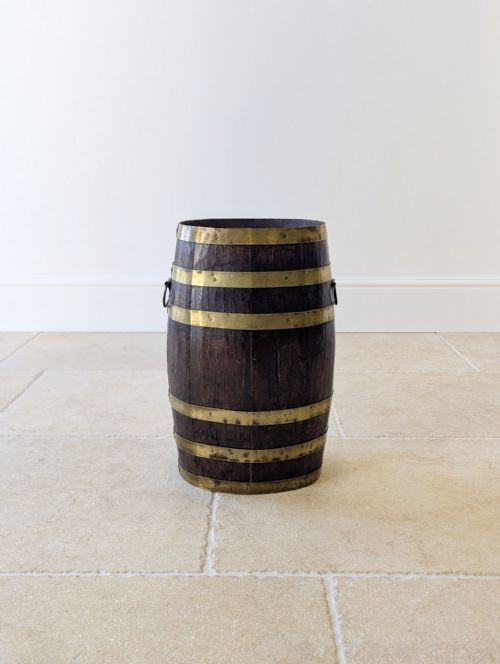
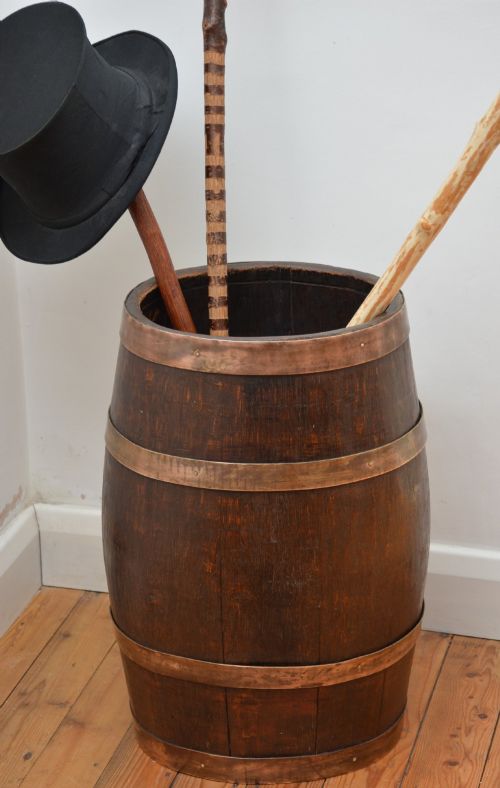
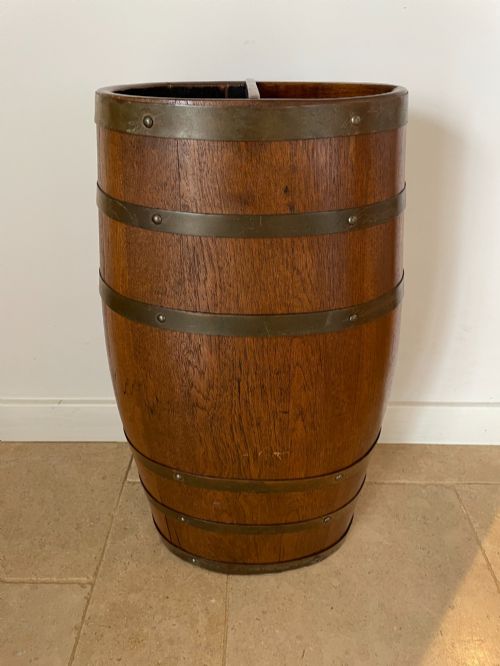
Vintage storage barrels encompass a broad selection of coopered vessels, trunks, bins, and biscuit boxes spanning from the Georgian era through to the early decades of the twentieth century. When seeking vintage storage barrels, buyers encounter everything from large pine flour bins and Scandinavian storage vessels to compact table-top glass biscuit boxes and brass-bound umbrella stands. The domestic and maritime pieces recorded here serve distinct practical purposes, shifting scale from substantial hallway stick stands down to lidded ceramic and glass table jars.
The architectural presence of these objects derives directly from period utilitarian manufacture, utilising materials chosen to withstand heavy everyday use. Coopered oak barrels fitted with brass bands predominate alongside rustic pine bins, steel-strapped travelling trunks, and enamel-decorated ceramics. Buyers selecting these items bring tangible history into contemporary interiors, utilising sturdy trunks for linen storage or placing coopered umbrella stands directly within entryways.
How they were made
Traditional cooperage forms the technical core of the wooden vessels, employing shaped staves held tightly together by tensioned metal hoops of brass or iron. Craftsmen selected durable timbers such as oak and pine, shaping individual staves to create curved bodies that required no modern adhesives. Other items rely on rigid box construction, combining wood cores with canvas, hide, or steel plates.
Metalwork and decorative finishes complete the manufacture of these utilitarian objects. Brass bindings, silver-plated mounts, and copper bodies appear alongside cut glass jars and enamel-decorated ceramic bodies. Joinery methods reflect period requirements, ranging from primitive carved wooden vessels to structured steamer trunks built for long-distance travel.
Vintage Storage Barrels Retail Price Guide 2026
Typical asking prices for vintage storage barrels among the pieces listed under this phrase on Sellingantiques today, from the lower quarter to the upper quarter. They describe what is for sale here now, not the wider market.
The listings span the Victorian, Edwardian, and Georgian eras, utilising oak, pine, brass, iron, and glass.
What varies in quality
The standard of materials and metal mounts distinguishes simpler utilitarian items from finer domestic examples. Solid oak staves paired with heavy cast brass bands and original umbrella loops demonstrate superior workshop output compared to plain pine alternatives. Similarly, cut glass biscuit jars featuring substantial silver-plated hardware sit higher in the tier than standard enamel-decorated pottery.
Integrity of construction and the survival of original components govern the standing of each piece. Items retaining their original lids, internal liners, and tight coopered joints hold greater architectural and historical coherence. The depth of timber patina and the crispness of primitive carvings further separate ordinary utility items from more refined country house examples.
R.A. Lister·Crown Devon·CUNARD Line
The Vintage Storage Barrels Glossary
- Coopered
- Constructed from curved wooden staves bound together with metal or wooden hoops. This historic technique creates watertight or sturdy vessels without relying on modern glues.
- Coffer
- A heavy wooden chest traditionally used for storing valuables or household goods. These sturdy boxes often feature hinged lids and robust iron or brass hardware.
- Biscuit barrel
- A lidded ceramic, glass, or metal jar designed to keep dry baked goods fresh on the dining table. Edwardian examples frequently combine cut glass bodies with silver-plated mounts.
- Steamer trunk
- A low-profile travelling chest designed to fit beneath passenger ship berths during the nineteenth and early twentieth centuries. They combine wooden frames with canvas, leather, or metal sheeting.
- Primitive
- Describing early or rustic items made with basic tools and straightforward joinery rather than refined workshop techniques. These pieces emphasise functional utility over decorative polish.
Vintage Storage Barrels: Frequently Asked Questions
How were coopered barrels used originally?
These vessels originally served rigorous domestic, agricultural, or maritime functions, holding dry goods like flour, storing bottled beverages, or containing wet umbrellas.
Their robust construction allowed them to withstand heavy daily handling in country houses, ships, and rural farmhouses.
What is the difference between a stick stand and an umbrella stand?
In period terms, the two descriptors largely overlap, though stick stands often emphasise tall walking sticks and canes alongside rain gear.
Both forms typically incorporate metal loops or drip pans at the base to catch moisture from wet entries.
How do I care for vintage wooden barrels?
Maintain the timber by keeping pieces away from direct heat sources and sudden temperature fluctuations that can dry out old staves.
Apply a light application of natural wax periodically to nourish the dry oak or pine surfaces without buildup.
Where should I place a vintage storage trunk?
Dome-top and flat-top trunks function well at the foot of a bed or serve as low coffee tables within a living space.
Their internal cavity provides practical concealed storage for extra blankets, books, or seasonal linens.