
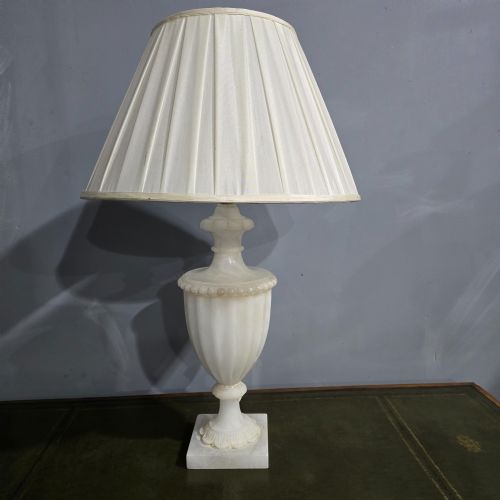


Vintage Stone Light Shade
These vintage stone light shades bring warmth and texture into a room, spanning alabaster and marble pendants, table lamps, and ceiling lights.
Vintage Stone Light Shade
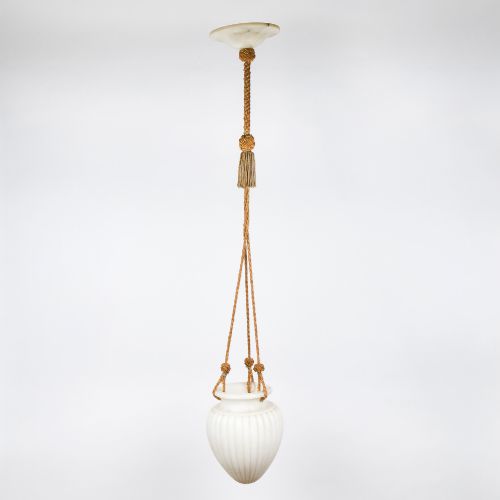
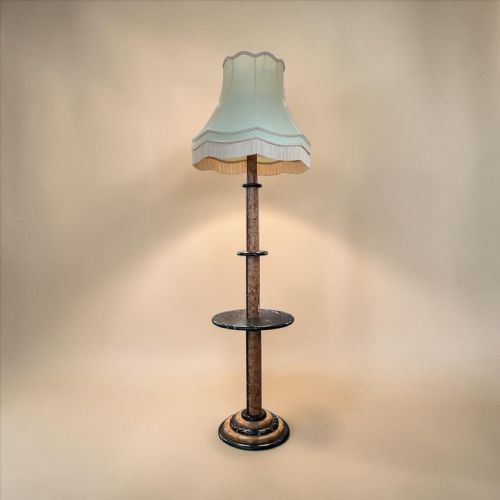
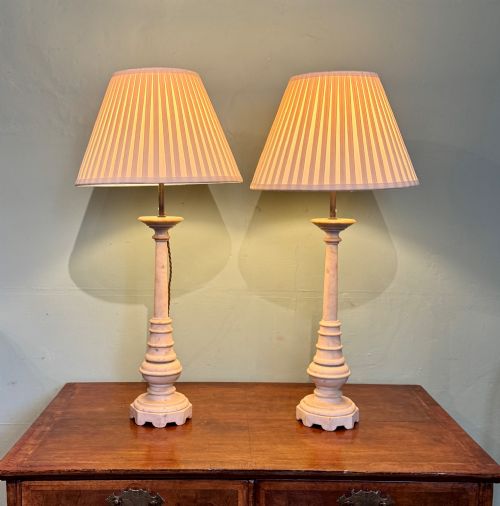
When you search for a vintage stone light shade, you encounter lighting fixtures fashioned from natural minerals like alabaster, marble, and onyx. These pieces emerge in styles including Art Deco, Classical Revival, and Neoclassical, often taking the form of hanging dish lights, pendant lights, or standard lamps.
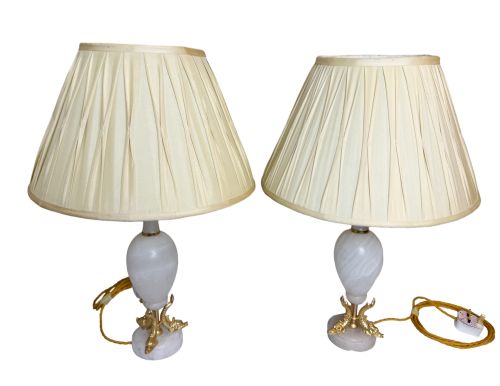
You are most likely to meet alabaster hanging lights and marble table lamps on this page, originating from periods spanning the nineteenth century through the 1930s. Many table lamps appear as matched pairs, sometimes accented with gilt metal, bronze trim, or fabric and braided cords.
How they were made
Makers shaped natural stone such as white alabaster and solid marble into bowls, amphora bodies, and cylindrical lamp bases. Techniques involved carving the mineral to exploit its natural translucency, allowing light to diffuse softly through the stone.
Metal components like brass, gilt metal, and gilt bronze provided structural mounts, paw feet, and suspension chains for the heavy stone shades. Wiring was typically threaded through internal channels or paired with fabric and braided cords.
Some nineteenth-century table lamps stand atop tiny gilt metal paw feet, ready to sprint across the sideboard.
What varies in quality
Quality rests upon the purity and grain of the mineral itself, distinguishing uniform white alabaster or finely figured marble from lesser stone. Superior examples display skillful carving that achieves an even thickness, ensuring a balanced, warm glow when illuminated.
The refinement of the metal mounts further separates tiers of execution, where cast gilt bronze trim or detailed paw feet elevate a simple stone vessel into a sophisticated decorative object.
The Vintage Stone Light Shade Glossary
- Alabaster
- A fine-grained, translucent stone frequently utilised for carved lighting shades and bowls. Its soft density allows light to pass directly through the material.
- Onyx
- A banded variety of chalcedony quartz often employed for decorative table lamp bases. It exhibits natural layered striations that catch the light.
- Amphora
- A two-handled ancient vessel shape adopted by later designers for ornamental lamp bodies. These forms often incorporate gilt metal trim.
- Classical Revival
- An artistic movement drawing inspiration from the art and architecture of ancient Greece and Rome. This style influences the symmetrical forms and formal detailing seen on these lamps.
Vintage Stone Light Shade: Frequently Asked Questions
How do I hang a heavy stone pendant light?
Hanging a heavy stone shade requires securing the suspension fixture directly into ceiling joists or utilising robust anchor fixings capable of supporting the weight of solid alabaster or marble.
Ensure that the accompanying brass or gilt chains are adjusted evenly to keep the dish or bowl level before connecting the electrical supply.
Can these vintage stone lamps take modern bulbs?
Most of these fixtures accommodate standard modern bulb holders, though you should check the internal wiring and lampholder capacity upon acquisition.
Utilising low-heat LED bulbs helps protect vintage internal wiring and prevents excessive thermal stress on aged stone components.
How should I clean alabaster light shades?
Clean alabaster and marble surfaces gently with a dry or barely damp microfiber cloth to remove dust without introducing moisture into porous stone.
Avoid harsh chemical cleaners or abrasive scouring pads, which can dull the polished finish or damage the natural mineral grain.
How do I date a marble table lamp?
Dating relies upon stylistic markers such as Art Deco geometric carving or Classical Revival proportions, alongside the type of electrical cord and metal fittings used.
Examining the underside of the stone base often reveals manufacturing marks, screw types, or wiring methods characteristic of the nineteenth century up through the 1930s.