



Vintage Stitched Sampler
A vintage stitched sampler is a needlework piece that records names, alphabets, or motifs, offering a tangible link to domestic history.
Vintage Stitched Sampler
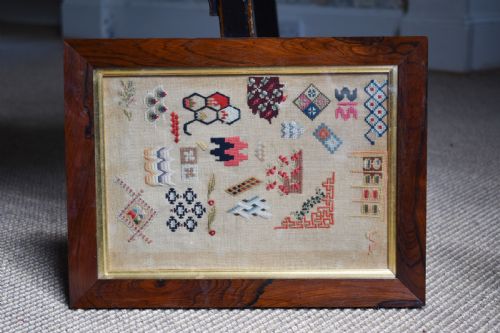
A vintage stitched sampler encompasses textile art and needlework pictures created across the nineteenth and early twentieth centuries. These works frequently record the name and age of the maker, alongside dates and pictorial motifs.
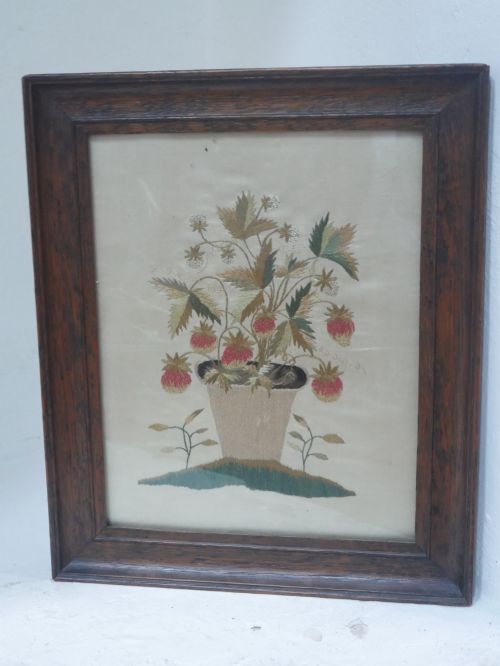
The versions most commonly met on this page originate from the Victorian and Georgian periods, often framed behind glass in wood surrounds. They include alphabet exercises, schoolroom pieces from locations such as Oswestry National School, and pictorial subjects like pots of strawberries or horses.
Makers ranged from young girls working in schools to individuals completing detailed embroidery displays. Each piece reflects the domestic education and needle skills of its respective era.
How they were made
These works were handmade using linen as a ground fabric, worked over with silk thread, wool, and general thread. Needlepoint and embroidery techniques formed alphabets, numbers, borders, and figurative scenes stitch by stitch.
Execution required precise counting of threads on plain-weave linen to keep lettering and motifs aligned. Finished textiles were then mounted onto frames, occasionally protected by glass to preserve the delicate fibres.
Vintage Stitched Sampler Retail Price Guide 2026
Typical asking prices for vintage stitched sampler among the pieces listed under this phrase on Sellingantiques today, from the lower quarter to the upper quarter. They describe what is for sale here now, not the wider market.
Listings feature works spanning the Georgian and Victorian eras into the early twentieth century, utilising linen, wool, glass, and wood.
What varies in quality
Quality rests on the precision of the stitching and the complexity of the design layout. Pieces with well-balanced alphabets, detailed pictorial elements, and clear lettering command greater attention from collectors.
The preservation of the ground fabric and the stability of the threads dictate the overall visual strength of the piece. Clear signatures, legible dates, and recorded ages of makers add contextual value to individual samplers.
Ann Hodson·Margaret Ann Blackow·Mary Mason·Ann B Gilies·Mary Street·Rachel·Emma and Hannah Barnes
The Vintage Stitched Sampler Glossary
- Sampler
- A piece of needlework produced as a demonstration or test of skill in various stitches. These exercises frequently incorporate alphabets, numerals, and decorative borders.
- Needlepoint
- A type of canvas work where yarn or thread is stitched through a stiff open-weave mesh. It forms a dense, durable surface that covers the foundation material entirely.
- Linen
- A strong textile made from the fibres of the flax plant. It served as the primary foundation fabric for most early needlework pieces.
- Alphabet sampler
- A specific form of needlework focused on rows of letters and numbers. They were used to teach young makers literacy alongside sewing skills.
Vintage Stitched Sampler: Frequently Asked Questions
What is a vintage stitched sampler?
A vintage stitched sampler is a piece of historical needlework created on linen using silk thread, wool, or cotton. They often display alphabets, numerals, signatures, and pictorial scenes.
Many examples were worked by young makers as educational exercises or records of achievement. They survive today framed behind glass as decorative textile art.
How can I date an antique sampler?
Dating often relies on inscribed names, dates, and ages stitched directly into the textile. School names and specific stylistic motifs also provide chronological clues.
Comparison with documented periods such as the Georgian or Victorian eras helps narrow down the timeframe. Frame styles and materials offer additional supporting evidence.
Were samplers made by children?
Many surviving pieces were worked by young girls attending schools or educational institutions. Inscriptions frequently list the maker's age, often between ten and fourteen years old.
Institutions like national schools utilised needlework as a core part of the curriculum. These dated exercises served as proof of domestic proficiency.
How should I display a textile sampler?
Samplers require protection from direct sunlight to prevent the fading of silk threads and linen grounds. Keeping them behind glass shields the fragile fibres from dust and atmospheric moisture.
Stable indoor environments away from excessive humidity help preserve the integrity of the fabric. Wall mounting should utilise secure framing methods that do not compress the textile.