



Vintage Sterling Teaspoons
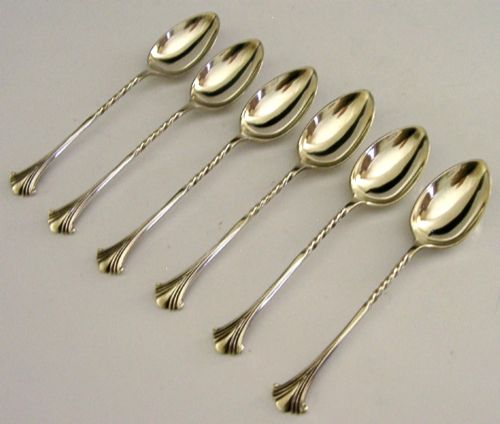
These vintage sterling teaspoons combine bright enamel work and classic silver forms, offering a tactile piece of dining history.
Vintage Sterling Teaspoons
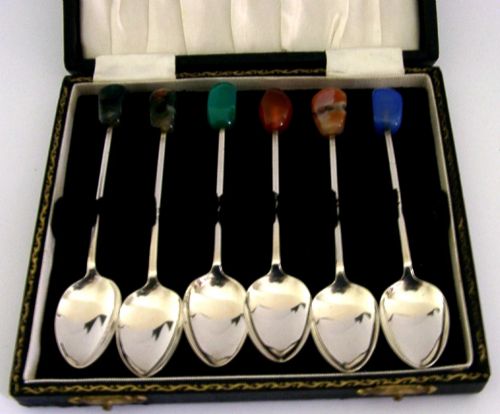
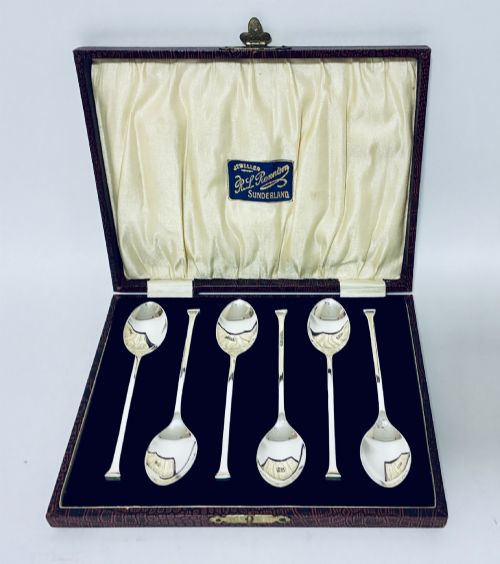
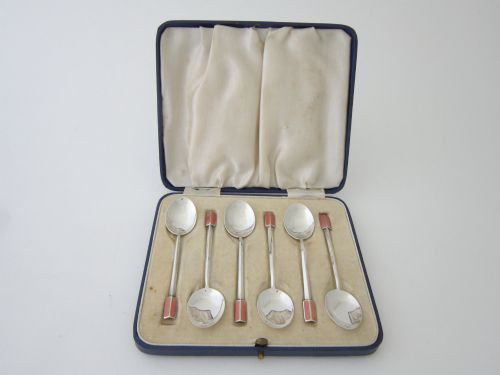
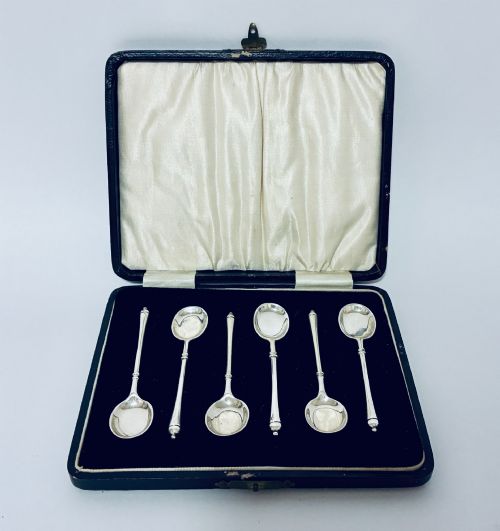
The assortment on this page ranges from simple nineteenth-century apostle spoons to brightly coloured Art Deco enamel sets. Many examples arrive in fitted presentation boxes lined with silk, velvet, or satin.
Makers and design houses from Britain and Scandinavia feature heavily among these pieces, spanning tea spoons, coffee spoons, and matching sugar tongs.
Materials and methods
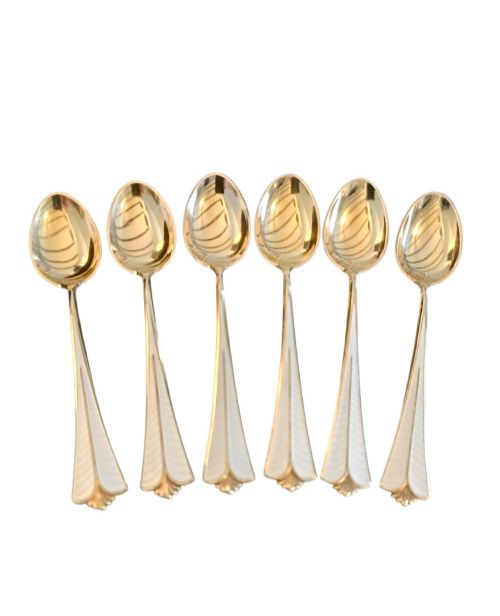
Silversmiths shaped these pieces from sterling silver, often applying a layer of gold gilt over the bowl or the entire spoon. Hallmarks stamped into the metal indicate the assay office, year, and maker.
Vitreous enamel provides the vibrant colour found on many twentieth-century sets, fused directly to the silver surface through intense heat. Fitted cases lined with leatherette and satin protected these delicate items when not in use.
Vintage Sterling Teaspoons Retail Price Guide 2026
Typical asking prices for vintage sterling teaspoons among the pieces listed under this phrase on Sellingantiques today, from the lower quarter to the upper quarter. They describe what is for sale here now, not the wider market.
Listings feature items spanning from the Victorian era through the 1960s, incorporating materials such as enamel, silk, velvet, and gold gilt.
Assessing quality
The distinction between standard tableware and finer examples lies in the crispness of the hallmarks, the weight of the silver, and the precision of the enamel work. Complete sets housed in their original fitted cases generally command greater interest than mismatched or loose items.
Design provenance also elevates certain pieces, particularly those bearing the marks of renowned silversmiths or retailers like Liberty and Co, Georg Jensen, and David Andersen.
David Andersen·Georg Jensen·Evald Nielsen·Liberty and Co·Walker and Hall·Robert Stebbings·Cooper Brothers and Sons
The Vintage Sterling Teaspoons Glossary
- Sterling silver
- An alloy consisting of 92.5 percent silver and 7.5 percent other metals, usually copper, chosen for durability in cutlery.
- Gilt
- A thin layer of gold applied to the surface of the silver, sometimes referred to as silver-gilt.
- Apostle spoon
- A spoon featuring the figure of an apostle or saint cast or engraved on the terminal of the handle, popular in earlier commemorative sets.
- Hallmark
- A series of official marks stamped on precious metals showing standard, assay office, and maker.
- Vitreous enamel
- Glass powder fused to metal at high temperatures, creating smooth, coloured decorative panels on spoons.
Vintage Sterling Teaspoons: Frequently Asked Questions
Are vintage teaspoons safe for daily use?
Sterling silver handles everyday meals well, provided they are washed by hand rather than placed in a modern dishwasher. Enamelled pieces require extra care to protect the coloured glass panels from chipping.
Over time, regular use develops a soft patina on the silver, though abrasive cleaners should be avoided to preserve any original gold gilt.
What is the difference between tea and coffee spoons?
Coffee spoons are noticeably smaller than standard teaspoons, designed to stir demitasse cups rather than full mugs of tea. They often feature more decorative handles or enamel work.
Both types appear frequently in fitted boxed sets alongside matching sugar tongs.
How can I date my silver spoons?
British silver bears hallmarks that include a date letter indicating the exact year it was assayed. Additional marks show the maker's initials and the town where it was tested.
Stylistic clues, such as geometric Art Deco enamel patterns or Victorian floral engraving, also help narrow down the decade.
Why do some spoons come in fitted boxes?
Complete sets were frequently retailed as wedding gifts, christening presents, or luxury household items housed in custom leatherette cases lined with satin or velvet. These fitted boxes kept the delicate silver and enamel protected from tarnish and damage.
Finding a set with its original box adds significantly to the completeness of the piece.