


Vintage Stepped Unit
These vintage stepped unit options bring distinct tiered forms and clever geometry to any room, combining display space with architectural presence.
Vintage Stepped Unit
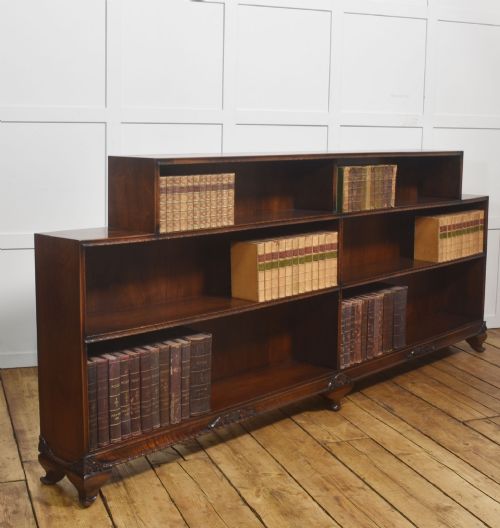
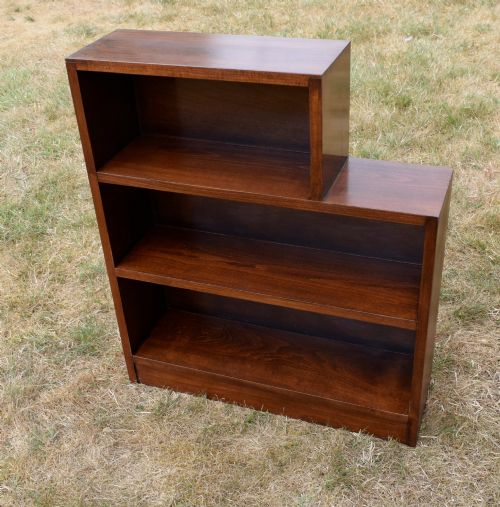
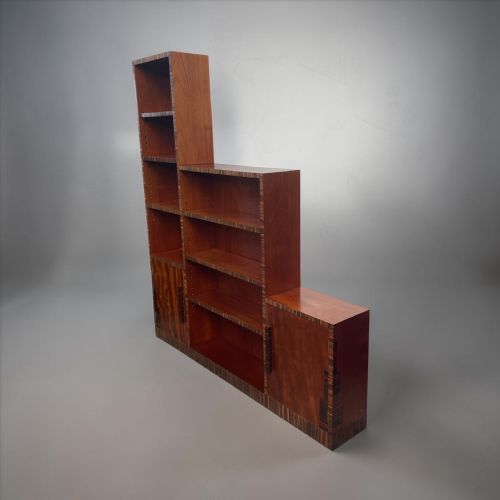
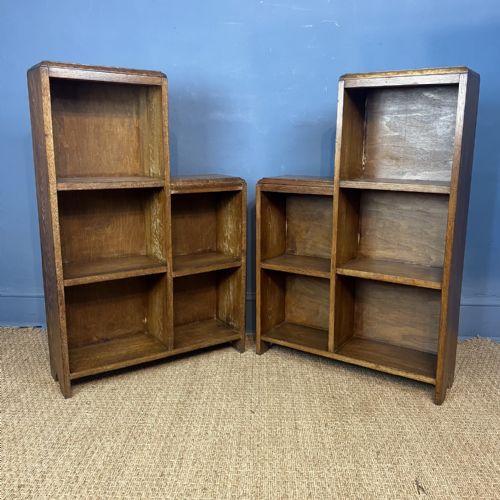
A vintage stepped unit offers staggered shelving and tiered compartments designed to hold books and display objects while drawing the eye upward. These configurations vary from open walnut bookcases to enclosed cabinets featuring graduated tiers.
The selections span several periods, drawing heavily on Art Deco sensibilities from nineteen thirty alongside earlier Edwardian, nineteen ten, and Victorian examples. Buyers encounter oak waterfall bookcases, open walnut layouts, and Chinese display cabinets.
Most pieces function primarily as bookcases or cabinets, utilising their graduated heights to break up the monotony of flat walls. Their multi-level surfaces suit modern interiors that benefit from varied vertical lines.
How they were made
Wood serves as the primary medium, with oak, walnut, and burr walnut veneer providing durable foundations and striking grain patterns. Cabinetmakers selected these timbers for their stability and capacity to take a polished finish.
Many examples incorporate brass and chrome hardware to accent doors and framing, particularly within the Art Deco style. These metal details contrast sharply against the warm tones of hardwood and walnut.
Construction techniques focus on rigid joinery to support the cantilevered or receding tiers characteristic of stepped designs. Makers balanced the weight distribution carefully across each ascending level to maintain structural integrity.
Some designers built staircases for books before anyone thought to put them on shelves.
What varies in quality
The choice of surface veneer heavily dictates the visual impact, where book-matched burr walnut commands greater visual presence than plain hardwood. Timber selection reflects the ambition of the original workshop and the intended market for the piece.
Design complexity separates standard shelving from masterworks, particularly in how cleanly the steps resolve into one another. Finer pieces demonstrate precise geometric rhythm and thoughtful integration of brass or chrome fittings.
Heals·Betty Joel
The Vintage Stepped Unit Glossary
- Waterfall bookcase
- A tiered shelving unit where each lower shelf extends further forward than the one above it, creating a cascading silhouette reminiscent of falling water.
- Veneer
- A thin layer of fine wood applied over a secondary timber base to create decorative patterns while conserving expensive materials such as burr walnut.
- Art Deco
- A design style emerging in the early twentieth century defined by sleek geometric shapes, stepped forms, and modern industrial materials.
- Open bookcase
- A storage unit featuring exposed shelves without doors, allowing books and decorative items to remain visible from multiple angles.
Vintage Stepped Unit: Frequently Asked Questions
What is a stepped unit?
A stepped unit is a piece of furniture featuring shelves or compartments that ascend or descend in graduated tiers. This configuration provides practical storage while creating an architectural, stair-like profile.
Such designs became popular during the early twentieth century, particularly within Art Deco styling, to maximise display potential within compact footprints.
How do I style a stepped bookcase?
Utilise the varying shelf heights to arrange books vertically on taller sections and horizontally on shorter tiers. This creates balanced visual weight across the graduated levels.
Pairing the stepped timber surfaces with minimal decor allows the geometric lines of the piece to remain the focal point of the room.
Where should I place a display cabinet?
Position these cabinets against blank walls where their tiered silhouettes can be appreciated without visual clutter. Placing them near natural light sources highlights the grain of walnut and oak veneers.
Ensure the surrounding floor space accommodates the stepped projection, allowing the piece to step outward into the room naturally.
How do I identify Art Deco furniture?
Art Deco furniture relies on symmetrical geometry, streamlined silhouettes, and stepped or tiered motifs. Look for contrasting materials such as burr walnut paired with chrome accents.
Pieces from this era often abandon ornate carving in favor of clean lines and smooth, polished wood surfaces.