

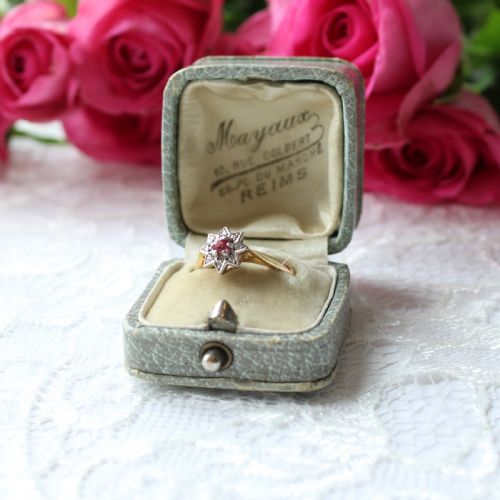
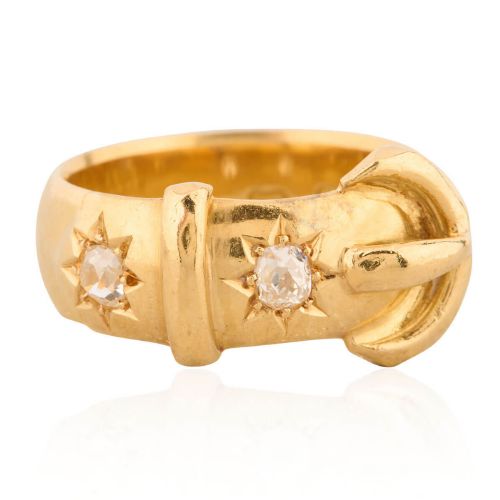


Vintage Star Set Diamond Ring
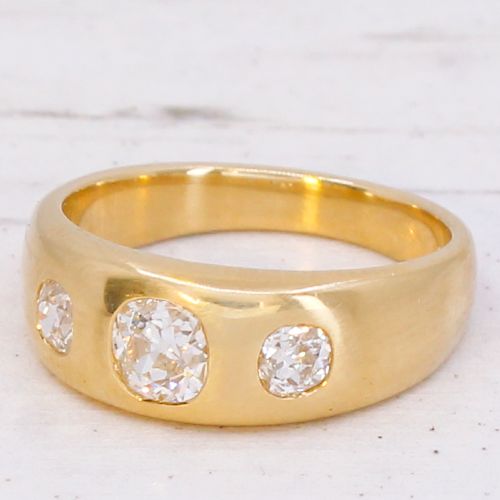
A vintage star set diamond ring holds small stones flush into the metal, offering understated sparkle and smooth everyday wear.
Vintage Star Set Diamond Ring
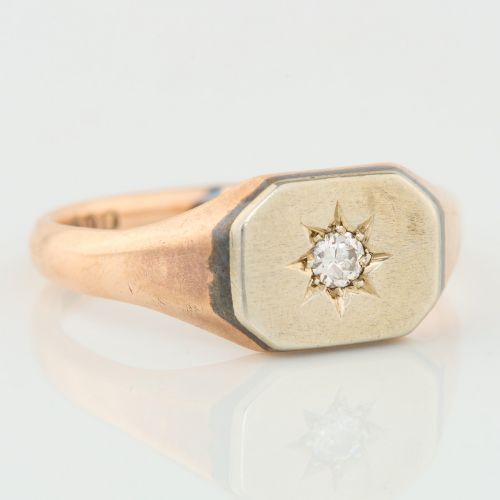
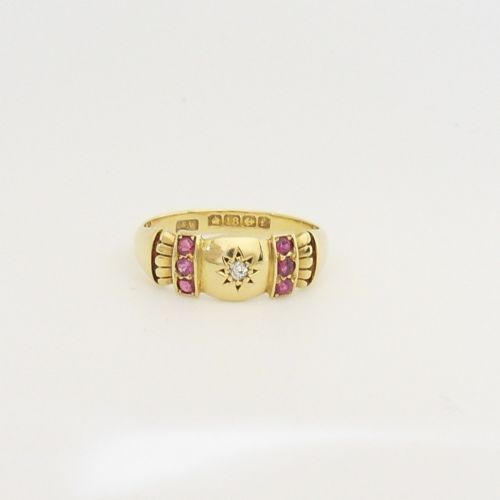
The materials recorded in these listings span 9ct, 15ct, and 18ct gold, occasionally combined with platinum or palladium settings. Alongside the central diamonds, some examples incorporate rubies, emeralds, sapphires, or black onyx to create cluster, trilogy, and dress ring formats. The profiles range from heavy men's signet styles and buckle bands to slender Edwardian bands designed for low-profile comfort on the hand.
Materials and construction methods
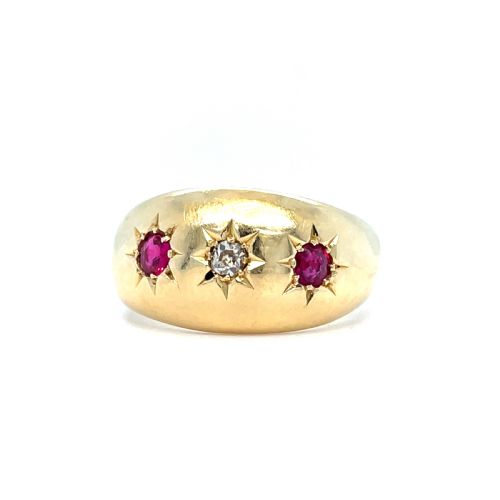
Makers formed these rings predominantly in yellow gold, utilising varying purities from 9ct up to 18ct, alongside platinum and palladium for specific settings. The technique relies on flush-setting or star-setting stones directly into the solid metal band rather than raising high claws. Engravers then pushed small chisels into the gold around the diamond to carve crisp, radiating points that form the characteristic starburst pattern.
Older pieces often feature old-cut diamonds with distinct hand-faceted proportions, secured within thick gold shoulders that provide structural strength. Hallmarks stamped inside the band, such as those from Chester, help confirm the metal standard and period of manufacture.
Listings span Victorian, Edwardian, and Art Deco periods, utilising 9ct and 18ct yellow gold paired with old-cut diamonds and rubies.
Distinguishing quality across the range
Quality rests upon the precision of the hand engraving and the depth of the starburst motif carved into the gold. Sharper, cleaner rays and a well-balanced setting indicate superior craftsmanship from the period.
The weight and gauge of the gold band also determine the calibre of the piece, with heavier shanties retaining their structural integrity and crisp star details far better through decades of wear.
The Vintage Star Set Diamond Ring Glossary
- Star set
- A diamond set flush into metal with hand-engraved star rays radiating outward from the stone. This technique protects the girdle of the diamond while adding decorative brightness.
- Gypsy ring
- A band style where the metal is thicker in the centre to accommodate flush-set stones, tapering smoothly toward the back of the finger. It gained immense popularity during the Victorian era for its snag-free profile.
- Old cut
- A traditional diamond cutting style preceding modern brilliant cuts, characterised by a smaller table, higher crown, and open culet. These stones display broad, soft flashes of light under candlelight.
- Illusion set
- A setting technique where a metal plate surrounds a smaller diamond to make it appear larger and brighter. It was frequently utilised in Edwardian and Art Deco designs to amplify visual impact.
- Belcher ring
- A ring style featuring rounded, protruding prongs or settings that hold the stone slightly above a heavy band. The design creates a distinct profile popular in nineteenth-century workshops.
Vintage Star Set Diamond Ring: Frequently Asked Questions
How do I date an antique star ring?
Dating relies on examining hallmarks, gold carats, and cutting styles. Victorian and Edwardian examples often feature old-cut diamonds and distinct regional assay marks inside the band.
Heavier yellow gold and specific geometric motifs also point toward later Art Deco or mid-century production periods.
Are these rings suitable for daily wear?
These pieces were built for everyday use, with flush and gypsy settings that protect the diamond from knocks. The absence of high claws makes them exceptionally practical.
Checking the thickness of the gold band ensures the structure remains robust enough for modern lifestyles.
What is a gypsy set ring?
A gypsy set ring is a heavy band that tapers toward the rear, featuring stones pushed directly into the thick gold. Victorian jewellers favoured this style for both men and women.
It provides a seamless, comfortable fit alongside a discreet appearance on the hand.