




Vintage Spyglass
A vintage spyglass brings the crisp optics and tactile brass barrels of maritime and library observation straight into your hands.
Vintage Spyglass
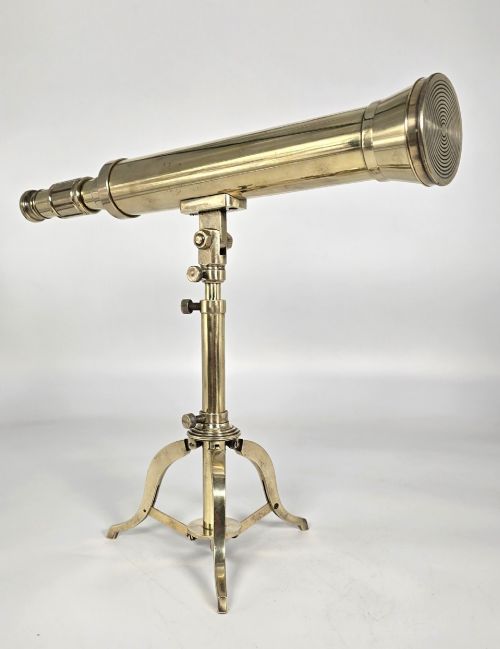
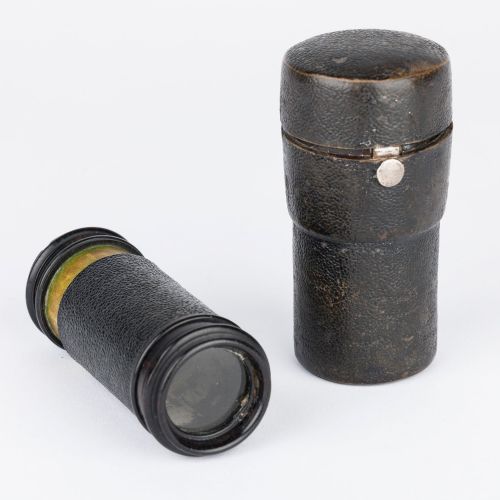
A vintage spyglass groups together historical optical instruments designed for land, sea, and library use across several centuries. Buyers searching this phrase meet pocket spyglasses, multi-draw extending tubes, and larger library telescopes mounted on folding tripods.
The selections span the eighteenth, nineteenth, and early twentieth centuries, drawing heavily from Victorian and Georgian periods. Formats range from simple two-draw pocket models to complex six-draw terrestrial instruments and naval officer watches.
Maritime contexts dominate the surviving material, alongside scientific instruments intended for desk use or travel. Walking canes containing hidden optical tubes also appear within these historical categories.
Quality factors in optical antiques
The calibre of a vintage spyglass rests upon the precision of its lens grinding and the stability of its draw assemblies. Smooth movement between brass sections without lateral play indicates superior maker execution.
Material selection and finishing also separate standard workshop output from premier London makers. Robust leather stitching, well-fitted wooden cases, and crisp maker signatures engraved on the draw tubes elevate an instrument's standing.
Vintage Spyglass Retail Price Guide 2026
Typical asking prices for vintage spyglass among the pieces listed under this phrase on Sellingantiques today, from the lower quarter to the upper quarter. They describe what is for sale here now, not the wider market.
Listings feature instruments constructed from brass, glass, leather, mahogany, oak, steel, and nickel across Georgian and Victorian eras.
Nairne & Blunt·Ross of London·Voigtländer & Sohn·W. & T. Gilbert·Clarkson·Steward of London·Richardson·Newton & Co·Broadhurst Clarkson & Co·Cary London·L. Casella·Chadburn Brothers·S & B Solomons·Matthew Berge·G. Adams·John Gilbert
The Vintage Spyglass Glossary
- Draw
- A sliding tubular section of a telescope that pulls out to extend the focal length. Multiple draws allow a long instrument to collapse into a portable pocket size.
- Terrestrial
- An optical system configured to show images the right way up for land viewing. It uses an erecting lens system distinct from astronomical configurations.
- Achromatic
- A lens design corrected to reduce colour fringing around high-contrast objects. This improvement allowed clearer long-distance observation.
- Monocular
- A compact optical viewing instrument for a single eye. These range from small opera glasses to portable pocket tubes.
Vintage Spyglass: Frequently Asked Questions
How do I use a draw telescope?
Gently pull each brass section outward until fully extended, supporting the main barrel while adjusting the smaller eye tube.
Focus the image by sliding the final eyepiece draw slightly inward or outward until distant objects appear sharp.
What is the difference between a spyglass and a library telescope?
Spyglasses are portable, multi-draw instruments designed for handheld field use, travel, and quick pocket deployment.
Library telescopes are larger, heavier instruments usually supported by table stands or folding wooden tripods for stationary indoor study.
How are antique brass barrels cleaned?
Dust the metal gently with a soft, dry cloth to remove surface particles without disturbing the underlying surface.
Avoid aggressive metal polishes that strip historical patination and remove maker engravings from the brass draws.
Can these historical telescopes view distant objects clearly?
Many surviving instruments retain functional lenses capable of magnifying distant terrestrial views across considerable distances.
Optics should be handled with care, as older glass and internal alignments benefit from gentle treatment rather than heavy modern usage.