

Vintage Spirit Stand
A vintage spirit stand brings together heavy cut glass decanters, silver plate, and warming brass kettles for dispensing fine drinks.
Vintage Spirit Stand
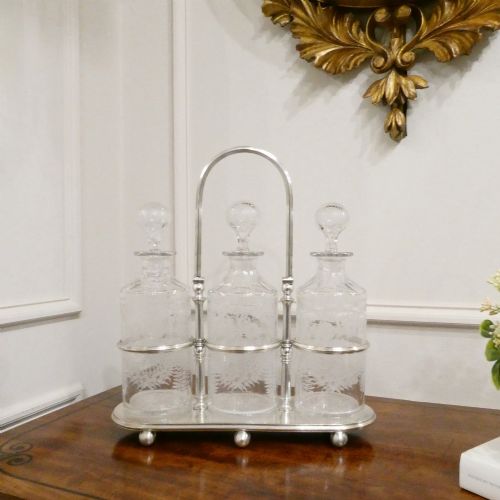
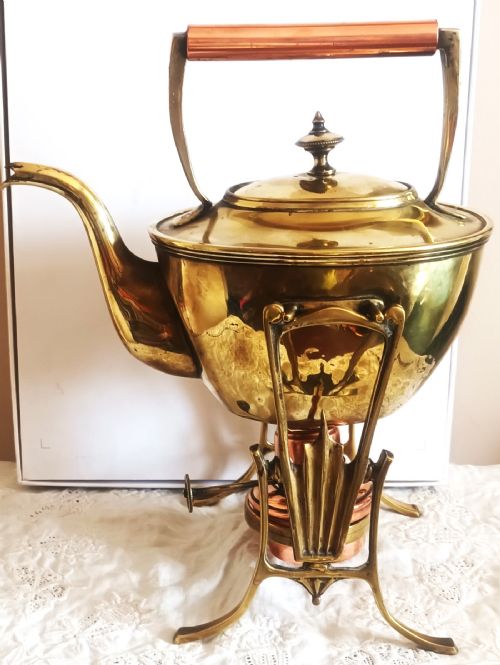
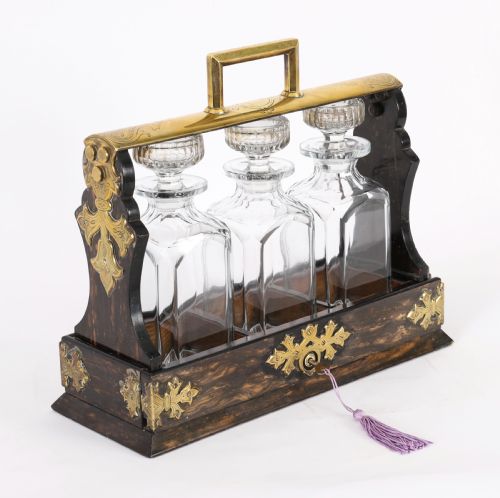
A vintage spirit stand encompasses functional entertaining equipment such as locking tantalus sets, decanter cruets, and spirit kettles mounted on metal frames. These pieces originate from periods spanning the Victorian era through the Edwardian years up to the 1930s, reflecting the social rituals of earlier drawing rooms and dining spaces.
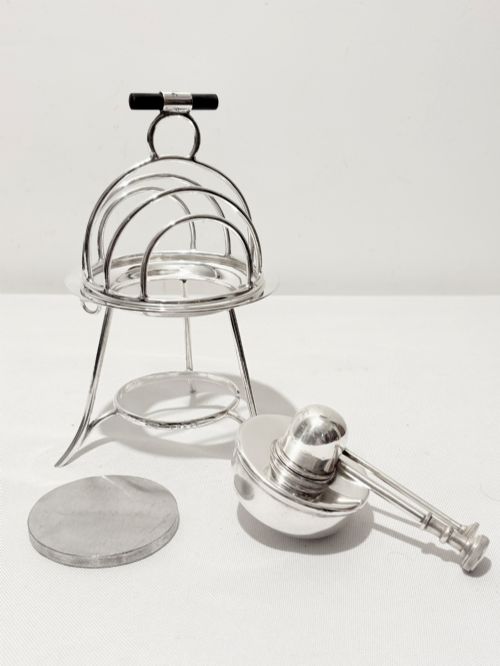
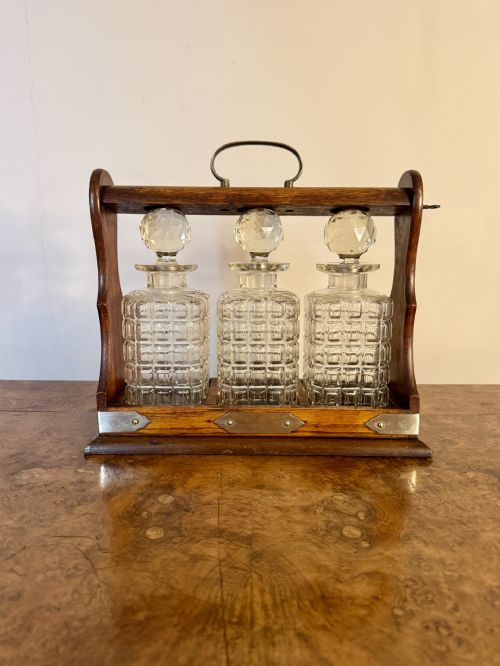
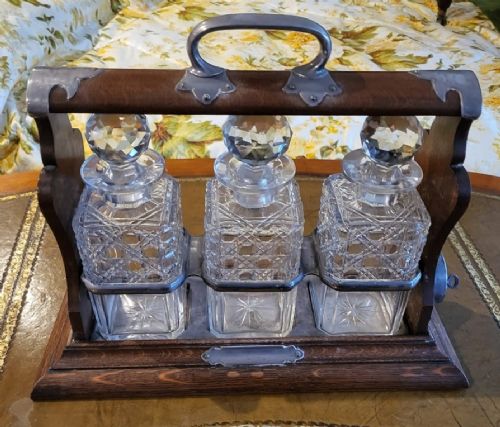
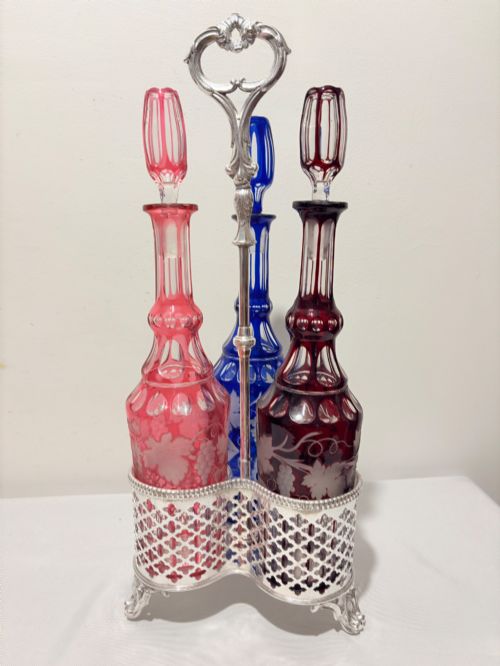
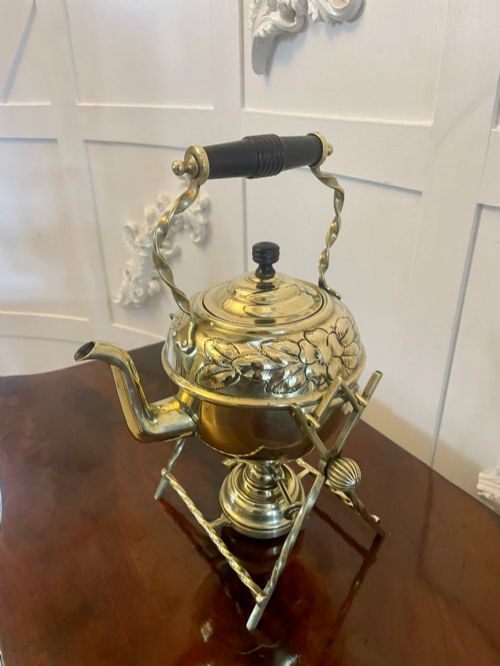
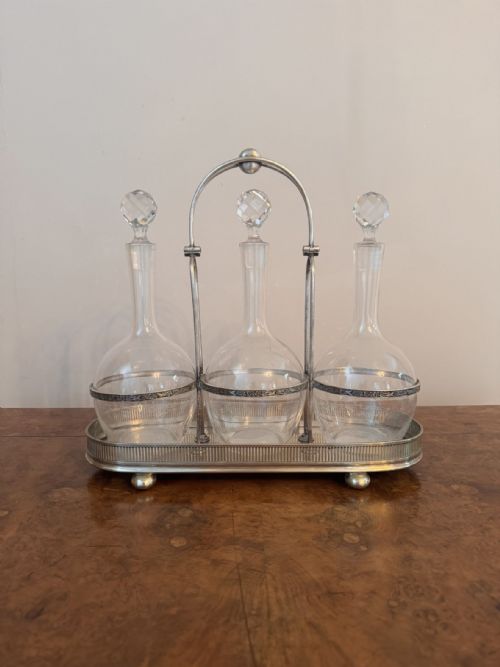
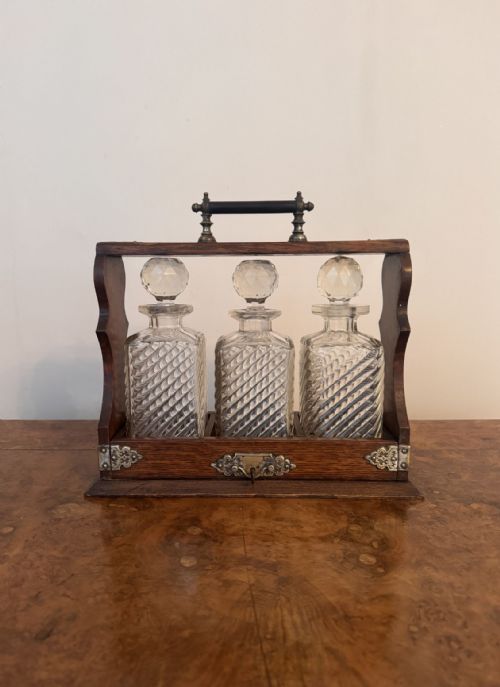
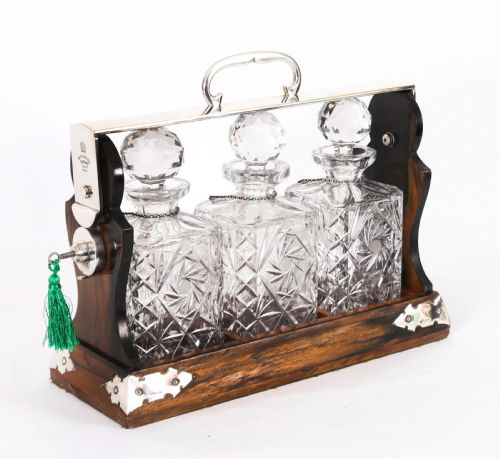
The version most commonly encountered on this page is the silver plated frame holding cut glass decanters or supporting a copper or brass spirit kettle with an integral burner. Makers housed these vessels in oak, burr walnut, or coromandel frameworks, often incorporating locking mechanisms to secure the contents.
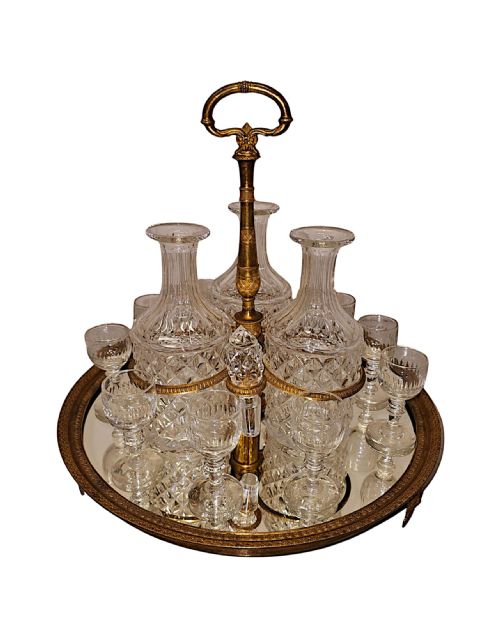
Beyond multi-bottle decanter frames, the selection includes hanging copper kettles and compact liqueur stands rooted in stylistic revivals like Queen Anne, Georgian, and Arts and Crafts. Each form serves a specific function for hospitality, whether heating water for tea or locking away spirits.
How they were made
Craftsmen built the structural frames using solid hardwoods like oak and walnut, frequently applying marquetry stringing or working with exotic timbers such as coromandel. Metal components combine silver plate, Old Sheffield plate, or silver gilt over base metals with solid brass and copper for kettles and stands.
Decanters and bottles utilise heavy cut glass shaped to refract light, paired with precise metalwork for locking mechanisms, hinges, and burner assemblies. Metal spinners and silversmiths raised copper and brass sheets into kettle bodies, attaching cast handles and spouts.
Vintage Spirit Stand Retail Price Guide 2026
Typical asking prices for vintage spirit stand among the pieces listed under this phrase on Sellingantiques today, from the lower quarter to the upper quarter. They describe what is for sale here now, not the wider market.
Design influences span the Georgian revival, Queen Anne style, and Arts and Crafts movement alongside 19th-century French production.
What varies in quality
Quality rests in the weight and clarity of the cut glass vessels, the thickness of the silver plating over the base metal, and the precision of the locking mechanisms. Superior examples retain original working keys and integrated burners that match the metal armature of the stand.
Cabinetry displays divergence in timber selection, evident in figured burr walnut veneers or dense oak grain alongside fine marquetry inlay. Maker attribution through stamped hallmarks or registry marks elevates an object, as seen in the work of established silversmiths.
Lee and Wigfull·Walker and Hall·William Soutter and Sons·Betjemann·Elkington·Hukin and Heath
The Vintage Spirit Stand Glossary
- Tantalus
- A locking drink container frame that secures decanters behind a metal bar to prevent unauthorized access while displaying the bottles.
- Spirit kettle
- A metal vessel mounted on a stand above a small spirit burner, designed to heat water for tea or punch.
- Cellaret
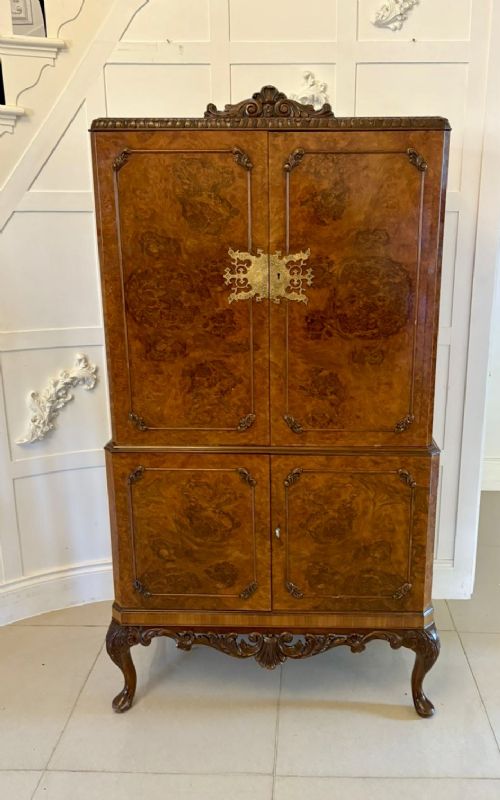
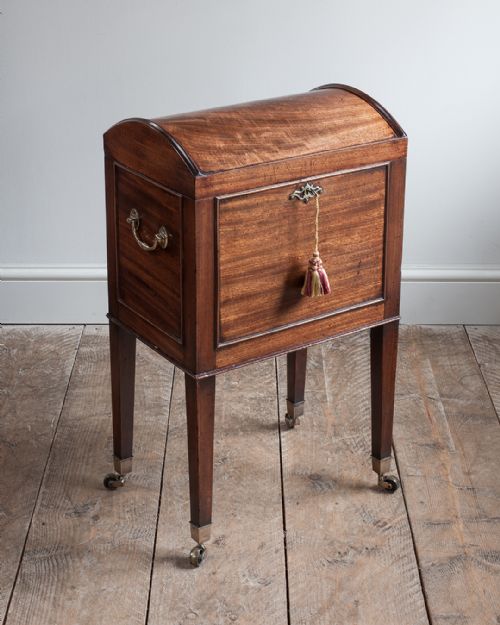
- A lockable cabinet or stand used to hold wine bottles and decanters securely near the dining table.
- Cave a liqueur
- A portable fitted case containing liqueur decanters and matching glasses, often executed in French or English styles.
- Old Sheffield plate
- A composite material made by fusing a thin sheet of silver to a thicker copper base, utilised before electroplating.
Vintage Spirit Stand: Frequently Asked Questions
What is a tantalus?
A tantalus is a lockable stand that holds decanters securely within a wooden and metal frame. A top bar engages the stoppers so the bottles cannot be removed without a key.
First patented in the Victorian era, the device kept household spirits locked away from domestic staff while displaying the crystal decanters on a sideboard.
How do spirit kettles work?
A spirit kettle is suspended on a metal stand above a small burner filled with methylated spirit. Lighting the burner heats the water inside the kettle for service.
These pieces were kept active in drawing rooms and dining spaces to provide hot water on demand without returning to the kitchen.
Are keys usually included?
Many antique tantalus sets retain their original working keys, though replacement locks or working keys are noted individually in listings.
Because the locking mechanism is central to the function of a tantalus, surviving keys add considerable historical completeness to the piece.
What woods were used?
Cabinetmakers employed durable timbers like oak alongside decorative veneers such as burr walnut and exotic coromandel. These woods provided sturdy housing for heavy glass decanters.
Frames frequently feature brass mounts, handles, and stringing to complement the dark grain of the timber.