






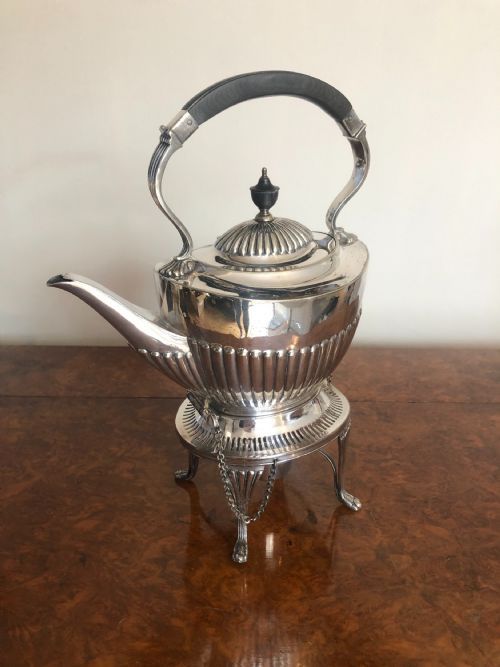

Vintage Spirit Kettle
These vintage spirit kettle pieces are self-contained boiling vessels raised on dedicated stands above tiny burners, prized for bringing traditional table service to life.
Vintage Spirit Kettle
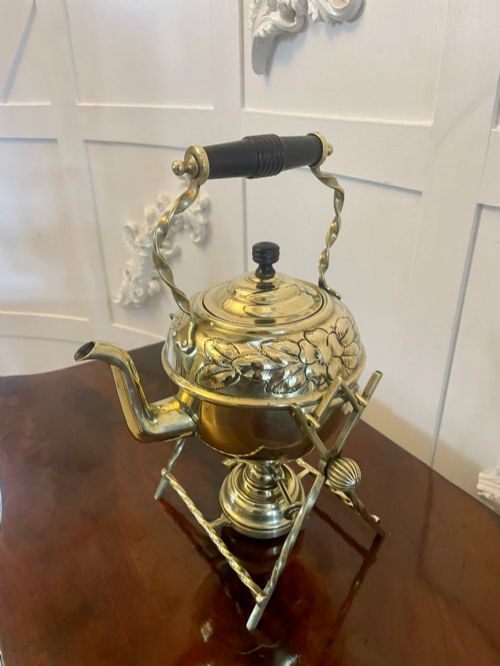
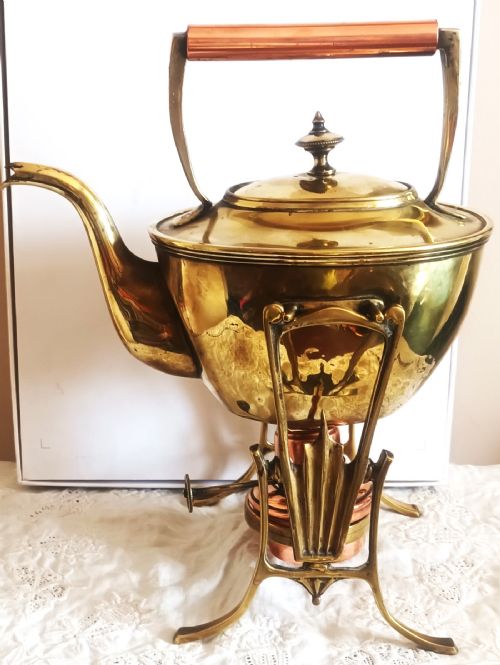
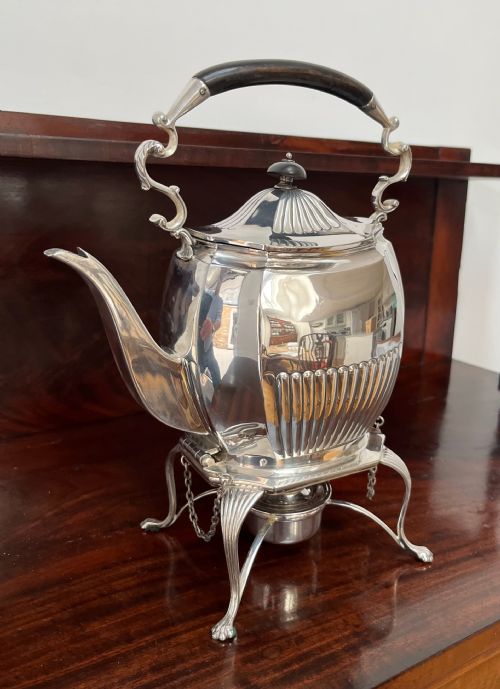
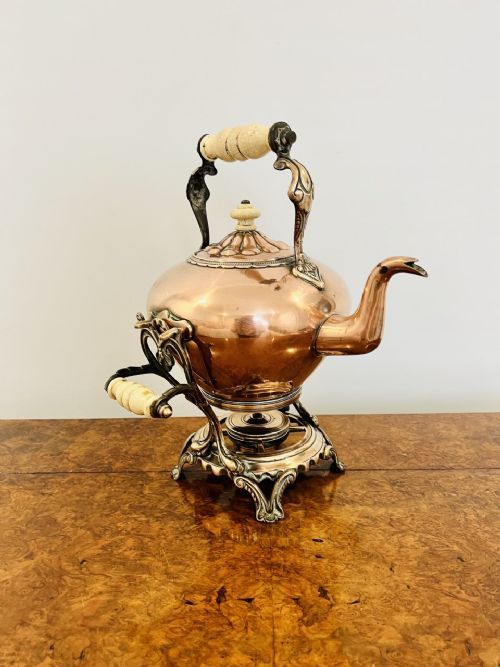
When you search for a vintage spirit kettle, you are looking at portable tea-making apparatus designed to keep water hot at the table without a trip to the kitchen. These vessels typically sit within metal frameworks incorporating a small spirit burner beneath the belly of the pot.
The examples gathered here span the Victorian, Edwardian, and Arts and Crafts periods, alongside Georgian Revival revivals. You will encounter freestanding models on cradles or swinging mounts, as well as hanging copper kettles intended for specific hearth setups.
Brass, copper, and silver plate dominate the forms, frequently paired with insulating elements like wood, bone, or ebony on the handles. These materials reflect late nineteenth and early twentieth-century dining habits where hospitality demanded continuous access to boiling water.
How they were made
The construction of a vintage spirit kettle relies heavily on heavy-gauge sheet brass and copper, hammered or spun into deep bodies and joined with robust seams. Silver-plated variants apply a reflective coating over a base metal foundation, utilising traditional plating techniques of the nineteenth and early twentieth centuries.
Stands and burners demand rigorous metalworking, combining cast components with articulated arms, pivots, and locking pins that allow the kettle to tilt smoothly for pouring. Handles incorporate organic insulators such as wood, bone, or ebony, pinned securely through metal sockets to protect the hand from conducted heat.
Vintage Spirit Kettle Retail Price Guide 2026
Typical asking prices for vintage spirit kettle among the pieces listed under this phrase on Sellingantiques today, from the lower quarter to the upper quarter. They describe what is for sale here now, not the wider market.
Listings feature items from the Victorian and Edwardian eras, constructed in brass, copper, and silver plate.
What varies in quality
Quality in these vessels rests upon the substance of the metal and the integrity of the mechanical joints on the stand. Heavier gauge copper and brass resist denting and maintain structural rigidity under the weight of boiling water, while thinner plates feel fragile and prone to distortion.
The sophistication of the burner mechanism and the smoothness of the pivoting frame separate ordinary production from finer workshop output. Well-executed pieces retain matching burners and secure insulating handles, demonstrating careful assembly where utility and display met.
William Soutter and Sons
The Vintage Spirit Kettle Glossary
- Spirit kettle
- A boiling pot mounted on a metal stand above a small fuel-burning lamp designed to maintain water temperature at the table.
- Spirit burner
- The small removable fuel container, often fitted with a wick and snuffer cap, housed directly beneath the suspended kettle.
- Silver plate
- A thin layer of silver fused or electroplated onto a base metal substrate such as brass, copper, or nickel silver.
- Arts and Crafts
- A design movement emphasising hand-wrought materials, visible construction marks, and simple, honest forms in copper and brass.
- Ebony
- A dense, dark heartwood utilised for insulating handle spacers on kettle bails to prevent heat transfer during pouring.
Vintage Spirit Kettle: Frequently Asked Questions
How do you use a spirit kettle?
Fill the main vessel with hot water from a primary source, place it securely on its stand, and light the small fuel burner underneath to maintain the heat. The tilting mechanism allows you to pour tea into cups without lifting the vessel from its frame.
Ensure the burner is extinguished safely with its cap once tea service concludes, and allow all metal components to cool completely before handling or cleaning.
What metal are they made from?
These pieces are predominantly constructed from brass, copper, or silver plate over a base metal body. Handles often feature contrasting materials like wood, bone, or ebony for insulation.
The choice of metal typically defines the visual character of the piece, ranging from polished silver plate to the warm glow of hammered copper and brass.
How do I date a spirit kettle?
Dating relies on stylistic clues, manufacturing techniques, and materials associated with specific eras such as the Victorian or Edwardian periods. Silver-plated items and specific revival styles often point towards the late nineteenth or early twentieth centuries.
Examine the construction methods of the handle mounts, the design of the burner, and any stamped marks on the base to narrow down the decade of production.
Can I still boil water in them?
While these kettles were originally designed to heat water using liquid fuel burners, modern use requires careful inspection of internal linings and historical repairs. Many owners prefer to use them as decorative table centerpieces rather than functional appliances.
If you intend to use the burner, check the fuel reservoir and wick condition thoroughly to ensure safe operation during tea service.