
Vintage Spirit Decanter Bottle
A vintage spirit decanter bottle is a practical vessel for serving liquor that brings period craftsmanship and glasswork to the modern table.
Vintage Spirit Decanter Bottle
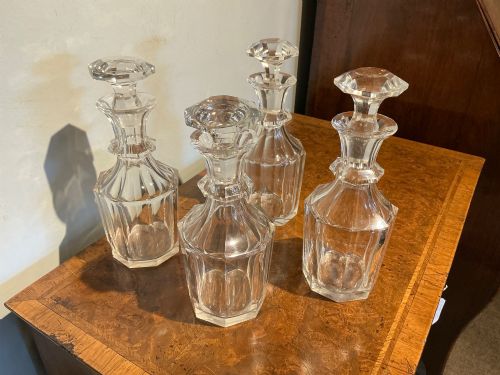
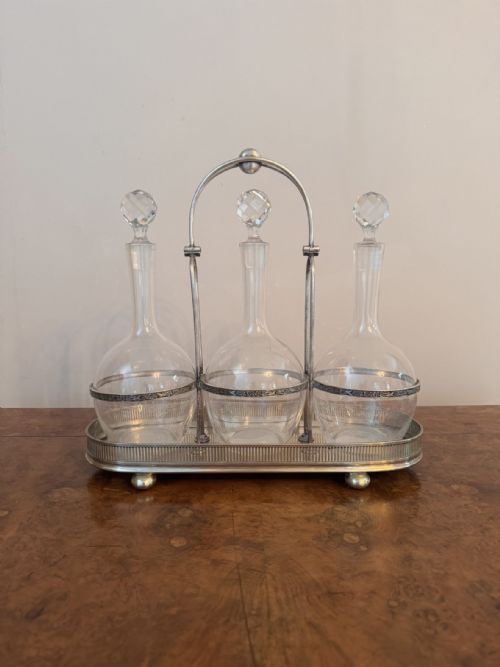
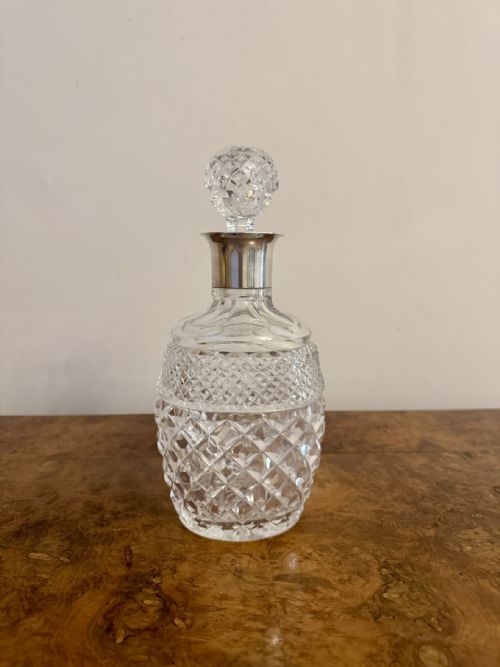
A vintage spirit decanter bottle encompasses vessels designed to hold and pour liquor, ranging from standalone glass flagons to multi-bottle sets housed in locking tantalus frames. Buyers searching this phrase meet pieces primarily from the Victorian and Edwardian eras, alongside George V and Art Deco examples.
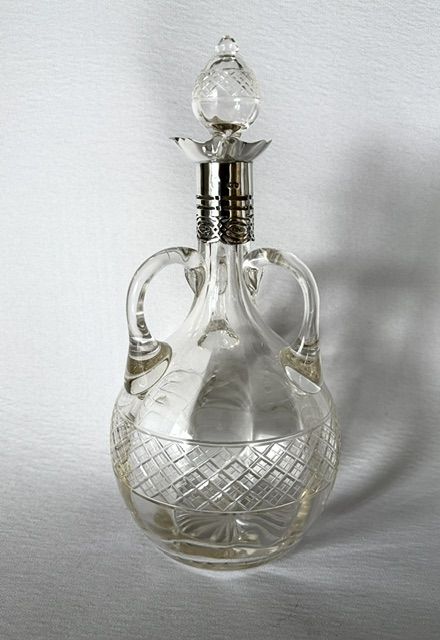
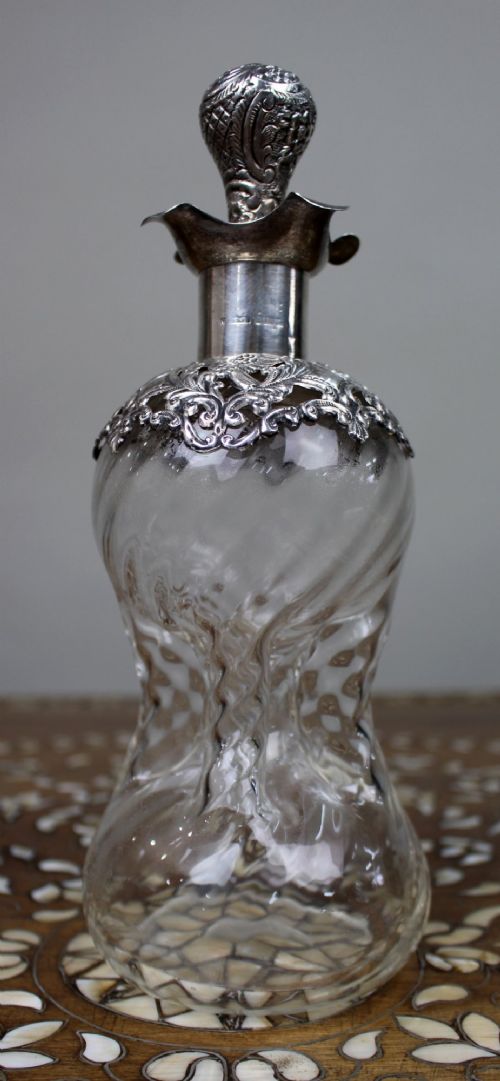
The material forms vary widely between clear cut crystal, coloured glass bodies, and ceramic stoneware. Many examples incorporate metal mounts, collars, or stoppers made from sterling silver, silver plate, or mounted cork.
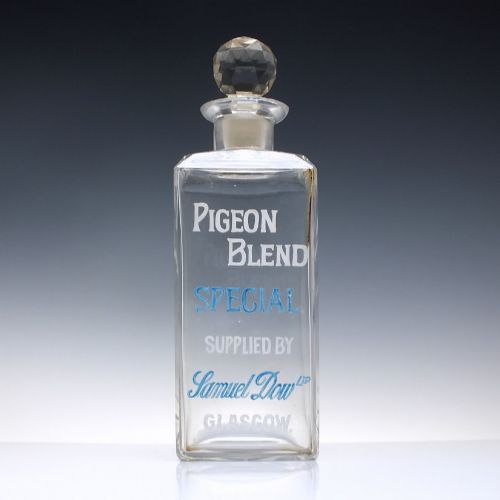
Common utilitarian formats include whisky noggins, spirit flasks housed in leather cases, and bell-shaped serving bottles. These objects reflect the formal dining and entertaining customs of the nineteenth and early twentieth centuries.
Materials and construction techniques
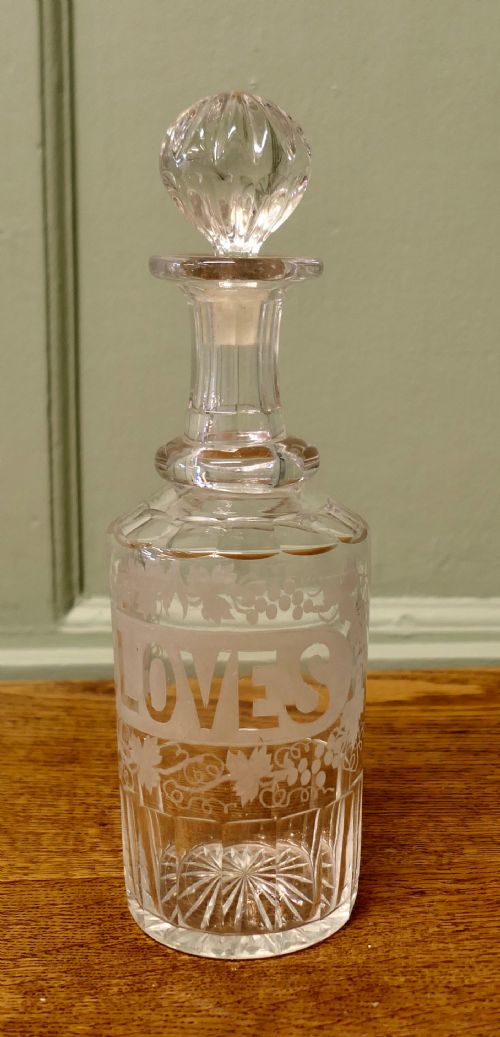
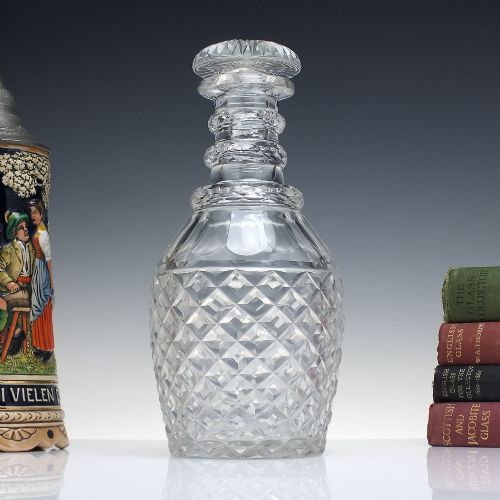
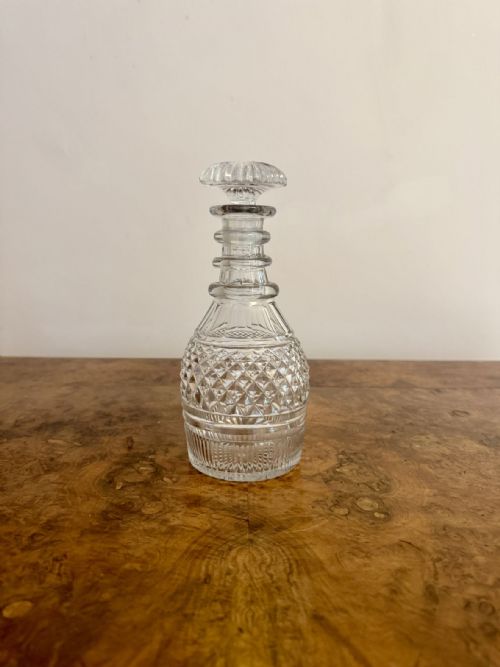
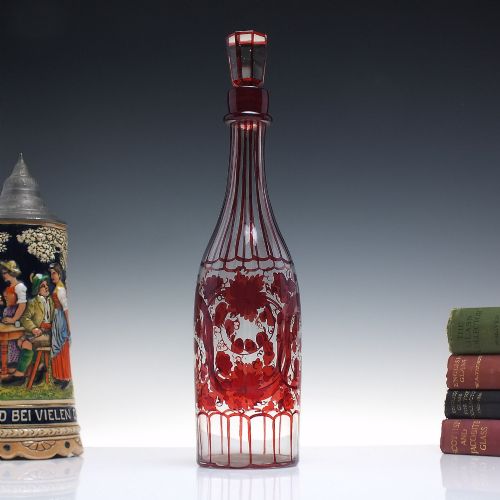
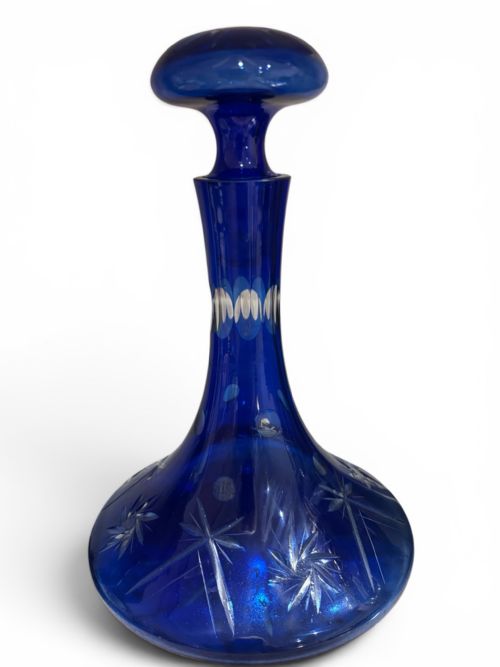
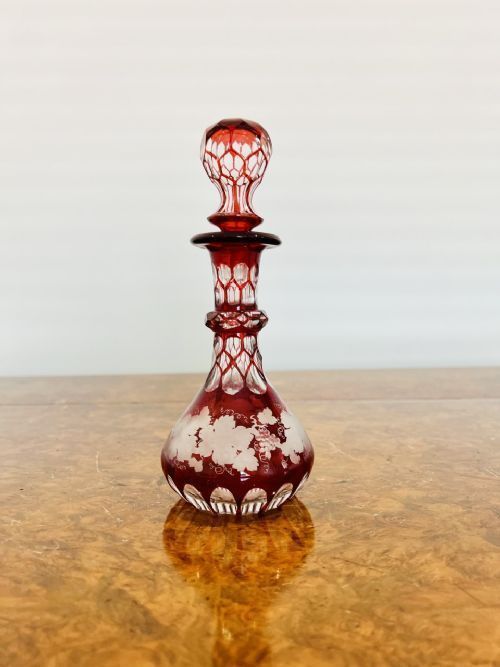
Glassmaking methods span mould-blown vessels, lead crystal, and hand-cut facets that catch the light. Makers also utilised overlay techniques, seen in ruby, cobalt, and green glass bodies cut back to clear crystal.
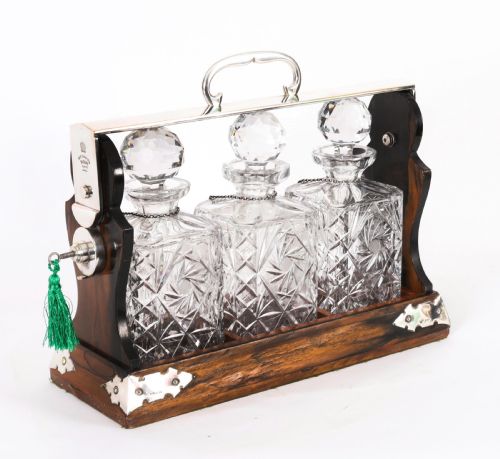
Metalwork components rely on silver plating or sterling silver casting for collars, mounts, and labels. Timber frames for tantalus sets utilise oak, satinwood, and coromandel fitted with working locks and keys.
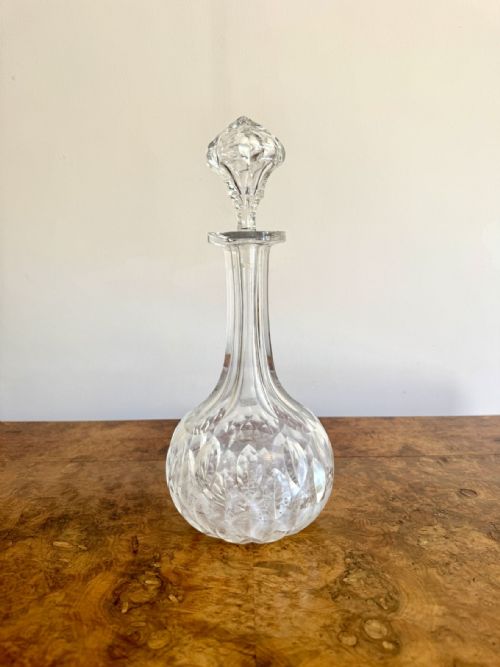
Object forms span standard wine decanters, tantalus frames, whisky noggins, and leather-cased spirit flasks.
Assessing quality in period decanters
Quality rests upon the crispness of the glass cutting and the weight of the lead crystal. Superior vessels feature hand-etched or enamelled decoration that remains sharp and well-defined across the surface.
The refinement of the metal mounts distinguishes finer specimens. Hallmarked sterling silver collars, heavy silver-plated frames, and matching original glass stoppers elevate a piece above standard utilitarian examples.
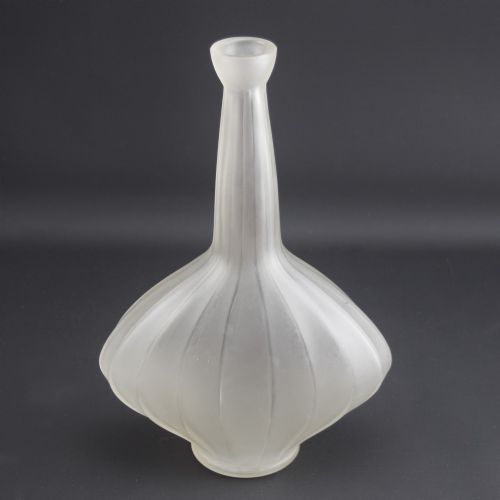
Tiffany·Betjemann·Rene Lalique·Royal Doulton·Stevens & Williams
The Vintage Spirit Decanter Bottle Glossary
- Whisky noggin
- A small spirit decanter or jug, often holding a single measure of whisky and fitted with a silver lip and matching label. These small vessels frequently date from the Edwardian period.
- Lead crystal
- Glass containing lead oxide to increase brilliance, weight, and the refractive index. This material permits deep, sharp cutting facets.
- Silver plate
- A base metal coated with a thin layer of silver. This technique provided the appearance of solid silver for hardware on tantalus stands and bottle collars.
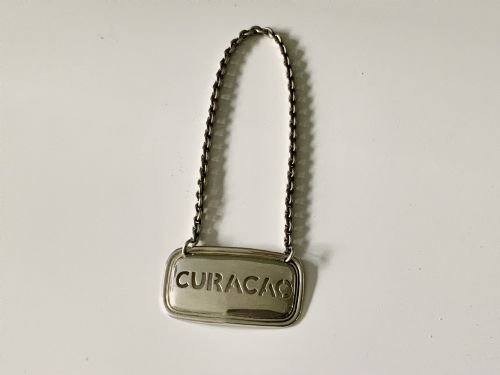
- Decanter label
- A small tag hung by a chain around the neck of a bottle to identify the contents. They appear in silver and silver plate.
Vintage Spirit Decanter Bottle: Frequently Asked Questions
How do I clean an old decanter?
Fill the bottle with warm water and mild detergent, avoiding harsh abrasives that scratch the glass surface. Stubborn internal residue requires non-scratch cleaning beads swirled gently inside.
Rinse thoroughly with clean water and leave the vessel inverted on a mat until completely dry before replacing the stopper.
Can these bottles still hold alcohol safely?
Most vintage glass vessels remain functional for holding spirits during normal serving use. Inspect the interior and the stopper base to ensure the glass is free from cracks.
Older decanters containing lead crystal should not be used to store liquor for extended periods, as lead can leach into the liquid over time.
How do I date a glass decanter?
Examine the base of the vessel for a polished pontil mark, which often indicates nineteenth-century or earlier manufacture. Shape, cutting style, and typography on associated silver labels also provide chronological clues.
Assay marks on silver collars or mounts offer definitive dates through official registry letters and hallmarks.
What is a tantalus set?
A tantalus is a locking cabinet or frame designed to hold two or three spirit bottles securely in place. The locking mechanism prevents guests or servants from accessing the contents without a key.
These sets became popular in the late Victorian and Edwardian periods as home entertaining increased in formality.